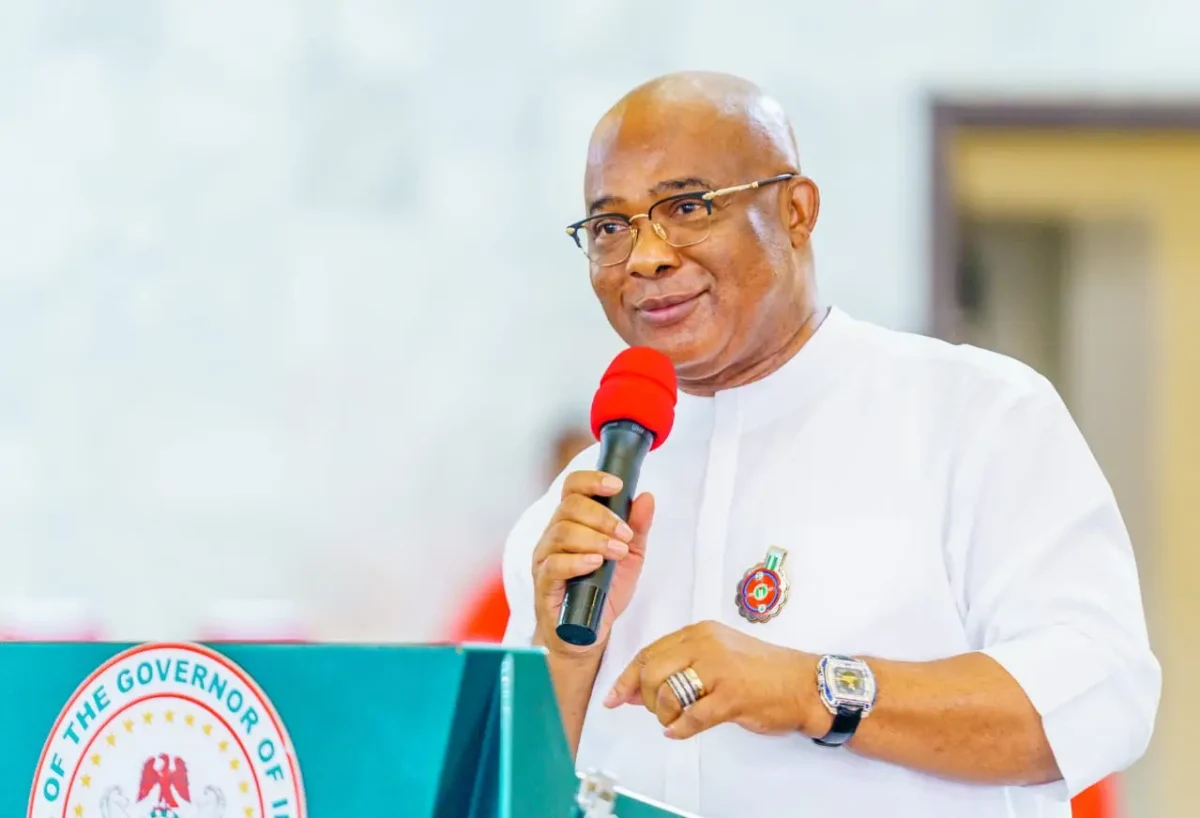
Imo State Governor Hope Uzodimma has thrown down the gauntlet for the 2027 presidential election. He declared Imo a one-party state firmly behind President Bola Tinubu’s re-election bid. The statement came during a high-profile inspection tour of federal and state projects by the Renewed Hope Ambassadors Media Team. Uzodimma’s confidence is not mere rhetoric. He pointed to tangible economic reforms and infrastructure gains as the bedrock of his assertion.
Uzodimma’s argument hinges on the financial windfall from Tinubu’s fuel subsidy removal. When he took office in January 2020, Imo’s monthly federal allocation barely covered salaries, leaving just ₦100 million for other expenses. By May 2023, after Tinubu’s reforms, the state’s allocation skyrocketed to ₦10.7 billion. This dramatic increase allowed Uzodimma to launch ambitious infrastructure projects. Roads that once took two to three hours to traverse now take under 45 minutes. The state’s internally generated revenue surged from ₦400 million to nearly ₦6 billion monthly. Debt plummeted from ₦287 billion to less than ₦90 billion.
The governor’s claims are not isolated. He chairs the APC Progressive Governors Forum, a bloc of 32 governors who collectively wield significant influence. Special Adviser to the President on Media Sunday Dare reinforced this point. He noted the APC’s expanding footprint, with governors leveraging increased federal allocations to deliver visible development. Dare’s delegation inspected projects in seven North-West states before visiting the South-East. Their tour included Imo’s Digital City, a public-private initiative focused on artificial intelligence, drone technology, and telecommunications manufacturing. The facility symbolizes the state’s pivot toward a digital economy.
Uzodimma’s comparison of Tinubu to Singapore’s Lee Kuan Yew reveals a strategic narrative. He frames Tinubu’s reforms as transformative despite initial resistance. This narrative is designed to counter opposition claims that the reforms have inflicted hardship. The governor’s emphasis on performance over traditional campaign rallies suggests a calculated shift in political strategy. He argues that tangible development, not slogans, will secure Tinubu’s re-election. This approach aligns with the APC’s broader messaging, which highlights economic gains as the party’s strongest campaign tool.
Yet Uzodimma’s declaration of Imo as a one-party state raises critical questions about political inclusivity. His assertion that the APC has a minimum of 50 members in every polling unit implies a coordinated effort to dominate the electoral landscape. This strategy could marginalize opposition voices, particularly in a state with a history of political volatility. The governor’s focus on infrastructure and economic gains may resonate with some voters, but it risks alienating those who prioritize democratic pluralism. The APC’s growing influence under Tinubu’s leadership could set a precedent for other states, potentially reshaping Nigeria’s political dynamics ahead of 2027.
The financial implications of Tinubu’s reforms extend beyond Imo. States across Nigeria have seen increased allocations, enabling governors to accelerate development projects. However, the sustainability of these gains remains uncertain. Critics argue that the removal of fuel subsidies has disproportionately affected the poor, despite the short-term financial boost to state coffers. Uzodimma’s defense of the policy centers on its long-term benefits, but the immediate economic strain on citizens cannot be ignored. This tension between short-term pain and long-term gain will likely dominate political discourse as the 2027 election approaches.
Uzodimma’s leadership of the Progressive Governors Forum adds another layer to this political calculus. The forum’s 32 governors represent a formidable bloc within the APC, capable of shaping the party’s direction. Their collective endorsement of Tinubu’s reforms signals a unified front, but internal dissent could emerge if economic conditions worsen. The forum’s influence will be pivotal in determining whether the APC can maintain its momentum or if opposition parties can exploit public dissatisfaction. The 2027 election may hinge on the APC’s ability to balance economic reform with social stability.
The Renewed Hope Ambassadors Media Team’s tour underscores the APC’s strategy of using development projects as a campaign tool. By showcasing tangible achievements, the party aims to build a narrative of progress and competence. This approach contrasts with traditional campaign methods that rely on rallies and political slogans. However, the effectiveness of this strategy will depend on whether voters perceive these projects as genuine improvements or mere political propaganda. The APC’s ability to sustain this narrative could determine its success in 2027.