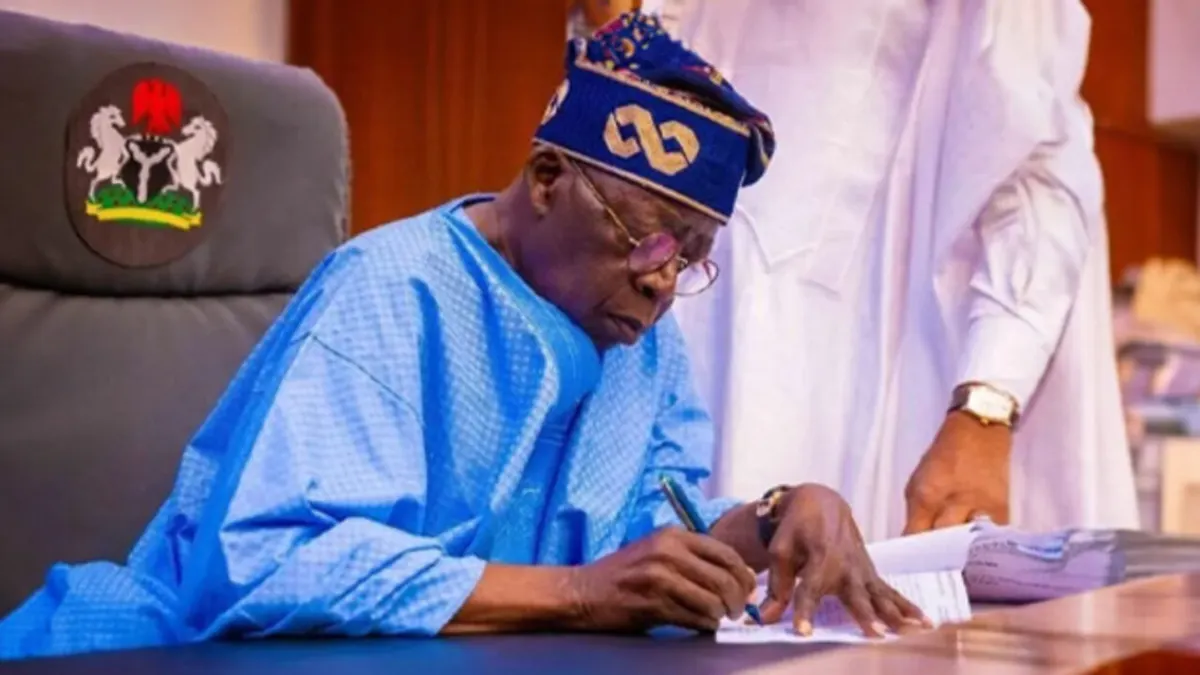
President Bola Tinubu has executed his most sweeping federal boardroom overhaul since taking office. In a single stroke he named 26 individuals to chairmanships and directorships across 10 critical agencies. The appointments landed at 9:32 PM on Monday night. They take immediate effect without Senate confirmation.
Former Ekiti State Governor Ayodele Fayose leads the list. Tinubu tapped him to chair the Rural Electrification Agency. Fayose’s board includes Alhaji Ahmadu Abubakar and Engineer Ilyasu Ibrahim Makinta as non-executive directors. The agency’s existing Director-General Abba Abubakar Aliyu and three executive directors remain in place. This structure locks Fayose into a power-sharing arrangement with career technocrats who control daily operations. The move signals Tinubu’s preference for political heavyweights to oversee policy while leaving execution to permanent civil servants.
The National Salaries, Incomes and Wages Commission received eight new faces. Major General Junaid Bindawa takes the chair. Lagos politician Olajumoke Okoya-Thomas becomes secretary. Four commissioners and three members fill out the board. The appointments span six geopolitical zones. Kaduna, Benue, Oyo, Borno, Enugu and Kogi are explicitly named. This regional spread mirrors Tinubu’s earlier cabinet formation strategy. It ensures every major bloc retains a stake in federal wage negotiations. The commission’s next wage review will now carry the imprint of Tinubu’s political coalition.
Tinubu also reshuffled the leadership of the Revenue Mobilisation, Allocation and Fiscal Commission. He moved Tosin Johnson Adeyanju from the National Lottery Trust Fund to serve as secretary. The shift suggests a deliberate effort to centralise revenue monitoring under loyalists. Adeyanju’s predecessor at the lottery fund was not named. The vacancy creates a ripple effect that could trigger further appointments in coming weeks. Tinubu’s team has not ruled out additional boardroom changes before the end of the quarter.
The appointments reveal a hidden institutional conflict. Tinubu bypassed the Federal Character Commission in making these selections. The 1999 Constitution mandates that federal appointments reflect the country’s diversity. The commission is tasked with enforcing this rule. Tinubu’s office did not release a federal character compliance report alongside the appointments. This omission could trigger a legal challenge. Civil society groups have previously sued over similar violations. The case could reach the Supreme Court within months.
Tinubu’s choices also expose a deeper governance gap. The Fiscal Responsibility Commission now has a full board for the first time in two years. Dr Abdullahi Maikano Saidu chairs it. Six members join him. The commission is responsible for monitoring federal spending. Its last audit report covered the 2022 fiscal year. The new board must clear a backlog of unaudited budgets. This task will test Tinubu’s commitment to fiscal transparency. The commission’s reports are public records. They often reveal waste and corruption. Tinubu’s political allies may face scrutiny in the next audit cycle.
The National Centre for Agricultural Mechanisation received a new CEO. Engineer Julius Oloro replaces the late Dr A.R. Kamal. Oloro’s appointment ends a six-month leadership vacuum. The centre is based in Kwara State. It oversees Nigeria’s agricultural equipment policy. Oloro’s first task will be to revive stalled tractor assembly plants. The centre’s last annual report showed a 40% drop in equipment procurement. Farmers have complained of rising costs. Oloro’s background as a local government chairman suggests Tinubu values political experience over technical expertise for this role.
The appointments carry significant economic consequences. The Nigerian Bulk Electricity Trading Plc now has a new managing director. Dr Akinola Odeyemi takes over. The company buys power from generators and sells it to distribution firms. It is currently owed N1.3 trillion by defaulting customers. Odeyemi must negotiate payment plans with state governments and private firms. His success or failure will directly impact Nigeria’s power supply. The sector has seen three managing directors in the last five years. This high turnover has contributed to chronic instability.
Tinubu’s boardroom strategy reveals a calculated risk. He has placed political allies in agencies that control critical national resources. The Rural Electrification Agency manages a N140 billion annual budget. The Revenue Mobilisation Commission oversees federal allocations to states. The Fiscal Responsibility Commission audits trillions in public spending. These agencies now answer to Tinubu’s appointees. The arrangement could strengthen his grip on power. It could also expose him to accusations of patronage. The next election cycle begins in 18 months. Tinubu’s opponents are already framing these appointments as a consolidation of power.