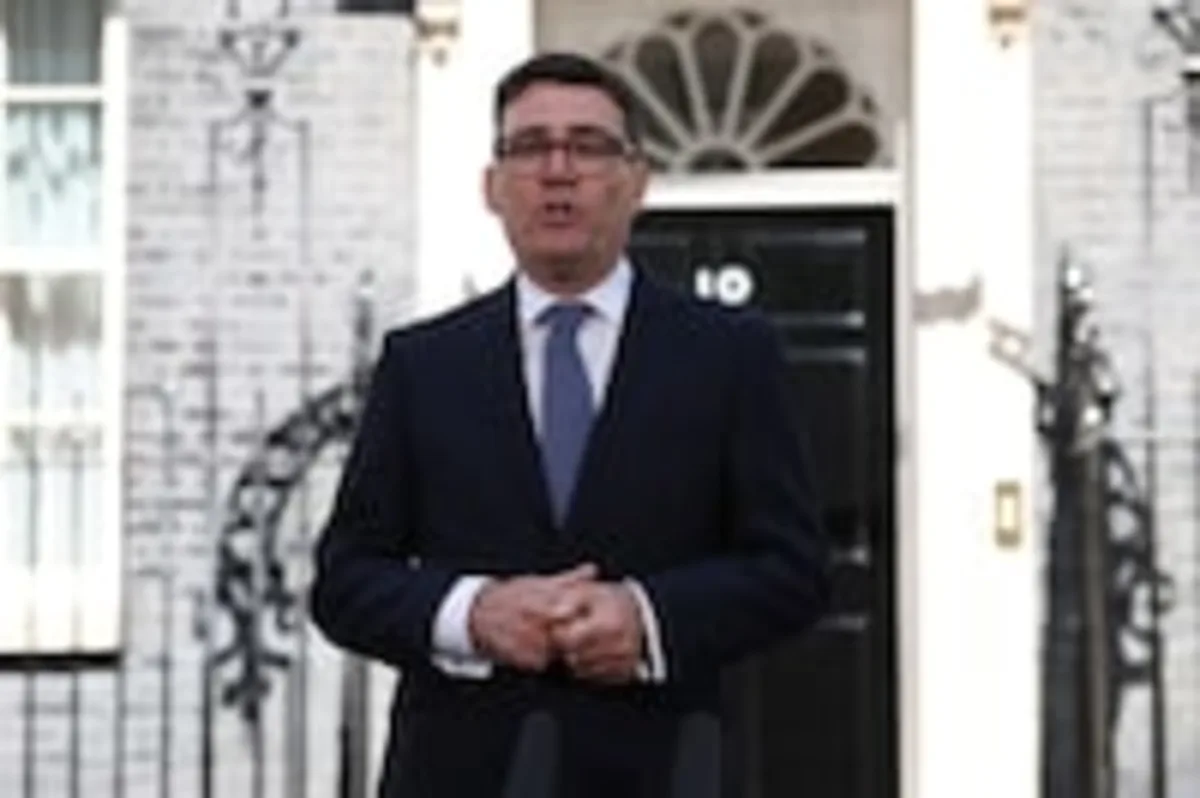

Andy Burnham became the United Kingdom’s seventh prime minister in a decade on Monday. His appointment followed a constitutional audience with King Charles III at Buckingham Palace. The 56-year-old former Mayor of Greater Manchester accepted the monarch’s invitation to form a new government. He succeeds Sir Keir Starmer, who resigned after two years in office.
The transition marks the latest chapter in a turbulent political era. Since 2016, Britain has navigated Brexit, the COVID-19 pandemic, record immigration, and a cost-of-living crisis. Burnham inherits a fractured electorate and a Labour Party still recovering from internal divisions. His first speech outside 10 Downing Street promised a “new political model” and a “new economic model” within a 10-year plan. He pledged immediate costed measures to address living costs starting the next day.
Burnham’s rise to power was unconventional. He twice failed to secure the Labour leadership, losing to Jeremy Corbyn in 2015. He then left Westminster to serve as Manchester’s mayor, a role that burnished his reputation as a pragmatic outsider. His return to national politics was swift. He was elected unopposed as Labour leader after Starmer’s resignation. His mayoral record—particularly on homelessness and regional devolution—formed the backbone of his campaign for change.
The new prime minister faces immediate institutional challenges. The UK’s economic growth has stagnated, public services are strained, and trust in government remains low. Burnham’s 10-year plan aims to rewire the nation’s priorities. He has signaled a shift toward regional investment, housing reform, and a rebalancing of economic power away from London. His speech referenced a “circuit breaker” moment for Britain, framing his premiership as a break from the past decade’s instability.
Behind the rhetoric lies a fragile political reality. Burnham must unite a Labour Party still divided between centrists and progressives. His cabinet appointments will test his ability to balance competing factions. The opposition Conservative Party, though weakened, remains a formidable force. Meanwhile, fringe parties on the left and right are gaining traction, threatening Labour’s traditional voter base. Burnham’s success hinges on delivering tangible results before the next election cycle begins.
An overlooked dimension of Burnham’s leadership is his regional power base. As Manchester’s mayor, he championed devolution deals that gave cities greater control over transport, housing, and skills funding. His premiership could accelerate this trend, reshaping the UK’s constitutional structure. Analysts note that his economic model may prioritize infrastructure projects outside London, a departure from previous administrations. This could redefine the UK’s economic geography, but it also risks alienating traditional Labour strongholds in the south.
Burnham’s personal connection to his policies adds a layer of credibility. A lifelong Everton FC supporter, he has been a vocal advocate for working-class communities. His involvement in the Hillsborough Law campaign—seeking justice for the 1989 football disaster—demonstrates his commitment to accountability. This background contrasts sharply with the Westminster establishment, positioning him as a leader who understands grassroots concerns. His ability to translate this authenticity into policy will determine his longevity in office.
The international response to Burnham’s appointment has been cautious. Global markets reacted with muted optimism, but concerns linger about the UK’s economic trajectory. His pledge to restore confidence in British institutions will be tested by geopolitical tensions, including the US-China rivalry and the fallout from Brexit. Domestically, his government must address the NHS crisis, social care reform, and climate commitments. Burnham’s challenge is to turn his vision into action without triggering further polarization.