
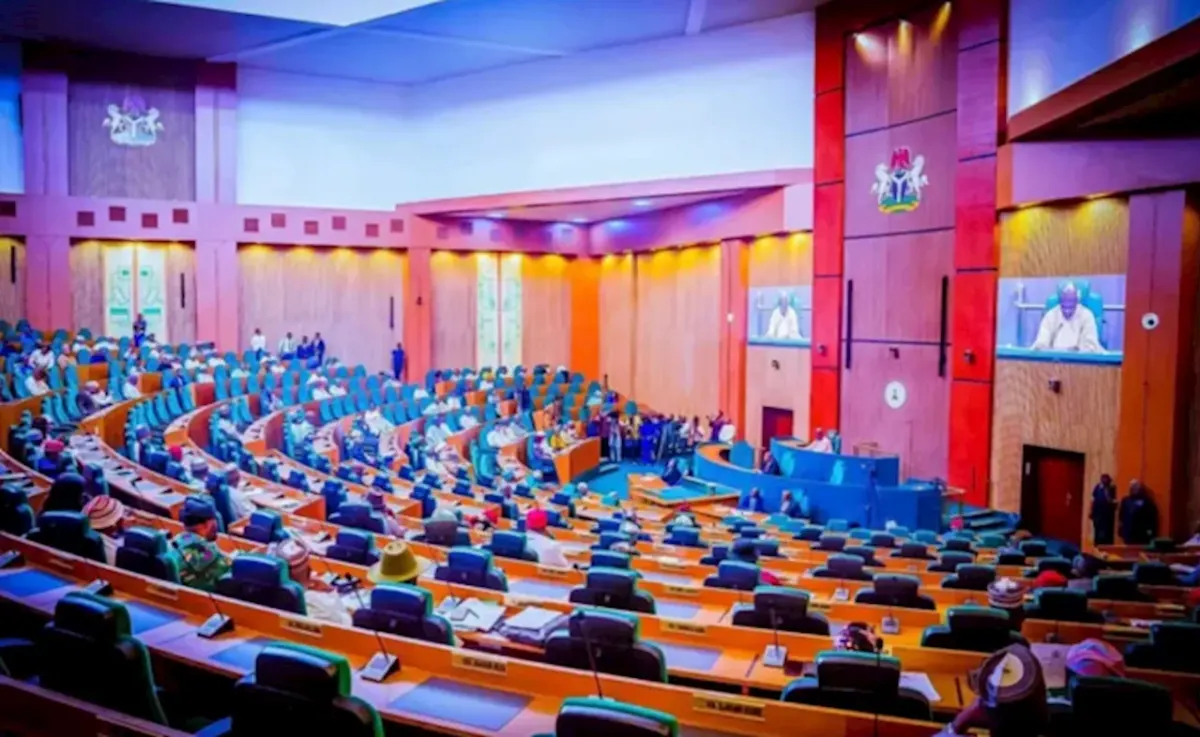
The House of Representatives has taken a decisive step toward establishing state police in Nigeria. Lawmakers announced plans to adopt the Senate’s version of the State Police Bill with minor amendments. This move aims to accelerate the constitutional amendment process and align both chambers of the National Assembly.
Deputy Speaker Benjamin Kalu revealed the decision during a meeting of the House Committee on Constitution Review. The committee is reviewing President Bola Tinubu’s executive bill, which seeks to alter the 1999 Constitution to allow state-level policing. Kalu emphasized the urgency of the bill, describing it as a priority for national security. The House had earlier passed its own version of the bill on June 11 but reversed course after Tinubu submitted his executive proposal on July 14.
The Senate approved its version of the bill on June 24. The House will now use the Senate’s document as a working draft. This includes new interpretation and transitional clauses designed to smooth the implementation of state police. Kalu stressed that the committee’s review would be thorough but swift. He noted that public consultations during the National Assembly Open Week had already satisfied the requirement for stakeholder engagement. This allows the House to bypass additional hearings and move directly to clause-by-clause deliberations.
The adoption of the Senate’s version reflects a rare moment of legislative harmony. Both chambers are coordinating to ensure the bill’s passage before transmission to the president for assent. This alignment is unusual in Nigeria’s often fractious political environment. It signals a shared recognition of the country’s escalating security challenges. Banditry, kidnapping, and insurgency have overwhelmed federal police forces. State governments have repeatedly called for localized control to improve response times and accountability.
President Tinubu’s advocacy for state police dates back to his tenure as Lagos State governor. His consistent support for decentralized policing has now gained federal traction. Kalu highlighted this continuity, framing the bill as a strategic response to Nigeria’s security crisis. He also underscored the collaborative effort between the executive and legislature. Both arms of government, he noted, are united in prioritizing security as a cornerstone of governance.
The bill’s transitional clauses are particularly critical. They outline the phased transfer of policing responsibilities from federal to state authorities. This includes provisions for funding, training, and oversight to prevent abuse. The Senate’s version introduces a new Section 31, which clarifies the legal framework for state police operations. It also addresses concerns about potential conflicts between state and federal law enforcement agencies. These safeguards are designed to ensure that state police forces complement rather than compete with existing federal structures.
However, the bill’s passage is not without controversy. Critics argue that state police could be weaponized by governors to target political opponents. Historical precedents, such as the misuse of local vigilante groups, fuel these concerns. The bill attempts to mitigate such risks by embedding oversight mechanisms. These include mandatory reporting to state assemblies and federal oversight bodies. Yet, skepticism remains about the effectiveness of these checks in practice.
Another overlooked dimension is the financial burden on state governments. Policing is resource-intensive, requiring infrastructure, personnel, and technology. Many states already struggle with salary payments and basic service delivery. The bill does not fully address how states will fund their police forces without diverting resources from other critical sectors. This financial gap could undermine the bill’s long-term viability, particularly in economically weaker states.
The bill’s success hinges on its implementation. Previous attempts at security reform, such as the establishment of community policing, have faltered due to poor execution. The National Assembly must ensure that the transitional clauses are not just theoretical but actionable. This includes setting clear timelines for the handover of responsibilities and providing federal support during the transition. Without these measures, the state police initiative risks becoming another unfulfilled promise in Nigeria’s security reform agenda.