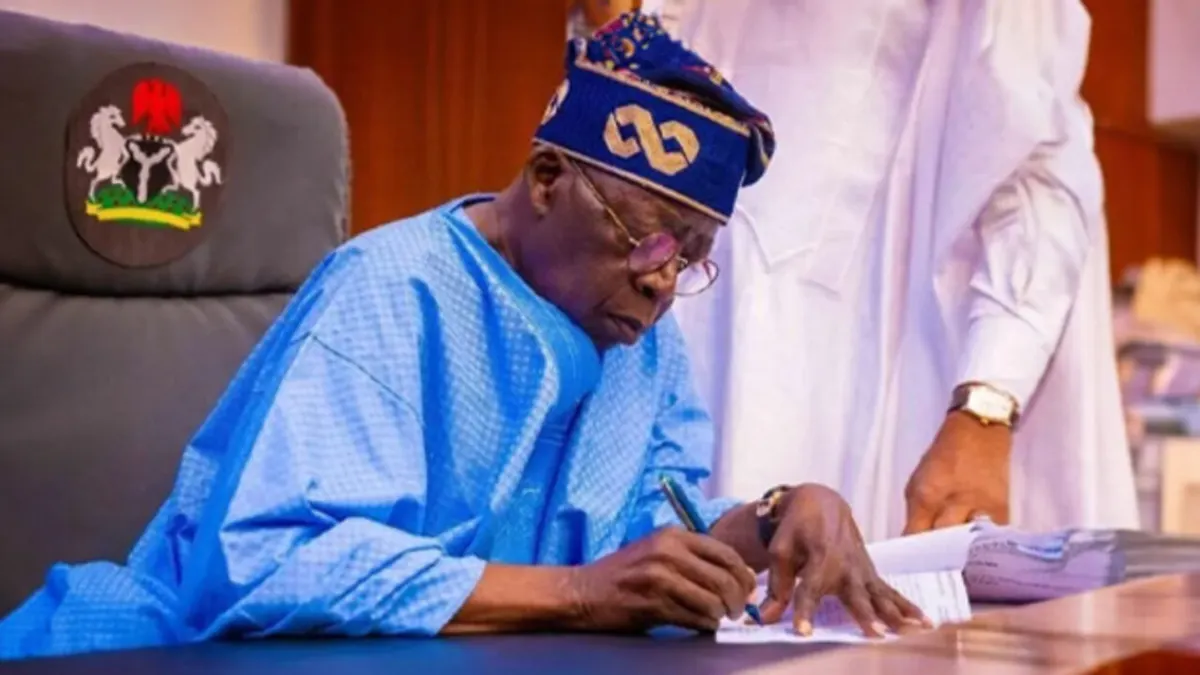

President Bola Ahmed Tinubu has formally congratulated Ekiti State Governor Biodun Abayomi Oyebanji on his re-election victory in Saturday’s governorship poll. The Independent National Electoral Commission declared Oyebanji winner after he secured 319,224 votes. His closest rival, Wole Oluyede of the Peoples Democratic Party, polled 40,543 votes. Dare Bejide of the African Democratic Congress trailed with 12,872 votes.
The outcome marks a historic milestone. Oyebanji becomes the first governor in Ekiti State’s 26-year history to win consecutive terms. Previous governors—Niyi Adebayo, Segun Oni, Kayode Fayemi, and Ayo Fayose—all failed to secure re-election. Tinubu’s statement, issued through his Special Adviser on Information and Strategy, Bayo Onanuga, framed the victory as a public endorsement of continuity and people-centred governance. The President commended Ekiti residents for their peaceful conduct and praised security agencies for maintaining order throughout the electoral process.
Tinubu’s message carried a strategic undertone. He urged the Independent National Electoral Commission to sustain its efforts ahead of the Osun State governorship poll in August and the 2027 general elections. The President’s emphasis on electoral credibility reflects growing national scrutiny over vote integrity. Ekiti’s election, though peaceful, was not without controversy. Reports of vote-buying and isolated clashes surfaced in Ido-Osi and Ilejemeje local government areas. Tinubu’s call for magnanimity in victory suggests an awareness of lingering political tensions.
Oyebanji’s first term was defined by the BAO agenda—an acronym for his administration’s focus on infrastructure, agriculture, youth employment, education, healthcare, and rural development. The President’s statement highlighted these sectors as key drivers of the governor’s re-election. Yet, beneath the surface, Ekiti’s economic realities tell a more complex story. Unemployment remains stubbornly high at 34.5%, above the national average. The state’s debt profile has climbed to ₦120 billion, raising questions about fiscal sustainability. Tinubu’s praise for Oyebanji’s achievements sidesteps these structural challenges.
The re-election also exposes deeper institutional patterns in Nigerian politics. Ekiti has long been a microcosm of the country’s electoral volatility. Since 1999, no governor had secured a second term until Oyebanji’s victory. This shift suggests a consolidation of power by the All Progressives Congress in the South-West. Tinubu, a former Lagos State governor and APC national leader, has positioned himself as the region’s political godfather. His endorsement of Oyebanji reinforces this role, signaling to other South-West governors the importance of aligning with his Renewed Hope Agenda.
A less discussed angle is the federal government’s financial leverage over Ekiti. The state relies heavily on federal allocations, which account for 78% of its revenue. Tinubu’s reaffirmation of federal support for Oyebanji’s administration is not merely diplomatic. It is a calculated move to ensure policy alignment. The President’s Renewed Hope Agenda includes infrastructure projects like the Lagos-Ibadan Expressway and the Second Niger Bridge, both critical to Ekiti’s economic connectivity. Oyebanji’s re-election guarantees continuity in these partnerships, reducing the risk of policy disruptions that could delay federal disbursements.
The election’s outcome also reveals a shift in voter behavior. Ekiti has historically been a swing state, with voters oscillating between the APC and PDP. Oyebanji’s landslide victory—securing 82% of the vote—indicates a consolidation of the APC’s base. This trend mirrors national patterns, where the ruling party has strengthened its grip on power since the 2023 general elections. The PDP’s collapse in Ekiti, where it polled just 10% of the vote, underscores the party’s declining influence in the South-West. Tinubu’s congratulatory message to Oyebanji subtly reinforces this narrative, framing the APC as the dominant force in the region.
Beyond the political theater, the re-election carries implications for Ekiti’s development trajectory. Oyebanji’s first term saw the completion of the Ekiti Knowledge Zone, a ₦20 billion tech hub aimed at attracting foreign investment. The project, however, remains underutilized, with only 30% of its facilities operational. The governor’s second term will test his ability to translate infrastructure investments into tangible economic growth. Tinubu’s call for inclusive governance hints at the need for Oyebanji to address these gaps. The President’s emphasis on carrying all stakeholders along suggests an awareness of the risks of elite capture, a recurring issue in Nigerian governance.
The federal government’s commitment to deepening the Renewed Hope Agenda in Ekiti raises questions about state autonomy. While Tinubu’s statement frames the partnership as collaborative, the financial realities of Nigeria’s federal system mean Ekiti has limited fiscal independence. The state’s reliance on federal allocations could constrain Oyebanji’s policy flexibility, particularly in areas like taxation and public sector reform. The President’s prayer for wisdom and strength for the governor takes on added significance in this context. Oyebanji’s ability to navigate these constraints will define his legacy as Ekiti’s first two-term governor.