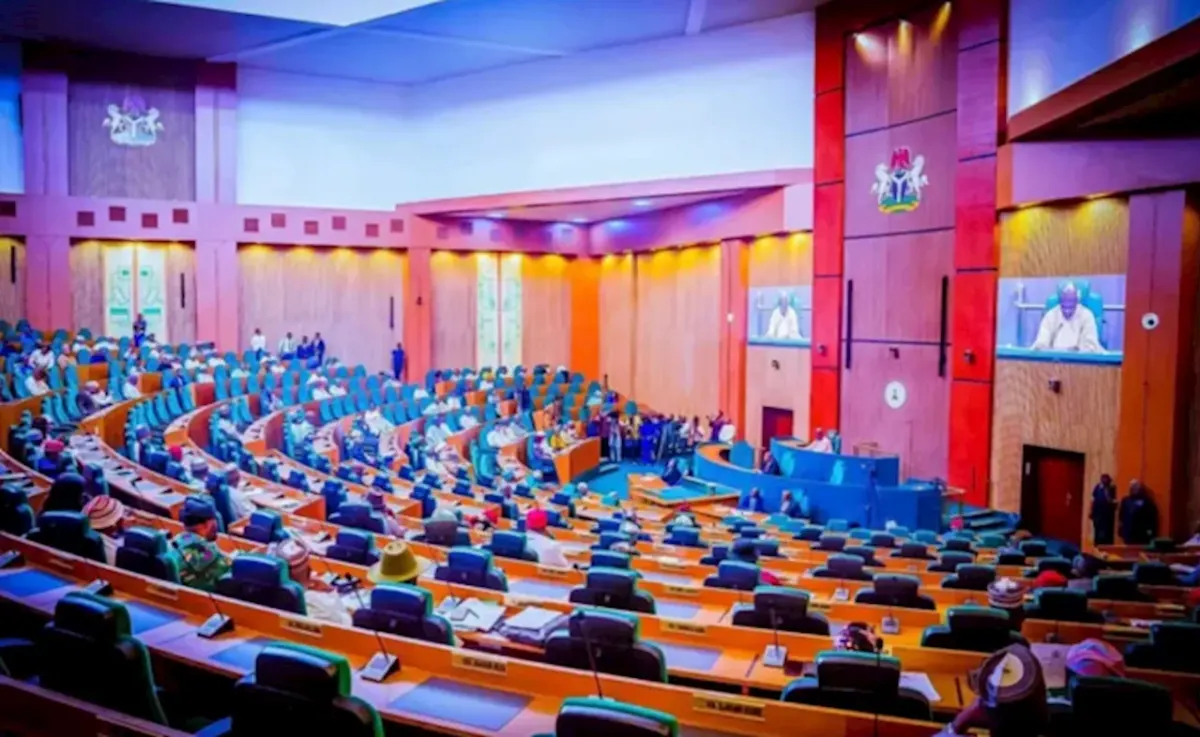

The Nigerian Senate has passed the Constitution of the Federal Republic of Nigeria (Alteration) (State Police) Bill, 2026. This legislation alters Sections 214, 215, and 216 of the 1999 Constitution. It establishes State Police Services alongside the existing Federal Police Force. The bill now awaits ratification by at least 24 state Houses of Assembly before President Bola Tinubu can sign it into law. If enacted, this will mark Nigeria’s most significant security reform since the return to democratic governance in 1999.
The bill introduces a dual policing system. The Federal Police Service will handle national crimes such as terrorism, cybercrime, organized crime, arms trafficking, border security, and inter-state offenses. State Police Services will enforce state laws, maintain public order, and protect lives and property within their jurisdictions. Governors will appoint Commissioners of Police, but these appointments must be recommended by the National Police Council and confirmed by a two-thirds majority of the State House of Assembly. This process aims to prevent arbitrary appointments and political interference.
One of the bill’s most debated provisions is the governor’s power to issue directives to State Commissioners of Police. Section 17(6) allows governors to issue lawful written directives of a general policy nature regarding public safety and order. However, these directives are strictly limited. Section 17(7) explicitly prohibits Commissioners of Police from arresting individuals for criticizing government, detaining political opponents, or deploying force against citizens merely for expressing opposition views. These safeguards are designed to prevent the weaponization of state police against political rivals.
The bill also includes an "escape hatch" for Commissioners of Police. If a commissioner believes a governor’s directive is unlawful, unconstitutional, or politically motivated, they can refer the matter to the National Police Council. The council’s decision becomes binding and final. This mechanism provides an independent check against executive overreach. Additionally, the Federal Government retains the power to intervene in state policing affairs under specific conditions: a complete breakdown of law and order, a formal request from the governor, or evidence of partisan, ethnic, or religious persecution. Such interventions require Senate approval within 48 hours to prevent federal overreach.
Security of tenure for police leadership is another critical safeguard. The Inspector-General of Police can no longer be removed at the President’s sole discretion. Similarly, governors cannot dismiss Commissioners of Police without cause. Removal requires a recommendation from the National Police Council and approval by a two-thirds majority of the State House of Assembly. This provision aims to insulate police leadership from political pressure and ensure professional independence. However, critics argue that these safeguards may not be sufficient to prevent abuse, given Nigeria’s history of executive dominance over state institutions.
The debate over state police is not new. Nigeria operated regional police forces during the First Republic, but these were abolished after the 1966 military coup due to allegations of political manipulation. The centralized policing structure that emerged has been widely criticized for its inefficiency and inability to address localized security challenges. Proponents of state police argue that decentralization will bring policing closer to the people, improve intelligence gathering, and enhance community trust. They point to federations like the United States and Germany, where subnational policing has been effective.
Yet, the risks of decentralization are significant. Many fear that state police could become tools of political repression, particularly in states with authoritarian governors. The experience of state electoral commissions, which are often accused of conducting flawed local government elections to favor ruling parties, fuels these concerns. Security expert Patrick Agbambu argues that Nigeria does not need state police but rather a decentralized federal police structure. He cites past experiments, such as the Babangida regime’s attempt to deploy officers to their states of origin, which failed due to community oppression and was subsequently discontinued.
Funding and capacity remain major hurdles. Establishing, equipping, and training state police forces will require substantial financial resources. Smaller states with low internally generated revenue may struggle to meet these demands, potentially leading to disparities in policing quality across the country. Lawmakers in economically weaker states may hesitate to endorse the bill, fearing fiscal strain. Additionally, the transition to a dual policing system risks administrative chaos if not carefully managed. Experts emphasize the need for standardized training, clear jurisdictional boundaries, and robust oversight mechanisms to ensure a seamless transition.
The bill’s passage has reignited debates about Nigeria’s federalism. Advocates argue that state police aligns with the principles of true federalism, where subnational entities have greater autonomy. Critics, however, warn that decentralizing policing without addressing deeper governance issues could exacerbate insecurity. The Rule of Law and Accountability Advocacy Centre (RULAAC) has cautioned against decentralizing abuse, noting that governors already exert significant control over state institutions. The organization questions whether constitutional safeguards can withstand the realities of executive dominance, particularly in states with weak democratic cultures.