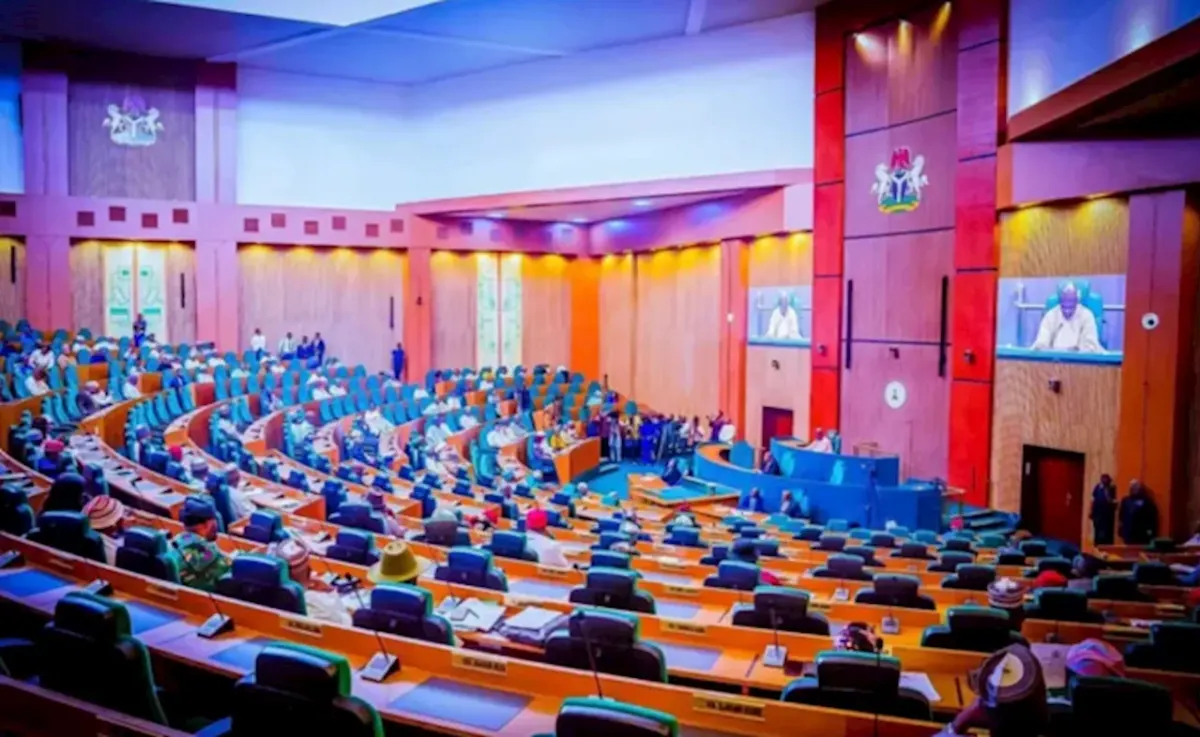

The House of Representatives voted 289 to 1 on Thursday to approve a constitutional amendment that would allow Nigeria’s 36 states to create their own police forces. The bill now moves to the Senate and then to state assemblies for final ratification. If enacted, it would end the 60-year monopoly of the Nigeria Police Force.
The vote came after a heated debate that exposed deep institutional tensions. Kaduna lawmaker Bashir Zubairu argued that members received the 87-page document only hours before the vote. Speaker Tajudeen Abbas overruled the objection. The electronic voting system failed, forcing a manual count based on attendance. Only one member opposed the bill.
Security analysts say the reform is overdue. Nigeria faces simultaneous insurgencies in the northeast, banditry in the northwest, farmer-herder clashes in the north-central, separatist violence in the southeast, and oil theft in the Niger Delta. The federal police force, with 370,000 officers, is stretched across 923,768 square kilometres. Average response time in rural areas exceeds three hours.
The bill’s supporters claim state police will improve local intelligence and cut response times. Lagos State Governor Babajide Sanwo-Olu said his administration could deploy 10,000 officers within six months if the bill passes. Kano State has already built a 5,000-capacity police training college in anticipation. Critics warn that governors could weaponise state police against political opponents. A 2022 report by the Centre for Democracy and Development documented 47 cases of governors using federal police to harass rivals between 2015 and 2022.
Funding remains a major hurdle. The federal police budget for 2026 is ₦1.2 trillion. Dividing that among 36 states would leave each with ₦33 billion—less than the ₦40 billion Lagos State spent on security in 2025. Poorer states like Zamfara and Yobe may struggle to pay salaries. The bill includes a provision for a State Police Service Commission to set uniform standards, but enforcement mechanisms are weak.
The timing of the vote is significant. In May, gunmen abducted 120 students from two schools in Oyo and Borno states. The incidents followed a pattern of mass kidnappings that has seen over 1,500 students abducted since 2020. President Bola Tinubu, who campaigned on security reform, has thrown his weight behind the bill. His spokesman said the president will sign it within 48 hours of Senate approval.
The bill’s passage also reflects a shift in political alliances. The ruling All Progressives Congress (APC) initially opposed state police, fearing it would empower opposition governors. The party changed its stance in 2025 after losing governorship elections in 14 states. The Peoples Democratic Party (PDP), which controls 12 states, now opposes the bill, arguing it will deepen regional inequalities. PDP lawmakers staged a walkout before the vote.
A less discussed but critical provision is the bill’s impact on the Nigeria Police Force. The federal force will retain control of forensic labs, anti-terrorism units, and the Police Mobile Force. However, it will lose 60% of its personnel to state forces. The Inspector General of Police, Kayode Egbetokun, has privately expressed concerns about losing experienced officers. The force’s morale is already low; a 2026 survey found that 72% of officers want to leave the service.
The bill’s fate now rests with the Senate. The upper chamber, which has 109 members, is expected to vote next week. If approved, it will go to state assemblies, where 24 must ratify it. Analysts predict the bill will pass, but with amendments that could delay implementation. The most likely change is a phased rollout, starting with six states that meet strict criteria on funding and training.