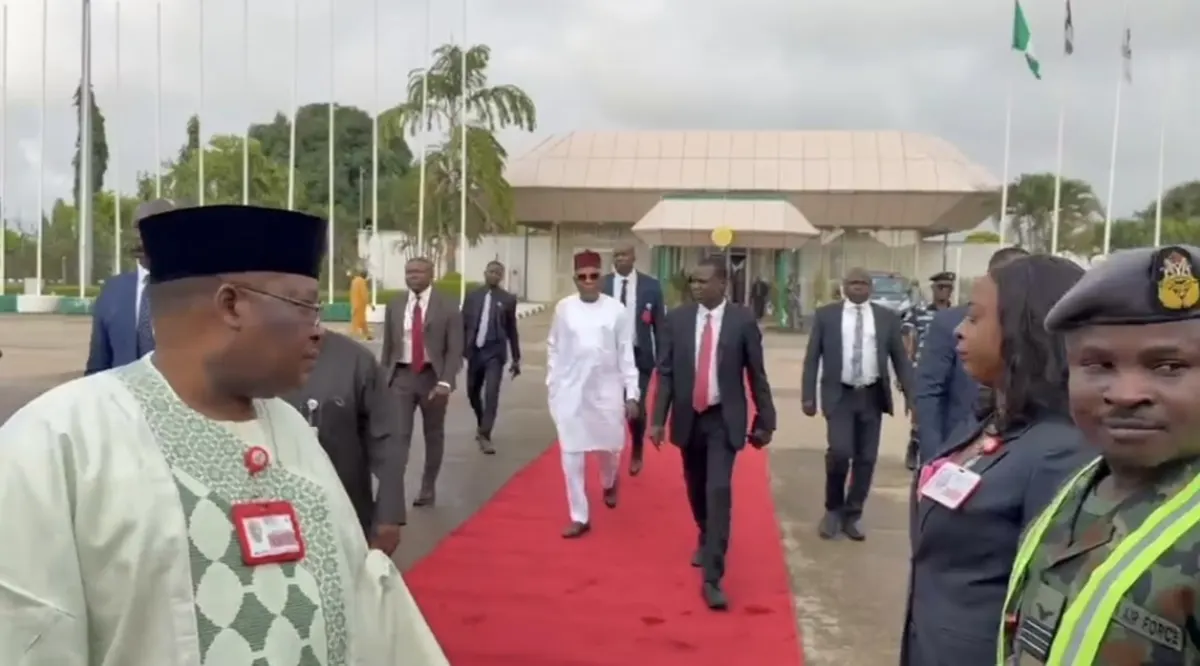
Vice President Kashim Shettima left Abuja on Sunday for Freetown. He will represent President Bola Tinubu at the 69th Ordinary Session of the ECOWAS Authority of Heads of State and Government. The summit opens today at the Julius Maada Bio International Conference Centre. This marks the first high-level ECOWAS gathering since the bloc suspended Mali, Burkina Faso, and Niger following military coups. The suspensions triggered a wave of withdrawal threats from the affected nations.
The timing of the summit exposes deep fractures within West Africa. The three suspended nations have formed a rival alliance called the Alliance of Sahel States. They accuse ECOWAS of serving foreign interests and failing to address terrorism effectively. The bloc now faces an existential threat. Leaders must decide whether to maintain a hardline stance or seek reconciliation. Shettima’s presence signals Nigeria’s intent to steer discussions toward a unified regional response. However, the absence of Tinubu himself may weaken Nigeria’s diplomatic leverage.
Security dominates the agenda. West Africa remains a hotspot for jihadist insurgencies. The Islamic State in the Greater Sahara and Jama’at Nasr al-Islam wal Muslimin continue to launch attacks across borders. ECOWAS has deployed a standby force but lacks funding and coordination. The summit will review progress on the ECOWAS Counter-Terrorism Strategy. Member states are expected to pledge additional troops and resources. Yet, internal divisions may stall meaningful action. The suspended nations have already withdrawn from the ECOWAS defence pact.
Economic integration faces similar challenges. The ECOWAS Trade Liberalisation Scheme has stalled. Non-tariff barriers and poor infrastructure hinder intra-regional trade. The summit will discuss the implementation of the African Continental Free Trade Area. Nigeria, as the largest economy, stands to benefit. However, protectionist policies and bureaucratic hurdles persist. The withdrawal of Mali, Burkina Faso, and Niger further complicates efforts. These nations account for nearly 20% of ECOWAS’s landmass and population.
The summit will also address democratic governance. ECOWAS has historically intervened in member states to restore civilian rule. The recent coups in Mali, Burkina Faso, and Niger have tested this principle. The bloc imposed sanctions but failed to reverse the takeovers. Public opinion in the affected countries now favours the juntas. This shift undermines ECOWAS’s legitimacy. Leaders must decide whether to uphold democratic norms or prioritise regional stability. Shettima’s delegation will push for a balanced approach. Nigeria’s stance will shape the bloc’s future direction.
A overlooked dimension is the role of external actors. France and Russia have intensified their influence in West Africa. The juntas in Mali and Burkina Faso have expelled French troops and aligned with Russia’s Wagner Group. Niger has followed suit. This geopolitical rivalry complicates ECOWAS’s efforts. The bloc must navigate these dynamics without appearing to take sides. Nigeria, as a non-aligned power, could mediate. However, its historical rivalry with France may limit its effectiveness. The summit provides an opportunity to reset relations with the suspended nations.
Another underreported issue is the impact on regional institutions. The ECOWAS Bank for Investment and Development relies on contributions from member states. The withdrawal of Mali, Burkina Faso, and Niger could cripple its operations. The West African Monetary Institute faces similar risks. The summit will discuss contingency plans. Leaders may propose a temporary freeze on contributions from the suspended nations. This could buy time but risks further alienating them. The long-term viability of ECOWAS institutions hangs in the balance.
Shettima’s delegation includes key economic advisers. This signals Nigeria’s focus on trade and investment. The summit will feature a business forum. Nigerian companies are expected to explore opportunities in Sierra Leone and other member states. However, the broader crisis may overshadow these discussions. Investors remain wary of political instability. The outcome of the summit will determine whether ECOWAS can restore confidence. Shettima’s return to Abuja is scheduled for Tuesday. The decisions made in Freetown will shape West Africa’s trajectory for years.