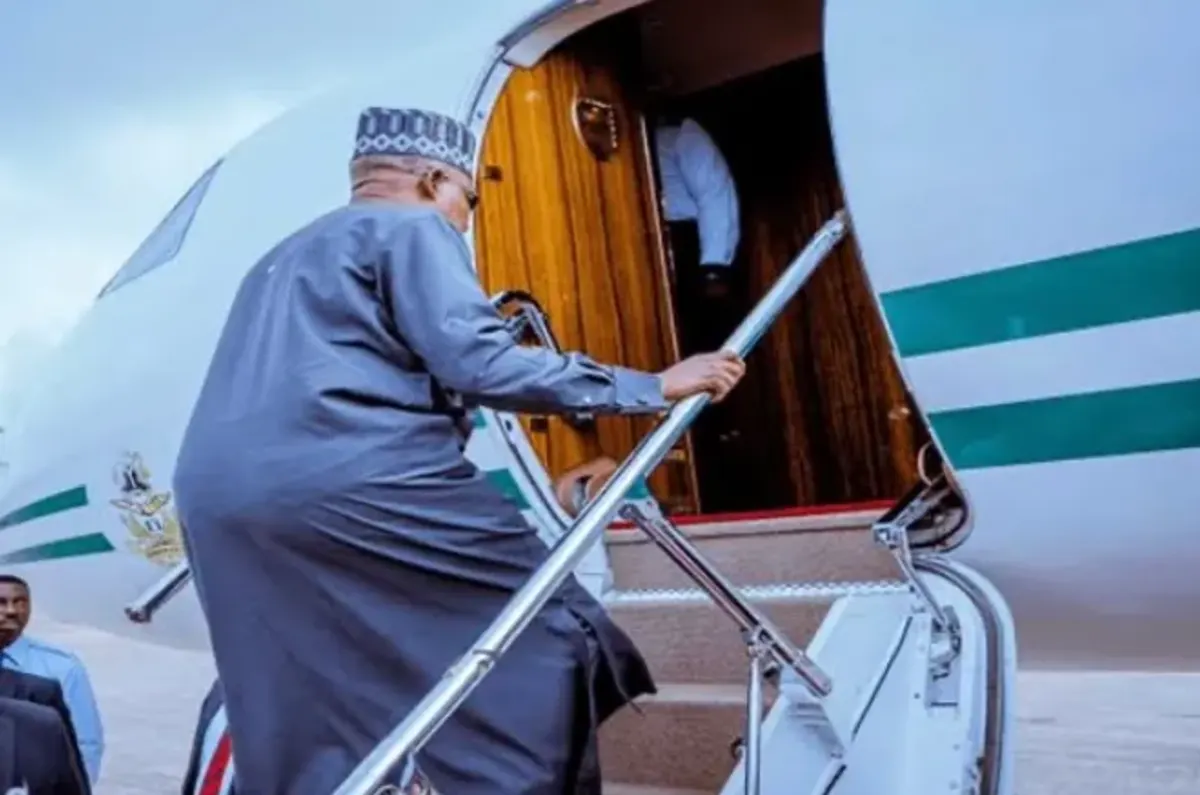
Vice President Kashim Shettima left Abuja on Sunday to represent President Bola Tinubu at the 69th Ordinary Session of the ECOWAS Authority of Heads of State and Government in Freetown. The summit, held at the Julius Maada Bio International Conference Centre, marks a critical juncture for West Africa’s collective security and economic integration. Shettima’s delegation includes senior officials from the Ministry of Foreign Affairs and the National Security Adviser’s office. Their mandate extends beyond routine diplomacy. Nigeria is pushing for a binding regional security framework to counter the escalating threats of terrorism and unconstitutional changes of government.
The Freetown summit arrives at a time when ECOWAS faces its most severe credibility crisis in decades. Three member states—Mali, Burkina Faso, and Niger—have been suspended following military coups. The juntas in these countries have formed a parallel alliance, the Alliance of Sahel States, and threatened to withdraw from ECOWAS entirely. This fragmentation weakens the bloc’s leverage and emboldens insurgent groups operating across porous borders. Nigeria, as the largest financial contributor to ECOWAS, has a direct stake in reversing this trend. Shettima’s brief includes advocating for a revised security protocol that allows for rapid deployment of regional forces without the bureaucratic delays that have hampered past interventions.
Beyond security, the summit will address the stalled implementation of the ECOWAS Single Currency, the Eco. The project, initially slated for 2020, has been delayed by macroeconomic disparities among member states. Nigeria’s inflation rate, currently at 33.95%, contrasts sharply with Côte d’Ivoire’s 3.8%. Such gaps make monetary union politically contentious. Shettima is expected to propose a phased approach, starting with a digital payment system to facilitate cross-border trade. This aligns with Tinubu’s domestic agenda of reducing transaction costs for small businesses. The proposal, however, faces resistance from Francophone countries that benefit from the CFA franc’s peg to the euro.
A less discussed but equally critical agenda item is the reform of ECOWAS’s conflict mediation mechanisms. The bloc’s recent interventions in Guinea and Mali have been criticized for prioritizing sanctions over dialogue. Nigeria’s delegation will push for a hybrid model that combines targeted sanctions with structured negotiations. This approach reflects lessons from Nigeria’s own experience with insurgencies in the Northeast, where military action alone failed to yield sustainable peace. Shettima’s team includes Dr. Fatima Akilu, a psychologist and former director of the Neem Foundation, who has worked on deradicalization programs. Her presence signals Nigeria’s intent to integrate soft-power strategies into ECOWAS’s security architecture.
The summit’s economic agenda also intersects with Nigeria’s domestic challenges. The removal of fuel subsidies in May 2023 has triggered inflationary pressures, exacerbating food insecurity. ECOWAS’s proposed regional food security reserve, which aims to stabilize prices during shortages, could provide a buffer. However, Nigeria’s ability to contribute to the reserve is constrained by its own food production deficits. Shettima’s delegation will seek to renegotiate the reserve’s funding formula to reflect Nigeria’s economic weight while securing concessions for its agricultural sector. This includes expedited approval for Nigeria’s request to export staple crops like rice and maize to neighboring countries without tariffs.
One overlooked dimension of the summit is its potential impact on Nigeria’s internal political dynamics. Tinubu’s decision to send Shettima, rather than attend himself, is a calculated move. The president faces mounting pressure over economic hardship and insecurity at home. By delegating the ECOWAS engagement, Tinubu avoids the optics of being absent during a national crisis while still projecting leadership on the regional stage. Shettima, a former governor of Borno State, brings firsthand experience of the security challenges plaguing the Sahel. His participation allows Nigeria to frame the summit’s outcomes as a direct extension of its domestic policy priorities, particularly the fight against Boko Haram and banditry.
The Freetown summit also serves as a test for ECOWAS’s relevance in an era of shifting global alliances. Russia and China have increased their engagement with West African states, offering military cooperation and infrastructure investments without the conditionalities attached to Western aid. Nigeria’s push for a stronger regional security framework is partly a response to this geopolitical competition. Shettima’s delegation will seek to rally support for a resolution condemning external interference in West Africa’s internal affairs. This aligns with Nigeria’s long-standing policy of non-alignment but risks alienating Western partners who view ECOWAS as a bulwark against Russian influence in the region.
As the summit concludes, Nigeria’s delegation will face the challenge of translating resolutions into action. Past ECOWAS summits have been criticized for producing ambitious declarations with little follow-through. This time, Nigeria is pushing for a monitoring mechanism to track implementation. The proposed mechanism would include quarterly progress reports and a dedicated fund to finance regional security operations. Shettima’s team will also advocate for a review of ECOWAS’s decision-making process, which currently requires unanimity for major resolutions. Nigeria’s goal is to shift to a majority-voting system, reducing the veto power of smaller states that have blocked key initiatives in the past. If successful, this could mark a turning point in ECOWAS’s ability to respond swiftly to crises.