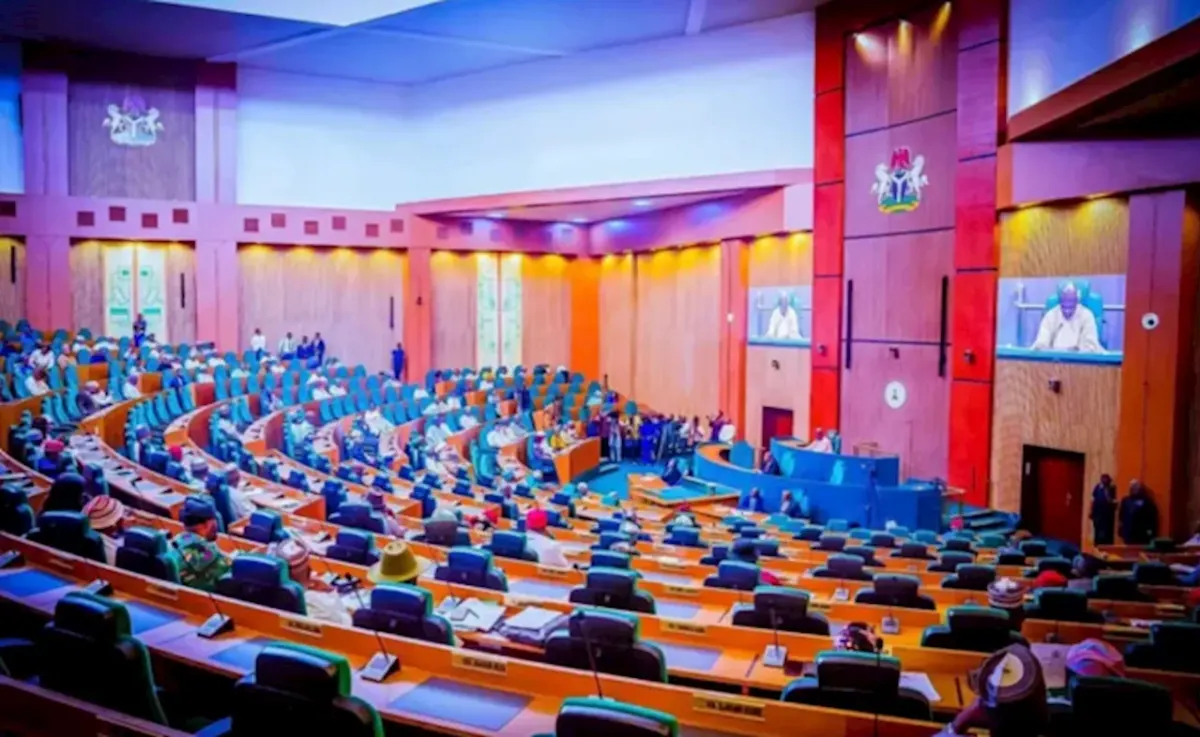

The Nigerian Senate has thrown its full weight behind the Constitution of the Federal Republic of Nigeria (Alteration) (State Police) Bill 2026. The bill cleared both chambers of the National Assembly this month. It now heads to the 36 state legislatures for ratification. If approved by at least 24 states, it will land on President Bola Tinubu’s desk for assent.
The Senate Leader, Opeyemi Bamidele, framed the bill as a direct response to Nigeria’s escalating security emergency. In a statement released on June 28, Bamidele dismissed accusations of political maneuvering. He called the bill “a child of necessity” born from years of constitutional review and nationwide stakeholder consultations. The Senate’s media directorate said public hearings across the six geopolitical zones in July 2025 recorded overwhelming support for state-controlled police forces. Nearly all participants cited the failure of the current federal policing model to contain local threats.
The bill proposes a dual policing structure. The Federal Police Service will retain jurisdiction over national security, terrorism, cybercrime, and interstate offences. State Police Services will handle local law enforcement and public safety within their borders. Governors will appoint State Commissioners of Police, but these appointments require confirmation by the respective State Houses of Assembly. Removal of a commissioner will need a recommendation from the National Police Council and a two-thirds majority vote in the state legislature. Each state must also establish a State Police Service Commission to oversee recruitment, promotions, and disciplinary actions.
The Senate claims the bill includes robust safeguards against political interference. No State Police Service can commence operations until the National Assembly certifies it meets nationally approved operational standards. Bamidele revealed that 84 out of 109 senators voted in favor during clause-by-clause consideration, representing 77.06 percent approval. He noted that opposition lawmakers from the PDP, ADC, NDC, and Labour Party joined the ruling APC in supporting the bill, framing it as a non-partisan national imperative.
Critics argue the bill could deepen regional power imbalances. Nigeria’s federal structure already grapples with uneven resource distribution and governance capacity across states. The proposed state police model risks creating elite-controlled security apparatuses in wealthier states while poorer states struggle to fund and equip their forces. The National Police Council’s oversight role may become a bureaucratic bottleneck, delaying critical appointments and operational certifications. These structural tensions could undermine the bill’s stated goal of decentralizing security responses.
The timing of the bill’s passage coincides with Nigeria’s worst security crisis in decades. Banditry, kidnapping, and insurgency have spread beyond the northeast, engulfing the northwest and central regions. The Nigeria Security Tracker, a project by the Council on Foreign Relations, recorded over 10,000 violent deaths in 2025 alone. The federal police’s centralized command structure has proven too slow to respond to localized threats. State governors, who currently lack direct control over security forces, have repeatedly called for decentralization to enable faster, context-specific interventions.
The bill’s fate now rests with the state assemblies. Analysts predict a contentious ratification process. Governors from oil-rich states like Rivers and Akwa Ibom may push for expanded control over their police forces, including revenue-sharing mechanisms. Northern states, where insurgency and banditry are rampant, may demand federal funding guarantees to avoid creating under-resourced security outfits. The National Assembly’s certification process could become a flashpoint if lawmakers perceive state-level preparations as inadequate or politically motivated.
The Senate’s defense of the bill highlights a broader institutional shift. The National Assembly has increasingly positioned itself as a proactive security reformer, not just a legislative rubber stamp. This role expansion reflects public frustration with the executive’s handling of insecurity. However, the Senate’s claim of non-partisanship rings hollow to some observers. The bill’s rapid passage, without significant amendments from opposition parties, suggests a coordinated push by the ruling APC to deliver a key campaign promise before the 2027 elections. The Senate’s criticism of opposition parties for failing to offer “credible alternatives” underscores the political undercurrents shaping the debate.