
The Peoples Democratic Party (PDP) has officially submitted its 2027 presidential and National Assembly candidates to the Independent National Electoral Commission (INEC), marking a critical step in Nigeria’s fractious political landscape. The submission, announced by the party’s National Chairman, Abdulrahman Mohammed, on July 12, 2026, underscores the deepening divide within the opposition party and the broader institutional tensions shaping Nigeria’s electoral future.
The PDP’s move comes amid a bitter internal schism, with the faction led by Federal Capital Territory Minister Nyesom Wike asserting control over the party’s nomination process. Mohammed confirmed that 367 candidate nomination forms had been uploaded to INEC’s portal, with an additional 42 pending for governorship and state assembly slots. The submission follows INEC’s recent extension of the nomination deadline, a decision influenced by appeals from multiple political parties struggling to reconcile internal disputes.
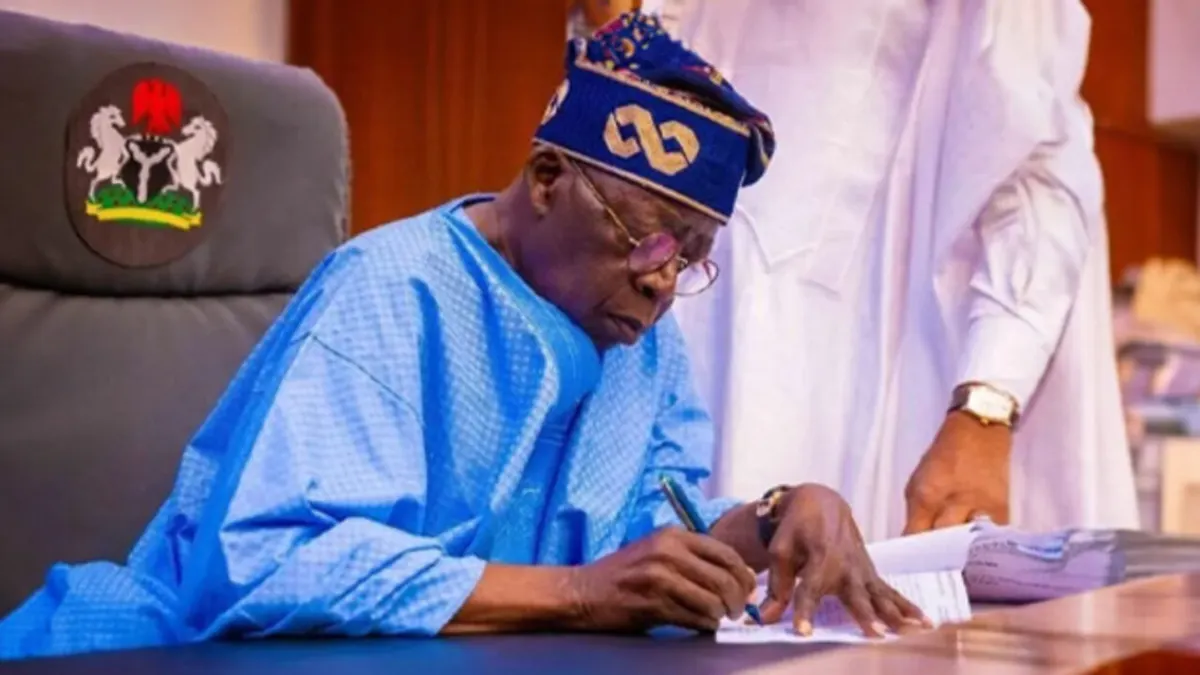
The ruling All Progressives Congress (APC) had earlier announced the completion of its own candidate uploads, including President Bola Tinubu and Vice-President Kashim Shettima. This parallel submission by Nigeria’s two dominant parties sets the stage for a fiercely contested 2027 election, but the PDP’s actions reveal a party still grappling with leadership crises. The Wike-led faction’s control over the nomination process has sidelined rival groups, including those loyal to former party leaders, raising questions about the PDP’s ability to present a unified front in the upcoming polls.
The timing of the PDP’s submission is particularly significant. It follows a series of high-profile defections and legal battles that have weakened the party’s cohesion. The APC, meanwhile, has sought to consolidate its base, with Tinubu’s administration pushing forward on economic reforms that have polarized public opinion. The PDP’s decision to proceed with nominations despite its internal fractures suggests a strategic gamble: that its brand, even in a weakened state, remains a viable alternative to the APC’s dominance.
Beyond the immediate political maneuvering, the PDP’s submission exposes deeper structural flaws in Nigeria’s electoral system. The reliance on INEC’s digital nomination portal, while intended to streamline the process, has instead highlighted the vulnerabilities of a system still plagued by technical glitches and allegations of manipulation. The extension of the nomination deadline, though justified by logistical challenges, has also fueled suspicions of favoritism, particularly among smaller parties that lack the resources to navigate last-minute adjustments.
The PDP’s internal divisions are not merely a party affair but a reflection of Nigeria’s broader governance crisis. The party’s inability to reconcile its competing factions mirrors the country’s struggle to forge a national consensus on critical issues, from economic policy to security. The editorial call for a “pan-Nigerian consensus” to drive development, as articulated in recent opinion pieces, remains elusive as political elites prioritize short-term gains over institutional stability. The PDP’s submission, therefore, is less a triumph of party unity and more a symptom of Nigeria’s fragmented political culture.
Another overlooked dimension of this development is the economic undercurrent shaping Nigeria’s political trajectory. The PDP’s submission coincides with a period of economic turbulence, marked by inflation, currency devaluation, and rising unemployment. The party’s ability to capitalize on these challenges will depend not only on its internal cohesion but also on its capacity to articulate a credible alternative to the APC’s policies. Yet, the PDP’s current leadership has yet to present a coherent economic vision, leaving voters with little clarity on how it intends to address the nation’s pressing financial woes.
The submission also raises questions about the role of INEC in mediating political conflicts. The electoral body’s decision to extend the nomination deadline, while pragmatic, has inadvertently deepened the mistrust between political actors and the institutions meant to oversee fair play. Smaller parties, in particular, have criticized the extension as a concession to the major parties, further entrenching the perception that Nigeria’s electoral system is skewed in favor of established political forces. This dynamic underscores the urgent need for electoral reforms that prioritize transparency and inclusivity.
The PDP’s actions serve as a microcosm of Nigeria’s broader political dysfunction. The party’s submission of candidates, while procedurally significant, does little to address the underlying issues of leadership accountability, policy coherence, or national unity. As Nigeria hurtles toward the 2027 elections, the PDP’s internal battles and the APC’s consolidation of power highlight a political landscape where institutional trust is eroding and the promise of democratic renewal remains unfulfilled. The real test for Nigeria’s democracy will not be the submission of nomination forms but the ability of its political class to rise above factionalism and deliver governance that serves the collective interest.