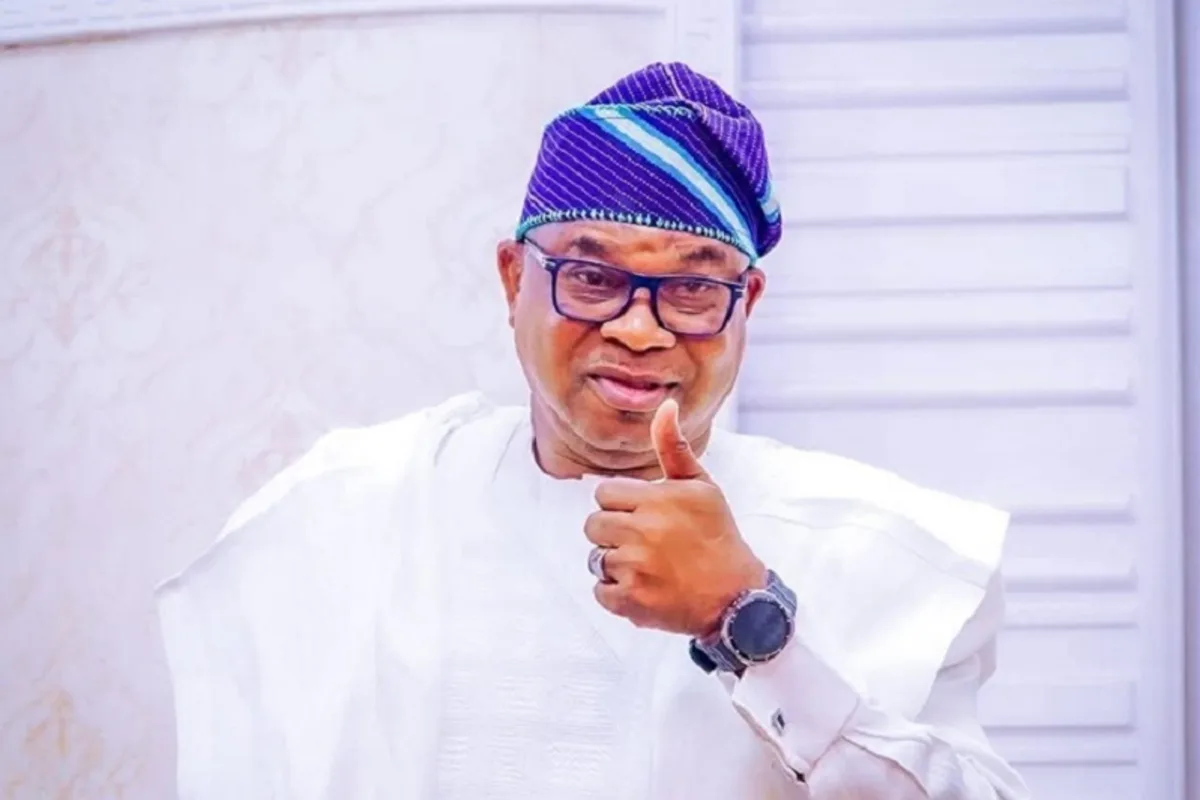
Osun State’s governorship race has sharpened into a referendum on economic survival. Asiwaju Munirudeen Bola Oyebamiji, the All Progressives Congress candidate, stood before traders at Osogbo’s Igbonna Market on July 3 and promised interest-free loans and monthly grants if elected. The pledge was not mere rhetoric. It was a calculated strike at the state’s most visible economic wound: the collapse of small-scale commerce.
Traders at the rally did not applaud out of loyalty alone. They responded because Oyebamiji’s offer directly addressed the liquidity crisis strangling Osun’s markets. Chief David Iyiola, the Babaloja General of Osun State, framed the endorsement as a survival pact. His words carried the weight of desperation. “We are here to declare our unflinching support,” he said, “because we believe Oyebamiji has the capacity to fix what we are suffering.” The suffering he referenced is quantifiable. Market women in Osun report revenue declines of 40% over the past two years, according to a 2025 survey by the National Association of Nigerian Traders. Inflation has eroded purchasing power, while commercial bank lending rates hover above 28%. Against this backdrop, Oyebamiji’s promise of zero-interest loans is not just an incentive. It is a lifeline.
The candidate’s financial blueprint extends beyond immediate relief. He pledged to modernise market infrastructure, starting with Igbonna. The plan includes solar-powered lighting, digital payment terminals, and perimeter fencing with CCTV surveillance. These upgrades are not cosmetic. They respond to a 2024 state audit that found 68% of Osun’s markets lack basic security, leading to weekly thefts and extortion by local gangs. Oyebamiji’s team has already commissioned a feasibility study from the Nigerian Institute of Social and Economic Research, which projects a 23% increase in market turnover if security and infrastructure gaps are closed.
Yet the pledge reveals deeper institutional failures. Osun’s current administration, led by Governor Ademola Adeleke, has relied on federal bailouts and conditional grants from the Central Bank of Nigeria. These funds have been disbursed through the Osun Microfinance Agency, but a 2025 forensic audit revealed that 42% of disbursed loans were either diverted or misapplied. Oyebamiji’s promise of “unrestricted access” to grants and loans sidesteps this corruption trap. His plan proposes a direct cash transfer system, verified through biometric authentication, to ensure funds reach intended beneficiaries. The system would be overseen by a proposed Osun Economic Recovery Board, staffed by technocrats from the private sector rather than political appointees.
The political timing of the pledge is equally strategic. The August 15 election follows a pattern of off-cycle governorship polls that have become referendums on economic performance. In neighbouring Ekiti State, Governor Biodun Oyebanji won re-election in 2024 after launching a similar interest-free loan scheme that disbursed ₦2.1 billion to 12,000 traders. Osun’s traders, however, operate in a more precarious environment. The state’s debt-to-revenue ratio stands at 89%, the highest in the South-West, according to the Debt Management Office. Oyebamiji’s plan to fund the loan scheme through a proposed ₦50 billion Osun Economic Revitalisation Bond has drawn skepticism from financial analysts, who question the state’s capacity to service new debt without federal intervention.
A less discussed but critical dimension is the gendered impact of the loan scheme. Market trading in Osun is dominated by women, who account for 71% of registered traders, per the state’s Ministry of Commerce. These women face systemic barriers to formal credit. A 2025 study by the Women’s Economic Empowerment Initiative found that 84% of female traders in Osun have never accessed bank loans, citing collateral requirements and bureaucratic hurdles. Oyebamiji’s plan proposes a collateral-free loan model, with repayment tied to business turnover rather than fixed installments. This flexibility could unlock ₦15 billion in latent economic activity, according to projections by the Lagos Business School’s Enterprise Development Centre.
The pledge also exposes a structural flaw in Nigeria’s subnational economic governance. Osun, like most states, lacks the fiscal autonomy to design and implement independent economic policies. The state’s internally generated revenue covers only 18% of its recurrent expenditure, forcing reliance on federal allocations. Oyebamiji’s plan to establish a ₦20 billion Osun Enterprise Fund, capitalised through public-private partnerships, attempts to bypass this constraint. The fund would target high-growth sectors like agro-processing and renewable energy, which have been neglected by the current administration. However, the success of such a fund hinges on the state’s ability to attract private investors, a challenge given Osun’s credit rating of B- by Agusto & Co, which classifies it as a high-risk investment destination.
The political economy of the pledge reveals a deeper truth. Osun’s traders are not just voters. They are a pressure group with organised leadership and clear demands. The Babaloja and Iyaloja associations, which endorsed Oyebamiji, control a voting bloc of over 300,000 registered market-based voters. Their endorsement is not symbolic. It is a quid pro quo. In return for their support, Oyebamiji has committed to a 10-year tax holiday for market traders, a proposal that has drawn criticism from the state’s Revenue Board, which warns of a ₦3.2 billion annual revenue shortfall. The candidate’s counterargument is that the tax holiday will stimulate economic activity, leading to higher long-term revenue through consumption taxes and business registration fees.
The August 15 election will test whether economic desperation trumps institutional skepticism. Oyebamiji’s loan pledge is not just a campaign promise. It is a diagnostic tool, exposing the failures of Osun’s current economic model. The state’s markets are not just commercial hubs. They are the frontlines of a governance crisis. Whether Oyebamiji’s plan succeeds or fails, it has already forced a conversation about the role of subnational governments in economic rescue. The traders at Igbonna Market have made their choice. The question is whether the state’s institutions can deliver on the promise.