The Nigerian state was infiltrated by a con artist who operated undetected for over eight months as a high-ranking presidential appointee. Prince Adeniyi Adeyemi Mathew, posing as the Director-General of the non-existent "Presidential Foreign Intervention Promotion Council," secured meetings with foreign ambassadors, EFCC Chairman Ola Olukoyede, and opened a Central Bank of Nigeria account. His arrest in July 2026 revealed catastrophic failures in institutional vetting that stretch from the Presidency to the National Assembly and the apex bank.
The scandal emerged in October 2025 when the Nigerian Investment Promotion Commission filed a complaint. It accused an unknown entity of encroaching on its mandate. The Presidency issued a disclaimer on July 1, 2026, confirming Adeyemi’s arrest and criminal charges. By then, the damage was irreversible. Adeyemi had led a management team to the EFCC headquarters, discussed investment partnerships, and received ceremonial recognition from Olukoyede. He operated 34 commercial bank accounts, nine tied to fictitious entities, and misled the Office of the Accountant-General into opening a restricted CBN account.
The Central Bank of Nigeria breach is the most alarming. The Presidency insists no federal funds were transferred, but the fact that a lone operator could penetrate the apex bank’s protocols exposes a critical gap in financial security. This mirrors breaches in Kenya and India, where forged paperwork and ceremonial titles bypassed official scrutiny. The core failure is an over-reliance on physical documents over digital verification. Nigeria’s institutions remain vulnerable to fraudsters who exploit outdated protocols.
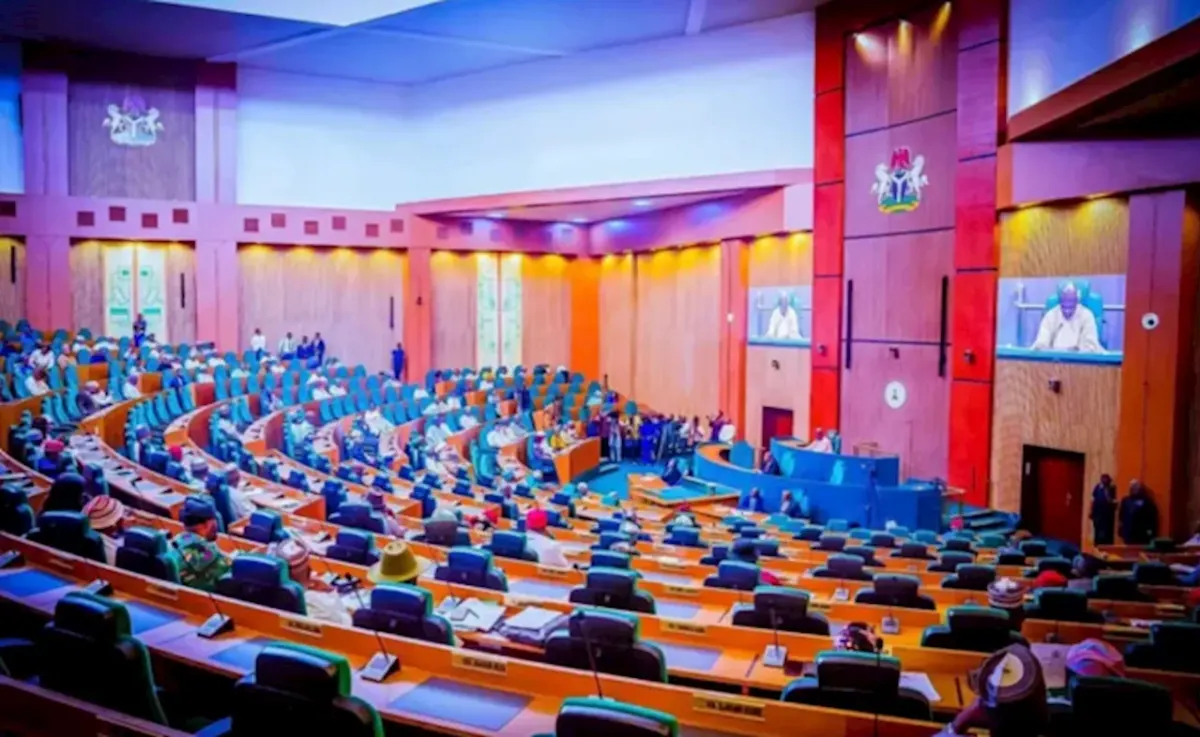
The National Assembly’s role in this scandal is damning. Reports confirm Adeyemi’s phantom council was allocated over N1.3 billion in the 2026 national budget. This budgetary inclusion suggests either complicity or gross negligence within legislative circles. The .gov.ng domain controversy deepens the absurdity. Nigeria’s gov.ng domain is reserved for verified government institutions, yet Adeyemi’s council operated under pfipc.gov.ng. Either the verification system was dormant, or an insider facilitated the fraud. Both possibilities indict the state’s institutional integrity and raise questions about the Assembly’s oversight mechanisms.
Adeyemi’s arrest followed a direct intervention by Chief of Staff Femi Gbajabiamila. He wrote to the Department of State Services and the Police, triggering a raid on Adeyemi’s office in the Federal Secretariat Complex. However, Gbajabiamila’s involvement has since come under scrutiny. Adeyemi has alleged that Gbajabiamila demanded N400 million through a proxy and insisted on a 48% share of a purported N27.4 billion take-off grant. These claims remain unverified but underscore the need for an independent probe. The Presidency’s swift exoneration of Gbajabiamila lacks credibility given the scale of the breach.
The scandal’s systemic implications extend beyond Adeyemi’s actions. It reveals a culture of impunity where ceremonial legitimacy trumps procedural rigor. The EFCC’s reception of Adeyemi, complete with media coverage, granted him an aura of authenticity that no digital verification could dismantle. This incident is not an isolated failure but a symptom of a broader governance crisis. Similar cases in India and China, where impostors infiltrated prime ministerial offices and state councils, underscore a global pattern of bureaucratic gullibility. The shared vulnerability lies in the over-reliance on ceremonial titles and physical paperwork.
The Nigerian public service’s response has been inadequate. Dr. Hakeem Baba-Ahmed, a retired permanent secretary, has called for an independent panel to probe the National Assembly, the CBN, and the Office of the Chief of Staff. His demand for a one-week deadline reflects the urgency. The current investigation, led by implicated institutions, is a conflict of interest. A truly independent probe must examine how Adeyemi navigated the budgetary process, secured office space, and bypassed CBN verification. Without digital verification reforms, Nigeria’s institutions will remain exposed to infiltration and reputational damage.
The phantom council scandal is a wake-up call for Nigeria’s governance architecture. It exposes the fragility of a system where physical letterheads and ceremonial titles override digital safeguards. The Presidency’s press statement, exonerating itself while shifting blame, is a disservice to accountability. The real culprits are systemic gaps: outdated verification protocols, legislative negligence, and a culture of impunity. Until these issues are addressed, Nigeria’s state institutions will remain vulnerable to fraud and erosion of public trust.
Reforms must include mandatory biometric verification for all presidential appointees. The CBN must overhaul its account-opening protocols to prevent future breaches. The National Assembly must strengthen its oversight of budgetary allocations to non-existent entities. Without these measures, the phantom council scandal will repeat. The Presidency must act decisively to restore public confidence. An independent panel, free from institutional conflicts, must unravel the full extent of the fraud and hold all complicit parties accountable.