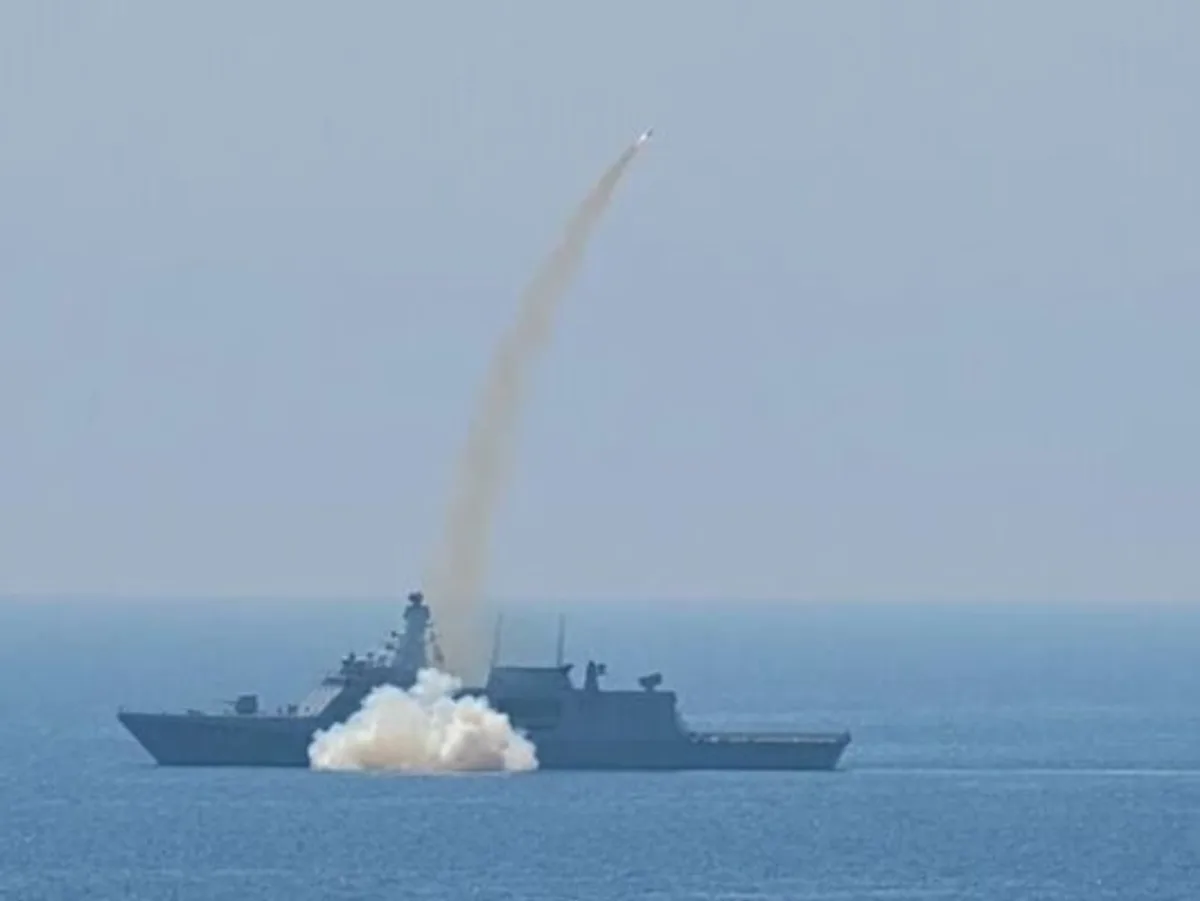
The United States launched a third consecutive day of military strikes against Iran on Tuesday, marking a dangerous escalation in the Middle East that has drawn sharp condemnation from global powers and triggered retaliatory attacks across the region. The strikes targeted key Iranian infrastructure, including the port city of Bushehr, home to Iran’s only civilian nuclear power plant, and the strategic Gulf island of Qeshm near the Strait of Hormuz. Iran responded with missile attacks on US allies, including Bahrain and Jordan, while Israel issued a stark warning of a "decisive blow" if Tehran launches further aggression.
The latest round of US strikes followed President Donald Trump’s decision to reimpose a naval blockade on Iranian ports, set to take effect at 2000 GMT. The blockade, announced alongside the scrapping of a controversial 20% shipping toll for vessels transiting the Strait of Hormuz, has heightened fears of a broader conflict disrupting global oil supplies. The Strait, a critical chokepoint for nearly a third of the world’s seaborne oil, has already seen attacks on commercial vessels, including a Norwegian tanker hit off Oman’s coast, killing one Indian sailor and injuring eight others. The UAE confirmed Iran’s involvement in the attacks, further straining diplomatic relations.
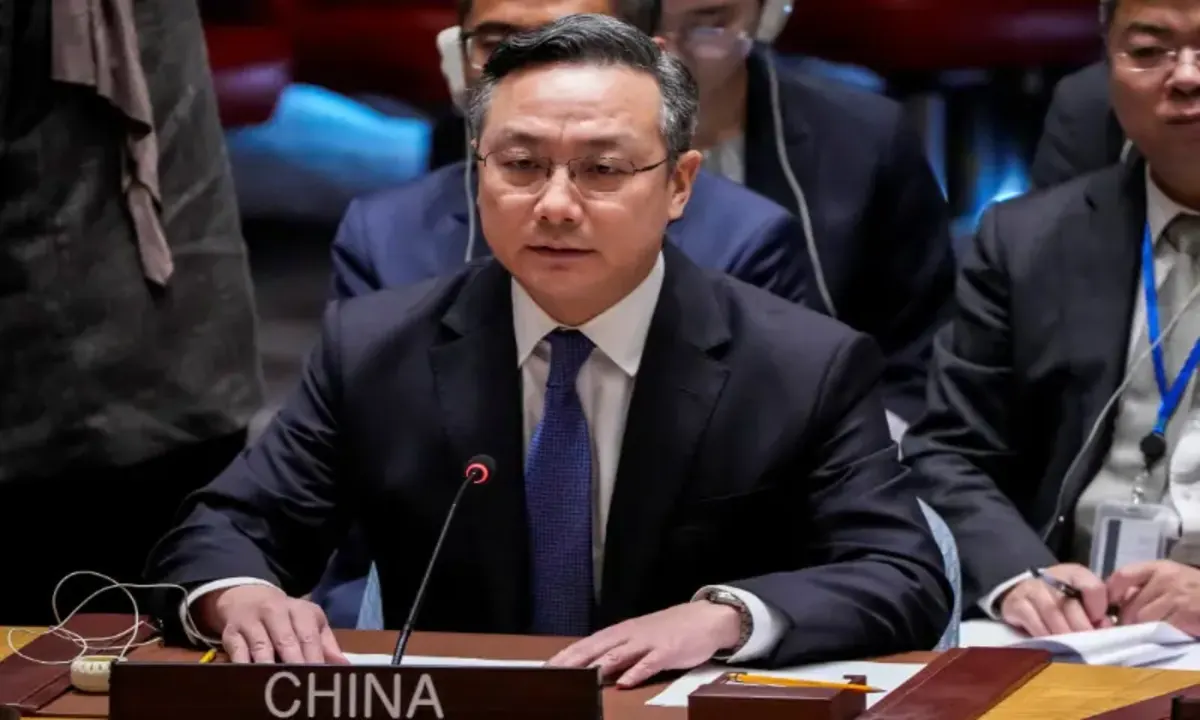
China’s envoy to the United Nations, Sun Lei, accused the US of pushing the Middle East to the "precipice of war" during a heated Security Council debate. Sun condemned Washington’s military actions as a violation of international law, citing the lack of UN Security Council authorization. "The US has irrefutable responsibility for the current situation in Yemen and the Red Sea," Sun said, referencing the ongoing Houthi rebel crisis. His remarks came after US Ambassador Mike Waltz accused China of violating the UN arms embargo on the Houthis, a claim Beijing dismissed as a deflection from Washington’s own role in fueling regional instability.
The geopolitical fallout extends beyond the US and Iran, with India summoning Iran’s senior diplomat in New Delhi to protest the attacks on commercial ships that killed an Indian national. Jordan and Bahrain reported intercepting Iranian missiles, while Israel’s Prime Minister Benjamin Netanyahu issued a direct warning to Tehran during a speech in Dimona, a town housing Israel’s undeclared nuclear arsenal. "Do not count on things remaining quiet if you attack us," Netanyahu declared. "This will be a different event, much more powerful." His threats underscored the risk of a wider regional war, with Israel’s military on high alert for potential Iranian retaliation.
Economic repercussions are already being felt, with global oil prices surging 4% following the latest strikes. Brent crude and West Texas Intermediate both climbed to $87 and $81 per barrel, respectively, as traders braced for potential disruptions to Middle Eastern oil exports. The attacks on Iranian refineries in Abadan and Mahshahr, two of the country’s largest, raised concerns about long-term supply constraints. Meanwhile, Iran’s parliament, dominated by hardliners, voted to terminate a memorandum of understanding with the US and called for new legislation to assert control over the Strait of Hormuz, a move that could further destabilize maritime security.
Behind the immediate military and economic tensions lies a deeper structural conflict over regional influence. The US strikes reflect Washington’s strategy to contain Iran’s expanding footprint in the Middle East, particularly its support for proxy groups like the Houthis in Yemen and Hezbollah in Lebanon. However, the attacks risk alienating key allies, including Gulf states that have sought to balance relations with both Washington and Tehran. Trump’s abrupt reversal on the Hormuz shipping toll—replacing it with trade deals—signals a pragmatic shift, but the damage to US credibility in the region may already be irreversible. China’s public rebuke of the US at the UN highlights Beijing’s growing role as an alternative power broker, positioning itself as a mediator even as it avoids direct confrontation.
The humanitarian toll of the conflict is mounting, with civilian casualties reported in Iranian strikes on Gulf states and US bombardments of Iranian territory. The attacks on Bushehr’s nuclear plant, though not confirmed to have caused radiation leaks, raised alarms about the potential for a catastrophic environmental disaster. Iran’s state media reported explosions near Bandar Abbas, a major port city, while Kuwait City residents described hearing blasts as the country’s military intercepted incoming projectiles. The escalation has also disrupted shipping routes, with the UK Maritime Trade Operations agency reporting a missile strike on a tanker near Oman, the second such incident in 48 hours.
Analysts warn that the current cycle of strikes and counterstrikes could spiral into a full-scale war if diplomatic off-ramps are not pursued. The US’s reliance on military force, rather than multilateral diplomacy, risks isolating it further on the global stage. Iran’s parliament, emboldened by the conflict, is pushing for a more aggressive stance, including potential closures of the Strait of Hormuz—a move that would trigger a direct confrontation with the US Navy. Meanwhile, Israel’s threats of a "decisive blow" suggest a willingness to escalate beyond conventional warfare, raising the specter of nuclear brinkmanship in a region already on edge.