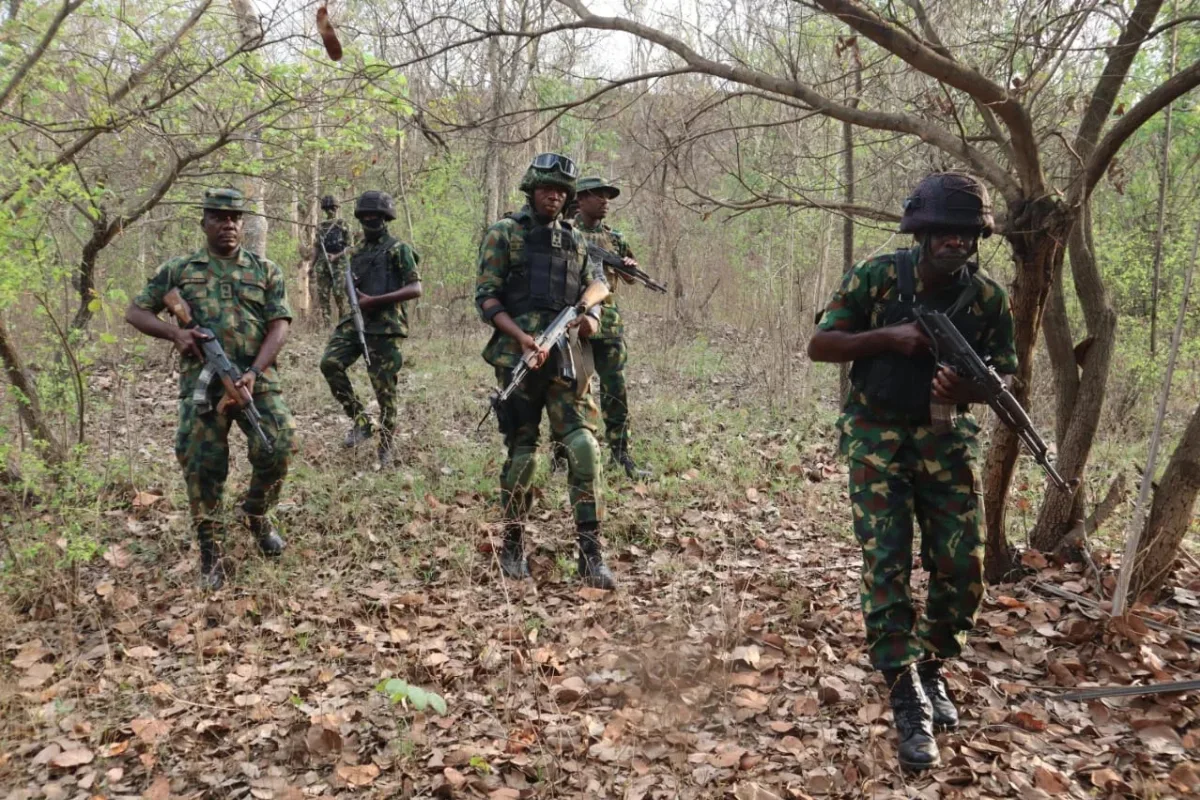

Nigerian troops have disrupted a major revenue operation by the Islamic State West Africa Province (ISWAP) in Yobe State. The military killed one terrorist and recovered weapons, ammunition, and logistics materials during a precision raid on July 19. The operation targeted insurgents attempting to collect illegal levies from local communities.
The raid began after intelligence confirmed that two Volkswagen Golf vehicles and several motorcycles were transporting ISWAP fighters to the Paya Kafiya axis. Troops from Forward Operating Base Bukarti, backed by the 27 Task Force Brigade, intercepted the convoy. The engagement was decisive. Soldiers immobilized one Golf vehicle and neutralized its driver. Four other insurgents fled into the bush with gunshot wounds, abandoning their weapons and supplies.
A follow-up sweep on July 20 along the Paya Kafiya-Garin Gada corridor uncovered critical evidence of ISWAP’s extortion infrastructure. Troops recovered 25 rounds of belted PKT ammunition, a loaded AK-47 magazine, and 15 empty PKT casings. They also seized assorted drugs—paracetamol and nicotine products—and mechanical tools used for vehicle maintenance. Military sources stated the tools were likely repurposed to sustain the group’s mobile extortion units, which rely on fast vehicles to evade detection.
The recovered items reveal how ISWAP funds its operations. The Volkswagen Golf cars, common civilian vehicles, allowed insurgents to blend into local traffic while conducting extortion missions. The drugs suggest a dual-purpose strategy: sustaining fighters’ health and generating income through black-market sales. The mechanical tools indicate the group’s focus on mobility, enabling quick escapes after collecting illegal levies.
The military’s statement emphasized the operation’s impact on ISWAP’s financial networks. By disrupting these revenue streams, troops are choking the group’s operational capacity. This raid follows a pattern of recent successes. In June, Operation HADIN KAI neutralized 12 ISWAP commanders and dismantled three logistics hubs in Borno and Yobe. The military now prioritizes targeting supply chains and financial networks over large-scale confrontations.
The Yobe raid also highlights the role of civilian intelligence. The initial tip-off about the extortion mission came from local residents. This underscores the importance of community trust in counter-insurgency operations. However, persistent reports of human rights abuses by security forces continue to undermine these efforts. The military has been working to improve relations through outreach programs, but skepticism remains among civilians.
The escape of four wounded fighters raises concerns about potential retaliatory attacks. ISWAP has previously targeted community leaders who cooperate with the military. Security sources warn that the group may respond with assassinations or renewed extortion demands. The military must now sustain pressure to prevent a resurgence of violence in the region.
The operation’s success hinges on the military’s ability to adapt to ISWAP’s evolving tactics. The group’s use of civilian vehicles and diversified revenue streams requires a nuanced response. Troops must combine kinetic operations with economic countermeasures to starve insurgents of funds and mobility. The coming months will test whether these tactical successes can translate into lasting security gains for Yobe and the broader North-East.
The recovered logistics items—ammunition, drugs, and tools—paint a clear picture of ISWAP’s operational priorities. The group relies on extortion to fund its activities, but it also invests in mobility and fighter sustainment. The military’s ability to disrupt these networks will determine the long-term stability of the region. The Yobe raid is a step forward, but the fight against insurgency remains far from over.