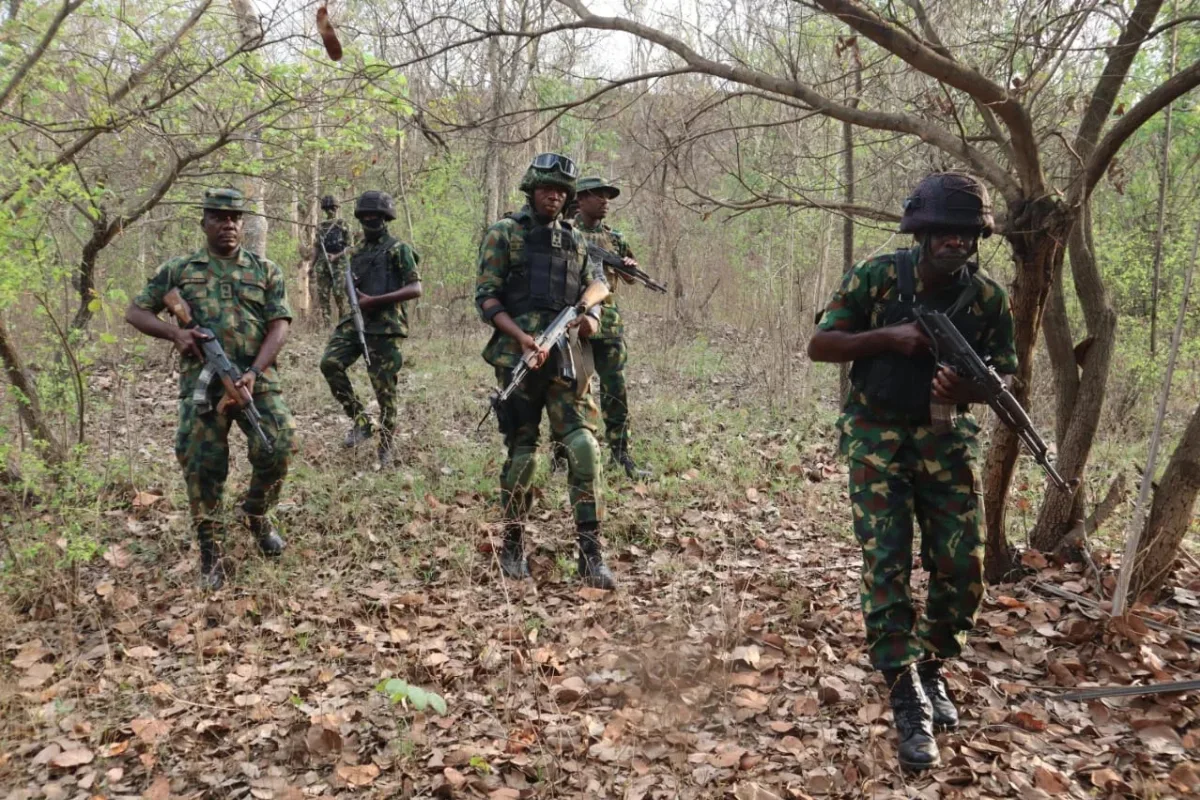

Troops of Operation Hadin Kai rescued ten National Examinations Council candidates and teachers on Monday. The victims were abducted during an ISWAP attack on Technical Secondary School in Lassa, Askira/Uba Local Government Area of Borno State. The military confirmed the raid occurred while students were writing their NECO examinations at 9:00 a.m. One victim remains missing.
The Theatre Command deployed ground troops supported by strike aircraft and Intelligence Surveillance and Reconnaissance platforms. Aerial surveillance guided soldiers to the Daggu area where a gun battle erupted. Ten victims were rescued unharmed. Seven motorcycles used by the insurgents were captured. One soldier and a Civilian Joint Task Force member died in the firefight. The military described the fallen personnel as heroes whose sacrifice reflects daily risks faced by security forces.
The attack reveals a tactical shift by ISWAP. The group has increasingly targeted soft civilian locations as sustained military pressure weakens its operational capacity. Schools, markets and farming communities have become prime targets. This raid marks the third school abduction in Borno this year. Previous incidents in Chibok and Dikwa resulted in prolonged captivity for dozens of students. The pattern suggests ISWAP is exploiting educational institutions as leverage for ransom and propaganda.
Security analysts warn the attack exposes critical gaps in school protection. Despite reinforced patrols, insurgents breached perimeter security undetected. The school lacked armed guards or perimeter fencing. Local education officials confirmed only two unarmed watchmen were present during the raid. The Borno State Government had allocated funds for school fortification in 2023. Implementation delays have left institutions vulnerable. The state’s education commissioner declined comment on the funding status.
The rescue operation highlights the military’s evolving counterterrorism strategy. Operation Hadin Kai has integrated drone surveillance with rapid response units. This combination reduced response time to under two hours. The military’s use of real-time intelligence sharing with local vigilante groups has also improved interception rates. However, the single remaining missing victim underscores persistent challenges in tracking insurgents through dense bush terrain.
The attack has triggered fresh debate over Nigeria’s counterinsurgency funding. The 2024 defence budget allocated ₦14.2 trillion to security operations. Critics argue funds are mismanaged. A recent audit revealed ₦4.5 billion earmarked for Borno security infrastructure remains unspent. The Senate Committee on Defence has summoned the Chief of Army Staff to explain the delays. The military attributes funding gaps to bureaucratic bottlenecks in procurement processes.
Local communities have expressed frustration over inconsistent security presence. Residents of Lassa reported seeing military patrols only twice in the week preceding the attack. A community leader stated, "We see soldiers during the day but they disappear by evening. The terrorists move freely at night." The military has denied the claim. Operation Hadin Kai’s spokesperson stated patrols operate 24/7 but declined to provide patrol logs for verification.
The incident has reignited calls for state police. Borno State Governor Babagana Zulum has advocated for regional security forces with specialised counterterrorism training. The proposal faces opposition from federal lawmakers who argue state police could be weaponised for political purposes. The House of Representatives has postponed debate on the State Police Bill indefinitely. Meanwhile, the military has intensified night patrols in Askira/Uba Local Government Area.