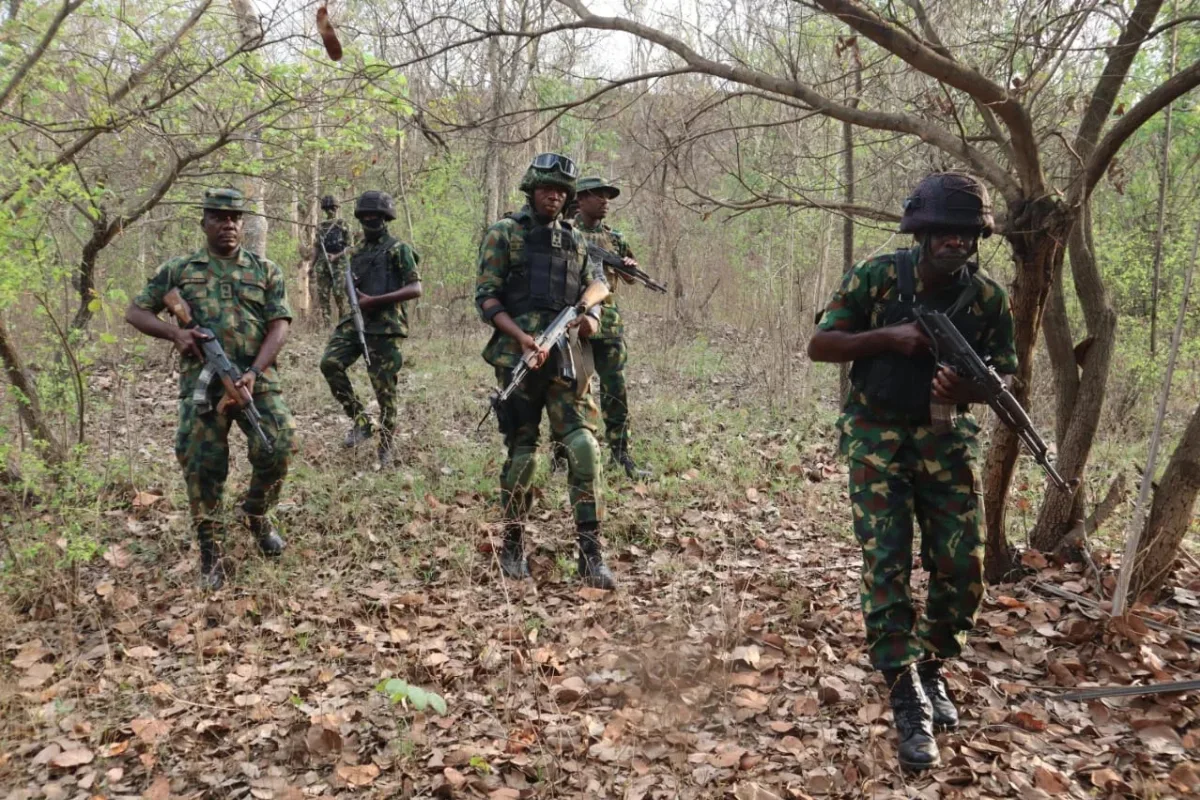

Nigerian troops killed two suspected Lakurawa terrorists in Kebbi State on June 27. The operation foiled a planned attack on Sabarumawa community. Soldiers recovered two AK-47 rifles, 143 rounds of ammunition, nine magazines, and a motorcycle. The military described the incident as a significant blow to the terrorist network in the North-West.
The ambush was executed by troops of the Chief of Army Staff Intervention Battalion 7 under Sector 2 of Operation Fansan Yamma. Intelligence reports indicated the terrorists were mobilising to assault Sabarumawa. Troops laid a tactical ambush along their suspected route. When the terrorists approached, soldiers engaged them with overwhelming firepower. Two terrorists were neutralised. The remaining members fled into the surrounding forest.
The recovered weapons and ammunition reveal the scale of the threat. Two AK-47 rifles, nine magazines, and 143 rounds of ammunition were seized. A motorcycle believed to have been used by the terrorists was also recovered. The military stated the operation was part of ongoing efforts to dismantle criminal groups threatening communities in the region. Operation Fansan Yamma reaffirmed its commitment to protecting lives and property.
The Lakurawa group has operated in the North-West for years. Their activities include kidnapping, armed robbery, and attacks on rural communities. The recent ambush suggests the group retains operational capacity despite military pressure. The recovery of a motorcycle indicates their mobility remains intact. This raises questions about the effectiveness of existing counter-terrorism strategies in curbing their movement.
The military relies heavily on intelligence from local communities. Lieutenant Colonel Aliyu Danja urged the public to provide timely and credible information. However, fear of reprisals often silences potential informants. In Kebbi, many residents hesitate to cooperate with security forces due to threats from terrorist groups. This creates a critical gap in the intelligence chain. Without reliable local support, military operations risk being reactive rather than preemptive.
The ambush also highlights the broader security challenges in the North-West. The region has seen a surge in banditry and terrorism over the past decade. Military operations have disrupted some groups but failed to eliminate the root causes. Poverty, unemployment, and weak governance continue to fuel recruitment into criminal networks. The Lakurawa group exploits these vulnerabilities to sustain its operations.
The military’s success in Kebbi is a tactical victory but not a strategic solution. The recovered weapons and ammunition suggest the group has access to illicit arms supplies. The North-West’s porous borders facilitate the flow of weapons from neighbouring countries. Until these supply chains are dismantled, terrorist groups will continue to rearm. The military must collaborate with regional partners to address this transnational threat.
The incident underscores the need for a multi-dimensional approach to security. Military force alone cannot defeat terrorism. The government must invest in economic development, education, and community engagement. In Kebbi, local leaders have called for more schools and job opportunities to deter youth from joining criminal groups. Without these interventions, the cycle of violence will persist.