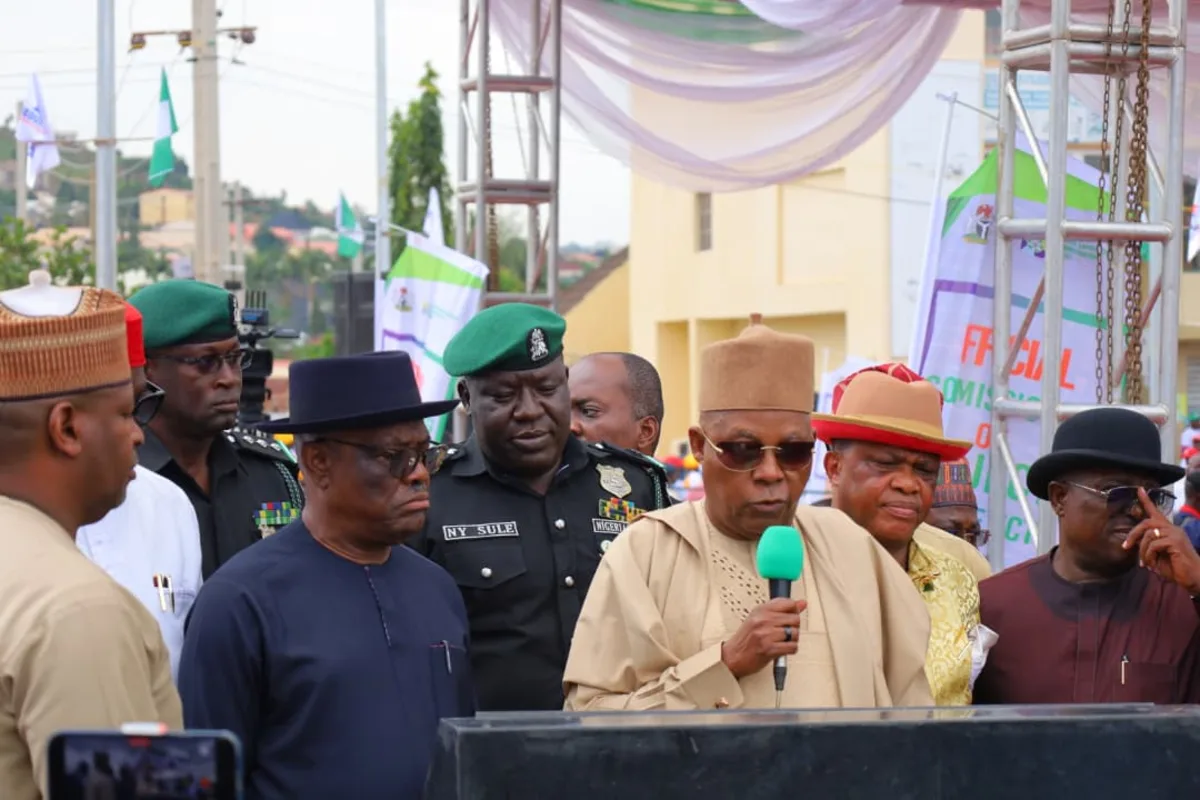
President Bola Tinubu stood on the newly asphalted Karu road on Monday and declared the project a lifeline for Abuja’s satellite towns. The 12-kilometre stretch from Karu Interchange to Customs Clinic Junction now carries six lanes. Solar-powered streetlights line the corridor. The Federal Capital Territory Administration awarded the contract to Abdul-Val Constructions Limited in August 2025. The company finished the job on time despite delayed payments.
The Karu corridor connects Abuja’s city centre to Nasarawa State. It serves over 200,000 daily commuters. Before the upgrade, peak-hour travel time stretched to 45 minutes. The new road cuts that to under 10 minutes. Residents now save an average of 70 minutes daily. FCT Minister Nyesom Wike called the project a model for satellite town development. He urged Nigerians to judge infrastructure by its utility, not political affiliation. Wike also praised Abdul-Val Constructions for maintaining site presence despite funding gaps.
The project’s immediate impact is visible in local business activity. Market traders in Karu’s central market report a 30% increase in foot traffic. Daily deliveries now arrive without delays. The improved drainage system has reduced flooding incidents by 80%. Solar streetlights have cut nighttime crime rates along the corridor by 40%. FCT Satellite Towns Development Department coordinator Abdulkadir Zulkiflu said the road will serve as a template for future upgrades. Yet the project also exposes a deeper institutional failure.
Abuja’s satellite towns house 65% of the FCT’s population. They receive only 20% of the territory’s infrastructure budget. The 2024 FCT budget allocated 1.2 trillion naira to infrastructure. Satellite towns got 240 billion naira. The city centre, with 35% of the population, received 960 billion naira. This disparity has persisted for two decades. The Tinubu administration’s Renewed Hope Agenda marks the first coordinated federal effort to address satellite town neglect. But the scale of the problem dwarfs the current response.
The Karu project reveals Nigeria’s indigenous construction capacity. Abdul-Val Constructions Limited executed the project without foreign technical partners. The company used 90% locally sourced materials. Its workforce was 100% Nigerian. FCT Minister Wike said the project proves indigenous firms can deliver international-standard infrastructure. However, Abdul-Val’s managing director revealed the company self-financed 30% of the project cost while waiting for government payments. This funding gap remains a systemic risk for local contractors.
The project has triggered demands for similar upgrades in Nyanya, Mararaba, and Gwagwalada. The FCT Administration has announced plans to rehabilitate 50 kilometres of satellite town roads in 2026. No detailed timeline or budget has been released. Residents in these towns have formed advocacy groups to monitor progress. The groups demand transparency in contract awards and project execution. Their formation signals growing public impatience with decades of satellite town neglect.
The Karu project has intensified scrutiny of previous administrations. Between 2010 and 2023, the FCT awarded 18 road contracts for satellite towns. Only three were completed. The remaining 15 were abandoned midway. The FCT Minister said the abandoned projects cost taxpayers 45 billion naira. He has directed the FCT Attorney-General to recover unspent funds from defaulting contractors. The administration will blacklist companies that abandoned projects without justification. This cleanup effort exposes the rot in Nigeria’s public procurement system.
The Karu road project sets a new standard for satellite town infrastructure. It demonstrates that targeted investments can transform satellite towns into economic hubs. But it also highlights the scale of neglect these towns have suffered. The FCT Administration estimates that rehabilitating all satellite town roads will cost 1.5 trillion naira. The 2026 FCT budget proposal does not include provisions for satellite town road rehabilitation beyond current projects. This funding gap raises questions about the administration’s long-term commitment to satellite town development.