
President Bola Tinubu has declared an end to Nigeria’s culture of abandoned infrastructure projects. His administration completed the Arterial Road N5 in Abuja within 15 months. The road links Life Camp Junction to Ring Road III in Dape District. This marks a sharp break from past delays that stretched over a decade.
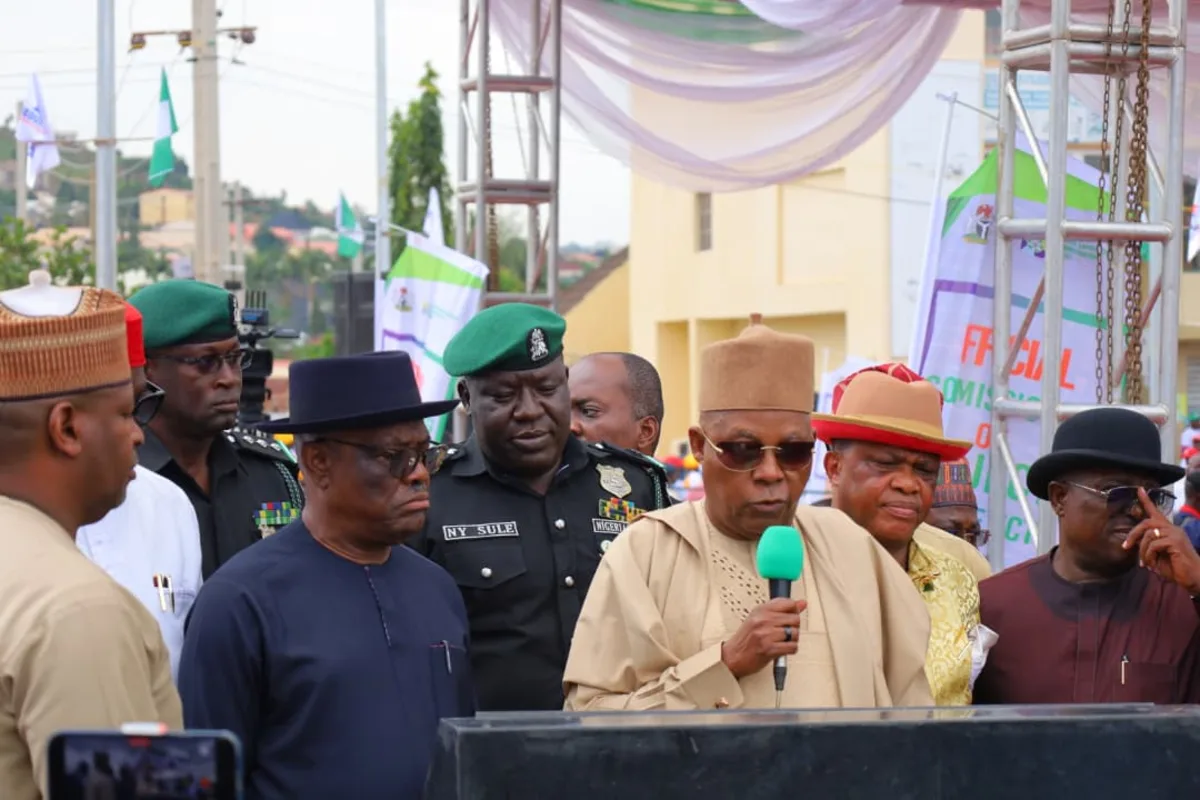
The project was awarded to Julius Berger in October 2024. Tinubu’s government funded and executed it without interruption. The President said this signals a new era of accountability in public works. He spoke at the commissioning ceremony on Wednesday. Vice President Kashim Shettima represented him. Tinubu stressed that infrastructure defines national seriousness. He said no capital city can thrive with blocked transport corridors.
The completed road will ease traffic congestion in key districts. It connects Dape, Karmo, Gwarinpa I, Kado, Idu, and Mbora communities. The road also improves access to the Idu Industrial District. Tinubu described it as an economic asset. He said it would reduce productivity losses caused by congestion. For years, Life Camp Junction was a major bottleneck. The new road delivers seamless connectivity as envisioned in the Abuja Master Plan.
Tinubu praised FCT Minister Nyesom Wike for driving the project. He said Wike demonstrated what happens when political will meets accountability. The President urged residents to protect public assets. He called for greater tax compliance to fund more projects. Wike described the development pace in Abuja as unprecedented. He said it reflects the administration’s Renewed Hope Agenda. The Minister of State for FCT, Dr Mariya Mahmud, also commended the President’s support for critical infrastructure.
The Federal Capital Development Administration (FCDA) said the road will significantly improve transportation. Executive Secretary Engr. Richard Yunana Dauda noted its impact on connecting satellite towns. The project cost was not disclosed. However, its completion within 15 months contrasts with past delays. Previous administrations left similar projects unfinished for over a decade. Tinubu’s administration has prioritized infrastructure to restore public confidence in governance.
This shift reveals deeper institutional gaps in Nigeria’s project execution. Past governments often cited budget cycles and funding delays as excuses. The Tinubu administration has streamlined approval processes. It has also enforced strict timelines. This approach reduces opportunities for corruption and mismanagement. The FCT’s rapid development under Wike suggests a model for other states. However, sustainability remains a challenge. Vandalism and poor maintenance have plagued past projects.
The administration’s focus on infrastructure aligns with Nigeria’s economic goals. Improved roads reduce logistics costs. They also encourage investment and job creation. Abuja’s transformation into a world-class capital city is central to Tinubu’s vision. He said the FCT must reflect Nigeria’s growing population and national identity. The President’s commitment to ending abandoned projects signals a broader governance reform. It aims to rebuild trust in public institutions.
Despite these gains, questions linger about long-term funding. The government has not outlined a sustainable revenue model for infrastructure maintenance. Residents’ tax compliance is critical. However, many remain skeptical due to past mismanagement. The administration must address these concerns to ensure lasting impact. The success of the Arterial Road N5 could set a precedent for future projects. It may also redefine Nigeria’s approach to urban development.