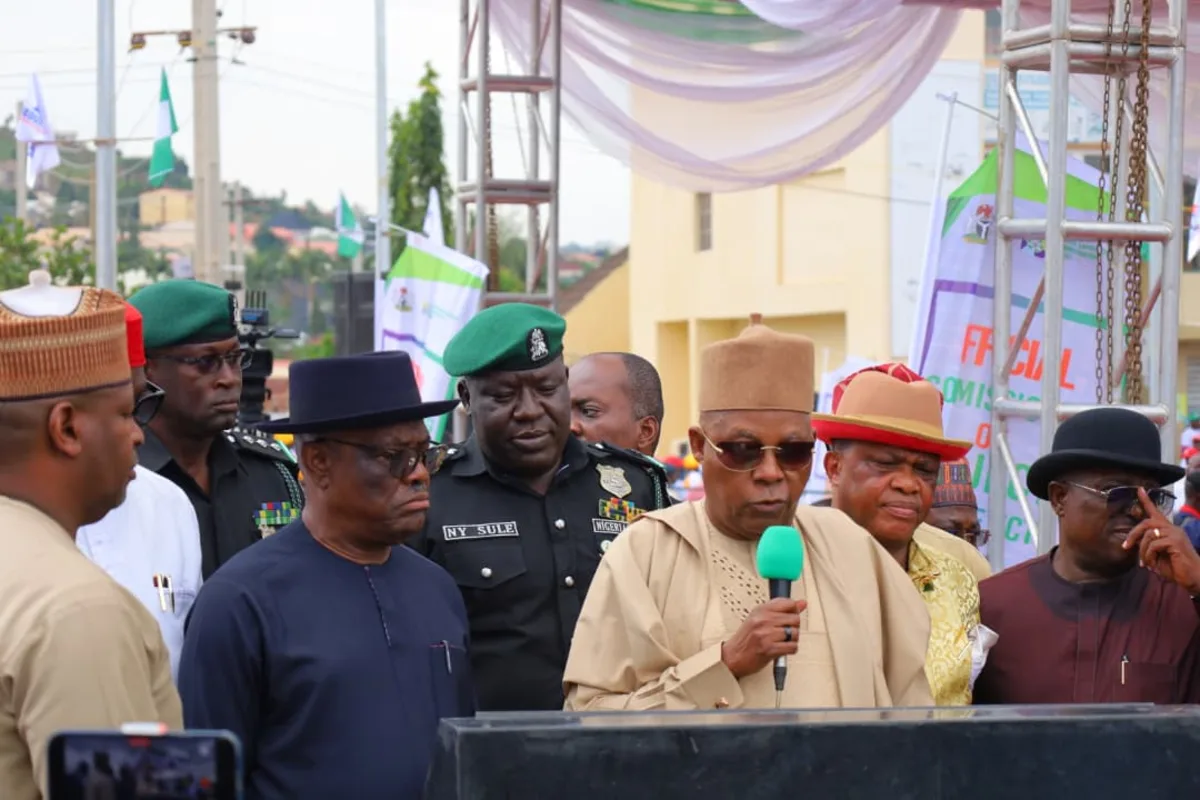

President Bola Ahmed Tinubu has drawn a line under decades of systemic neglect in Abuja’s satellite towns. The declaration came during the commissioning of a 194-kilometre water pipeline network in Karu. The project delivers treated water to Karu, Orozo, Jikwoyi, Kurudu and surrounding communities. It marks the first major municipal water expansion into these areas in over twenty years.
Tinubu, represented by Vice President Kashim Shettima, framed the project as a direct fulfilment of the Renewed Hope Agenda. He stated that governance would no longer be confined to boardrooms while satellite residents relied on unsafe boreholes and water vendors. The President revealed that funding was approved without bureaucratic delays. Contractors completed the work ahead of schedule. The network comprises secondary and tertiary pipelines designed to serve over one thousand distribution lines.
The project exposes a long-standing institutional gap in the Federal Capital Territory Administration. Satellite towns house a significant portion of Abuja’s working population. Yet, until now, they remained excluded from the Greater Abuja Water Supply Project. The FCT Minister, Nyesom Wike, confirmed that similar interventions are underway in Bwari Area Council. This signals a shift from elite-centric infrastructure to inclusive development.
Residents of Karu and adjoining communities have endured persistent water shortages for decades. The new network is expected to reduce dependence on unsafe water sources. It will also lower household water costs. The project’s completion ahead of schedule highlights an overlooked efficiency in public procurement. The administration paid contractors on time. This eliminated the usual delays that plague federal projects.
The Karu water network reveals deeper structural inequities in Abuja’s urban planning. Satellite towns have grown rapidly without corresponding infrastructure investment. The Federal Capital Development Authority’s acting Executive Secretary, Richard Dauda, noted that the project utilises an existing reservoir. This suggests that previous administrations had the capacity but lacked the political will to extend services. The current intervention raises questions about why it took so long to address such a critical need.
Tinubu’s declaration carries symbolic weight but also faces practical challenges. The administration must ensure the network’s sustainability. Residents have been urged to protect the infrastructure from vandalism and illegal connections. The FCT Minister of State, Dr Mariya Mahmoud, emphasised the need for community ownership. She warned that without proper maintenance, the project’s benefits could be short-lived. This highlights a recurring issue in Nigerian infrastructure projects: the gap between commissioning and long-term functionality.
The project’s impact extends beyond water supply. It is expected to improve public health, sanitation and economic productivity. For years, residents have relied on water vendors whose supplies are often contaminated. The new network will reduce waterborne diseases and ease the financial burden on households. The FCT Administration has also hinted at similar interventions in healthcare, education and transport. This suggests a broader strategy to integrate satellite towns into Abuja’s development agenda.
The Karu water project serves as a test case for the administration’s ability to deliver on its promises. Tinubu’s government has faced criticism for rising inflation and economic hardship. However, this intervention demonstrates a tangible commitment to underserved communities. The challenge now is to replicate this success across other satellite towns. The administration must also address the institutional bottlenecks that have historically delayed such projects. If successful, this could redefine governance in the FCT and set a precedent for other states.