
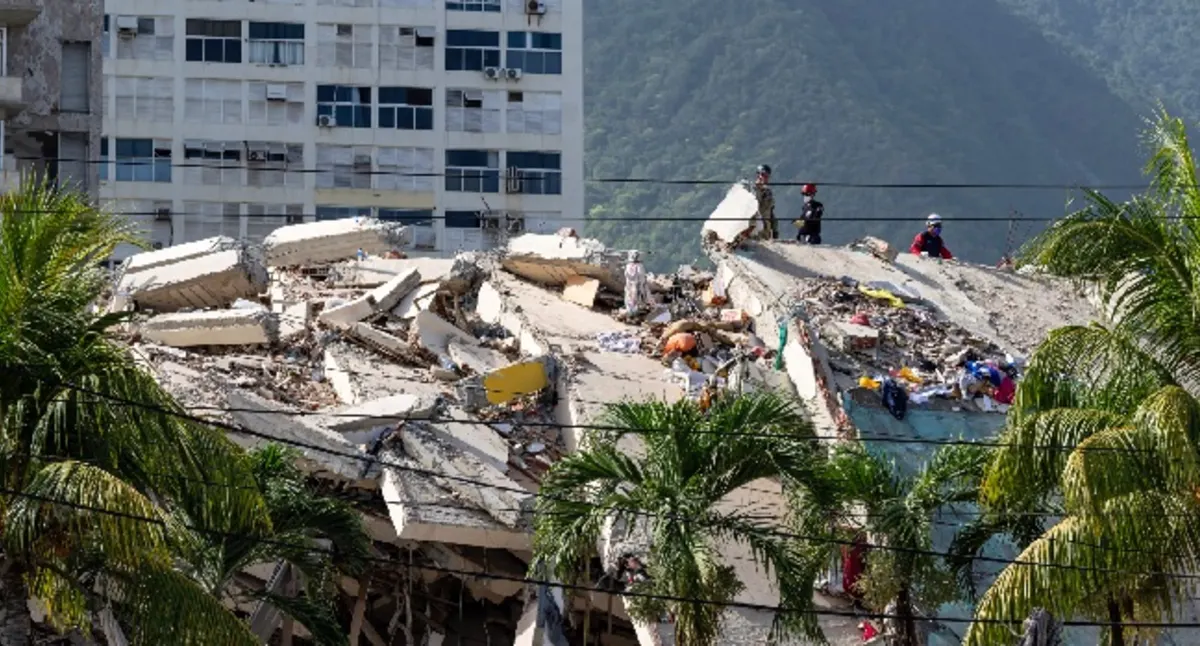
The twin earthquakes that struck Venezuela’s northern coast on June 24, 2026, have now claimed 5,069 lives. National Assembly President Jorge Rodríguez confirmed the death toll in a Telegram post on July 18. The quakes, measuring 7.2 and 7.5 in magnitude, hit within a minute of each other. La Guaira state, just north of Caracas, bore the brunt of the destruction. Most of the dead were pulled from the rubble of collapsed coastal buildings.
The official injury count remains at 16,740. Rodríguez stated earlier that the majority of those injured have already been discharged from hospitals. Rescue teams continue to sift through debris, but the focus has shifted to the living. Over 20,000 people are now homeless, crammed into makeshift camps. Many of these camps lack running water and basic sanitation. The United Nations has warned of a looming public health crisis if conditions do not improve.
The International Monetary Fund released $346 million to Venezuela on July 17. Interim President Delcy Rodríguez announced the funds would be used for immediate reconstruction. IMF Managing Director Kristalina Georgieva confirmed the disbursement on X. She said the institution worked with counterparts to allow Venezuela to access its own reserve tranche. The funds had been frozen since 2019, when the IMF refused to recognize Nicolás Maduro’s government.
The political thaw that unlocked the funds began in April 2026. The IMF and World Bank resumed relations with Venezuela after the United States removed Maduro in a January military operation. The U.S. intervention ended years of diplomatic isolation. Venezuela holds 3.568 billion Special Drawing Rights at the IMF, equivalent to about $5.1 billion. The $346 million disbursement is a fraction of that total, but it arrives at a critical moment.
The earthquakes exposed deep structural vulnerabilities in Venezuela’s infrastructure. La Guaira’s coastal buildings were not designed to withstand seismic shocks of this magnitude. Engineers have noted that many collapsed structures were built with substandard materials. Corruption in the construction sector has long been an open secret. The quakes have forced a reckoning with decades of neglected building codes and enforcement.
The humanitarian response has been hampered by Venezuela’s pre-existing economic crisis. Hospitals in the affected region were already struggling with shortages of medicine and equipment. The influx of injured patients overwhelmed facilities that were barely functional. International aid organizations have stepped in, but their efforts are constrained by logistical challenges. Roads to the hardest-hit areas remain blocked by debris, delaying the delivery of supplies.
The IMF funds are expected to accelerate the rebuilding process. However, questions remain about how the money will be allocated. Venezuela’s government has a history of mismanaging international aid. Transparency International ranks the country among the most corrupt in the world. Civil society groups are calling for independent oversight of the reconstruction funds. They warn that without accountability, the money could disappear into the same networks that profited from past misappropriation.
The earthquakes have also reignited debates about Venezuela’s preparedness for natural disasters. The country sits on multiple fault lines, yet its disaster response plans are outdated. The last major seismic event in Venezuela occurred in 1967, killing over 200 people. Since then, urbanization has exploded, particularly in coastal areas. The government has not invested in early warning systems or public education campaigns. Experts say the June 24 quakes should serve as a wake-up call for long-term planning.