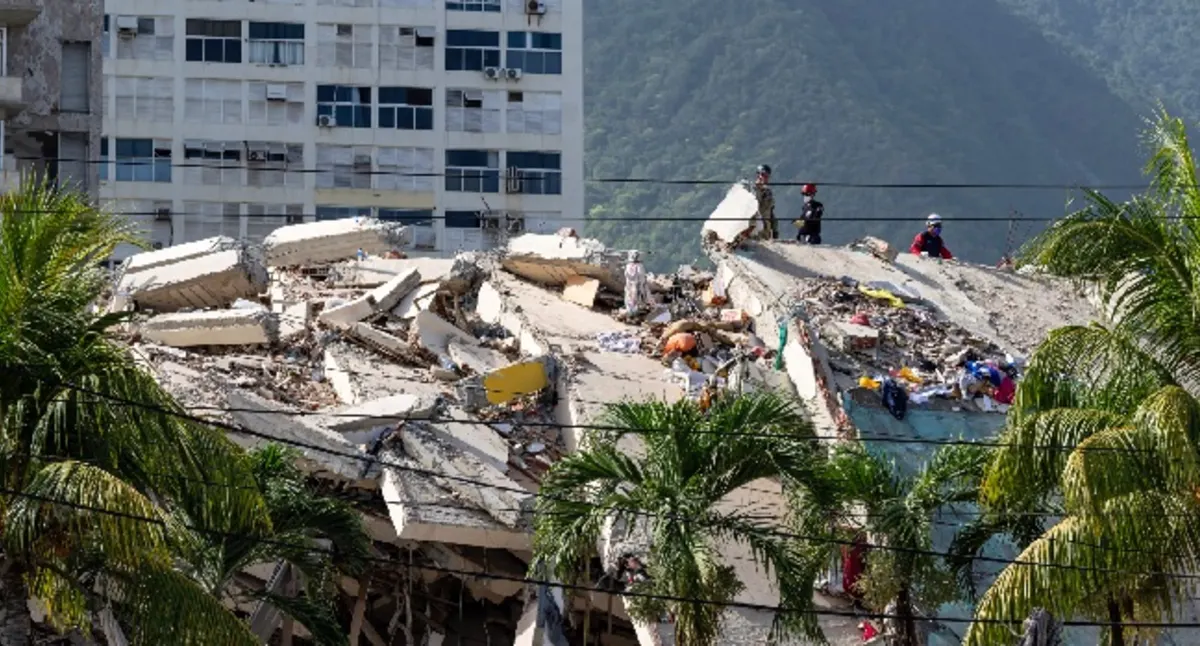

The death toll from Venezuela’s twin earthquakes on June 24 has climbed to 2,954, with 16,592 injured and 16,309 displaced, according to the latest official figures released by the Ministry of Communication and Information. The earthquakes, measuring 7.2 and 7.5 in magnitude, struck the coastal state of La Guaira, north of Caracas, collapsing dozens of residential buildings and triggering one of Latin America’s deadliest seismic disasters in a century.
National Assembly President Jorge Rodríguez confirmed the updated figures on Saturday, revealing that 22,445 people have received medical treatment since the disaster. Nearly 30,000 emergency personnel and 3,281 international rescue workers have been deployed, yet search-and-rescue operations remain fraught with delays and logistical failures. The government’s response has faced widespread criticism, with survivors and volunteers accusing authorities of a sluggish and disorganized relief effort. Food, medicine, and heavy machinery arrived late, hampering efforts to extract survivors from the rubble.
The coastal state of La Guaira bore the brunt of the destruction, with 856 buildings damaged and 190 completely collapsed. The area, already scarred by a devastating 1999 landslide that killed thousands, now faces a second humanitarian crisis. Temporary shelters have been set up for the homeless, but conditions are dire. Hospitals are overwhelmed, and health experts warn of potential disease outbreaks as sanitation infrastructure collapses. The government has established a digital platform for reporting missing persons, though the unofficial tally of the missing exceeds 41,000, far outstripping official estimates.
Survivor accounts paint a grim picture of the disaster’s immediate aftermath. Juan Zapata, a resident of La Guaira, spent 55 hours trapped in the rubble of his fifth-floor apartment before civilian rescuers pulled him out. He suffered fractured ribs, severe cuts, and lost all identification documents. Zapata’s story is one of thousands. Many survivors, like Miguel Poleo, have taken matters into their own hands, digging through debris with bare hands in search of missing relatives. Poleo, who lost his stepdaughter and her family, criticized the government’s response, stating, "The president said that help arrived quickly, but it wasn’t like that. We’ve gotten help from regular people."
The international community has stepped in to fill the gaps left by the Venezuelan government. A U.S.-backed field hospital run by the disaster relief group Samaritan’s Purse has treated over 400 patients, performing nearly 30 surgeries. The hospital, set up on a baseball field, will eventually transition into a community health center. However, the delay in deploying heavy machinery has prolonged the suffering of families desperate to recover the bodies of loved ones. In La Guaira’s Los Cocos housing complex, civilian teams led by a physical education teacher continue to search for victims, nine days after the quakes.
The government’s handling of the crisis has sparked political backlash. Interim President Delcy Rodríguez has vehemently denied allegations of a slow response, pointing to the deployment of nearly 30,000 officials and international rescue workers. Yet, the disconnect between official statements and the reality on the ground is stark. Volunteers report that police and military personnel have been more focused on securing the area than aiding rescue efforts. Francisco Sasquia, a volunteer in La Guaira, stated, "We’re still working, still searching for bodies. We found two bodies that have already been released to their families." The frustration is palpable, with many questioning why the government failed to act decisively during the critical first 72 hours when survival rates are highest.
The earthquakes have exposed deeper systemic vulnerabilities in Venezuela. The country’s infrastructure, already weakened by years of economic crisis, proved woefully inadequate to withstand the seismic shocks. The collapse of residential buildings in La Guaira raises questions about construction standards and regulatory oversight. The 1967 Caracas earthquake, which killed 245 people, led to stricter building codes, but enforcement has lapsed amid political and economic turmoil. The current disaster underscores the urgent need for infrastructure reforms, yet the government’s focus remains on damage control rather than long-term solutions.
As international rescue teams begin to withdraw, the humanitarian crisis is far from over. Families like Víctor Colivert’s, who lost his nephew in the quakes, are left grappling with the emotional and logistical nightmare of recovering and identifying bodies. Colivert refused to let forensic workers take his nephew’s body, fearing it would be lost in the chaos. "If I have to go to China, to wherever, but I’m not leaving him alone," he said. The psychological toll of the disaster is immense, with many survivors struggling to come to terms with their losses. The government’s failure to provide timely support has left communities to fend for themselves, deepening the sense of abandonment.