
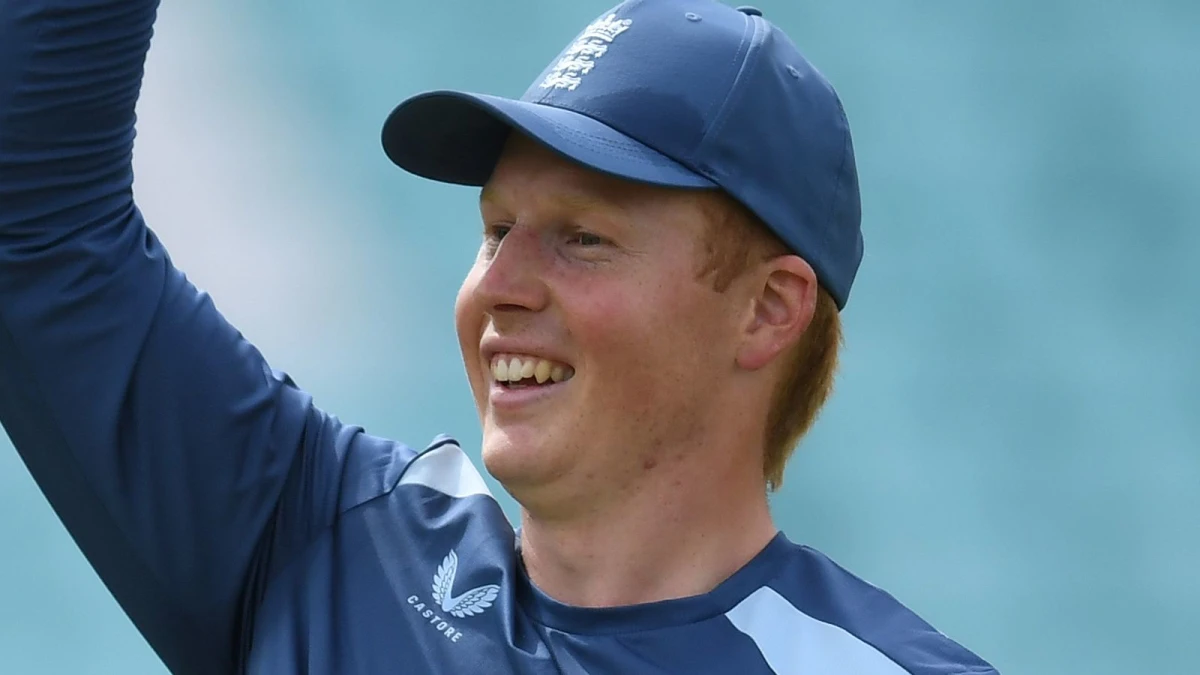
James Rew will walk out at The Oval tomorrow as England’s newest Test cricketer. The 22-year-old Somerset wicketkeeper-batter replaces Jamie Smith, who left the squad after the birth of his second child on Tuesday morning. Rew becomes the third debutant in four days, joining Jordan Cox and Sonny Baker in an XI that now carries five changes from the Lord’s victory.
The reshuffle is not merely administrative. England enter the second Test without Ben Stokes, their talismanic captain, and Gus Atkinson, their fastest bowler. Both remain suspended pending an ECB investigation into an incident outside a London nightclub after the first Test. Joe Root has stepped back into the leadership role for the first time since April 2022. His return is temporary, framed as a “game-by-game” appointment, yet it carries immediate tactical weight. Root must steady a side missing its two most explosive players while integrating three rookies into a high-pressure series decider.
Rew’s selection reveals a deliberate shift in England’s wicketkeeping strategy. Smith, 24, was chosen for his glovework and lower-order resilience. Rew, by contrast, averages 41.71 in 64 first-class matches and offers a left-handed top-order option. His inclusion at number seven suggests England are prioritising batting depth over specialist keeping. The move mirrors the recent trend of promoting multi-skilled players who can bat across the order, a philosophy championed by former head coach Brendon McCullum. If Rew succeeds, England may have found a long-term successor to Jonny Bairstow, whose own Test career hangs in the balance after a string of injuries.
Tactically, the debutants will face a New Zealand attack missing its own captain. Kane Williamson retired from international cricket after the Lord’s Test, ending a 13-year career that included 8,124 Test runs. His absence leaves a gaping hole in the middle order. Will Young, a late call-up, is expected to bat at number three. Young has played 12 Tests, averaging 34.50, but lacks Williamson’s ability to anchor innings under pressure. New Zealand’s bowling attack remains intact, with Kyle Jamieson and Matt Henry forming a potent new-ball partnership. Henry, however, is nursing back spasms and may be replaced by Blair Tickner, whose raw pace could trouble England’s young batting line-up.
The Oval pitch promises a contest between bat and ball. County Championship matches here this season have produced an average first-innings score of 421, yet the surface retains enough grass to assist seamers early. Mild showers are forecast for the opening morning, which could aid swing bowling. England’s attack, led by the returning Jofra Archer, will look to exploit these conditions. Archer, back after a two-year Test absence, provides the X-factor England lacked at Lord’s. His ability to reverse-swing the ball at 90mph could prove decisive if the pitch flattens out later in the match.
Beyond the immediate tactical battle, the Test carries deeper structural implications. England’s decision to blood three debutants in a single match is rare. The last time they fielded three new faces in the same XI was against South Africa in 2017. That match ended in a draw, but the experiment yielded long-term dividends: Dawid Malan, Toby Roland-Jones, and Tom Westley all became regulars. This week’s selections suggest England are accelerating their transition. With Stokes’ future uncertain and Bairstow’s fitness in doubt, the ECB is fast-tracking young talent to avoid a leadership vacuum. The move also reflects a broader cultural shift. England’s management, under director of cricket Rob Key, has embraced a “high-risk, high-reward” approach, prioritising aggression and adaptability over conservative selection.
For New Zealand, the Test marks the beginning of a post-Williamson era. His retirement leaves the Black Caps without their most reliable run-scorer and tactical thinker. Tom Latham, the new captain, acknowledged the emotional weight of Williamson’s departure. “What he’s given to this group, that legacy will certainly live on,” Latham said. Yet the challenge is immediate. New Zealand have lost four consecutive Tests in England, including the World Test Championship final in 2021. Without Williamson, they must rebuild their batting identity. Rachin Ravindra, a left-handed all-rounder, is expected to bat at number four. His recent form has been patchy, but his ability to rotate strike could ease the pressure on Young and Daryl Mitchell.
The debutants’ performances will be scrutinised beyond individual statistics. England’s selection committee, led by Luke Wright, has emphasised the need for players who can thrive in all conditions. Rew’s domestic record suggests he can adapt. He scored a century against Gloucestershire in April on a seaming Bristol pitch, and his glovework has improved under Somerset’s coaching staff. Cox, a 23-year-old batter, brings a different skill set. His unbeaten 238 for Kent against Sussex in the County Championship last month showcased his ability to dominate attacks. Baker, the third debutant, offers raw pace. The 25-year-old fast bowler has taken 30 wickets at 24.50 this season, including a five-wicket haul against Yorkshire. His inclusion reflects England’s ongoing search for a reliable partner to Archer and Josh Tongue.
The match also serves as a litmus test for England’s rotational policy. Root’s return as captain is framed as temporary, but it underscores the fragility of England’s leadership structure. Stokes’ suspension has forced the ECB to confront a reality they had hoped to avoid: the team’s success is too closely tied to a single player. If England win at The Oval, Root’s captaincy may extend beyond this series. If they lose, the calls for a permanent successor will grow louder. For now, the focus remains on the immediate task. Rew, Cox, and Baker have 40 overs to prove they belong. Their performances will shape not just the series, but the trajectory of English cricket for the next decade.