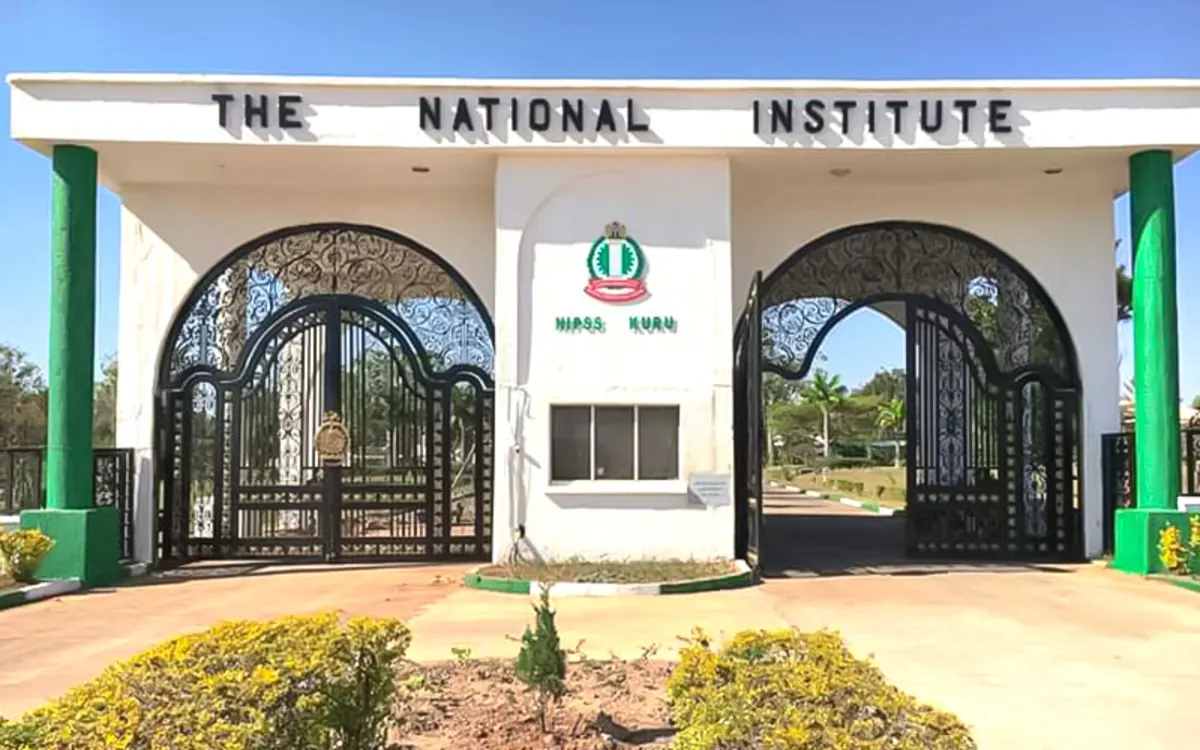

The National Institute for Policy and Strategic Studies in Kuru, Plateau State, suffered its third armed assault in 16 days. Security operatives repelled the attack on Wednesday night, killing one gunman during a gun battle that lasted 47 minutes. The institute confirmed the incident in a statement signed by its Head of Public Affairs, Dr Osime Samuel, on Thursday morning.
The assailants struck at 11 pm, targeting the same perimeter fence near the participants’ lodge used in the previous attacks. Security personnel engaged the gunmen in a sustained firefight, neutralising one attacker while others escaped with injuries. No staff, course participants, or residents were harmed. The institute’s facilities remained intact, but the repeated breaches have exposed critical vulnerabilities in its security architecture. Surveillance cameras and motion sensors installed after the June 16 attack failed to prevent the latest incident, raising questions about their operational effectiveness.
The timeline of the attacks reveals a disturbing pattern. The first assault on June 16 killed three security operatives. A second attempt on June 29 was initially denied by the institute but later confirmed by security sources. The third attack on July 1 occurred despite heightened security measures, including intensified patrols and additional personnel. The institute’s statement reassured stakeholders that security remains its highest priority but provided no details on the investigation or the identities of the attackers. The lack of transparency has fueled speculation about potential insider involvement or external sponsorship.
The National Institute for Policy and Strategic Studies is not just another government facility. It trains Nigeria’s top civil servants, military officers, and political leaders in national security strategy, economic policy, and leadership development. At the time of the attacks, the institute was hosting 87 participants from 22 federal agencies, including the Central Bank of Nigeria, the Ministry of Defence, and the Nigerian National Petroleum Corporation. The disruptions have forced the suspension of field trips, public lectures, and workshops, including those scheduled with international partners like the United Nations Development Programme and the African Union.
The operational impact extends beyond training delays. The institute’s role in shaping Nigeria’s policy framework means its disruption has national security implications. The Senior Executive Course, a flagship program, prepares future leaders to tackle challenges like insurgency, economic instability, and governance failures. The attacks have already led to the postponement of a high-profile workshop on counterterrorism strategies, which was to be attended by security chiefs and foreign diplomats. The institute’s leadership has not disclosed whether the current course will be extended or if participants will graduate as scheduled.
The attacks on NIPSS are part of a broader wave of violence targeting high-profile institutions in Plateau State. In May, gunmen stormed the Plateau State Polytechnic in Barkin Ladi, abducting 14 students. In June, armed men attacked a military checkpoint in Riyom, killing two soldiers. The state has recorded over 120 violent incidents in the first half of 2026, according to data from the Nigeria Security Tracker. The state government’s response has been reactive, focusing on curfews and joint military-police patrols rather than addressing the root causes of the violence, such as land disputes, unemployment, and weak law enforcement.
The federal government’s silence on the NIPSS attacks has drawn sharp criticism. The National Security Adviser’s office has not issued a public statement, nor has the presidency commented on the incidents. This lack of response contrasts with the swift condemnations issued after attacks on religious sites or political figures. Security experts argue that the attacks on NIPSS demand a multi-agency investigation, including the Department of State Services and the Nigerian Intelligence Agency, to determine whether the assailants are linked to insurgent groups, criminal syndicates, or disgruntled insiders. Without a coordinated response, the pattern of violence could spread to other policy institutions, such as the Administrative Staff College of Nigeria in Badagry or the Nigerian Defence Academy in Kaduna.
The repeated assaults on NIPSS highlight systemic failures in Nigeria’s security architecture. The institute’s location in Kuru, a town with a history of communal clashes, exposes it to spillover violence. Local residents report increased military presence in the area, but community leaders argue that long-term solutions require economic investment and conflict resolution initiatives. The attacks have also exposed gaps in intelligence gathering. Despite the June 16 attack, security agencies failed to anticipate the subsequent assaults, suggesting a breakdown in early warning systems. The institute’s reliance on perimeter defence, rather than proactive intelligence-led operations, has proven inadequate against determined attackers.
The broader implications of the NIPSS attacks extend to Nigeria’s governance and economic stability. The institute’s programs are designed to equip leaders with the skills to address the country’s most pressing challenges, from insecurity to inflation. The disruptions come at a time when Nigeria is grappling with a cost-of-living crisis, rising unemployment, and escalating violence in multiple states. The postponement of critical workshops on economic recovery and security sector reform could delay policy responses to these challenges. The attacks also send a chilling message to international partners, who may reconsider their engagement with Nigerian institutions perceived as vulnerable to security threats.