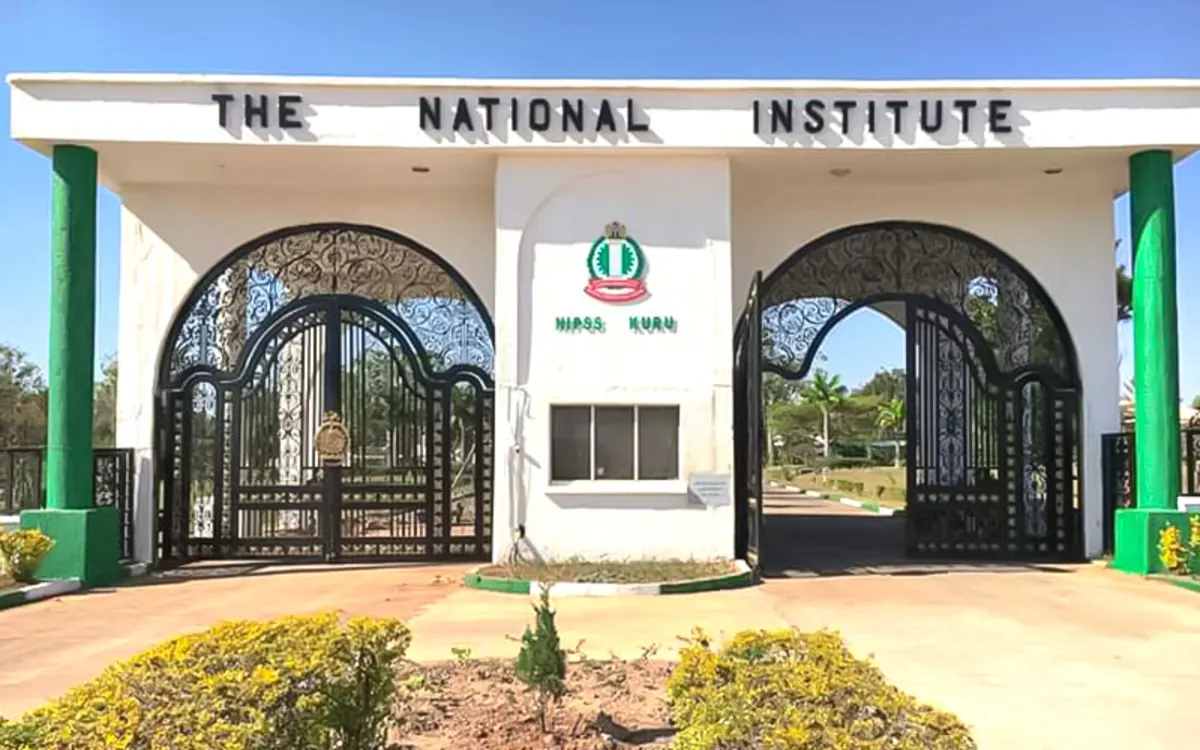
The National Institute for Policy and Strategic Studies in Kuru, Plateau State, became the latest high-profile target of Nigeria’s escalating insecurity crisis. Three security operatives—two soldiers and a police officer—were killed in the early hours of Tuesday, June 16, 2026, when armed gunmen stormed the institution’s premises. The Plateau State Police Command confirmed the fatalities within hours, describing the incident as a direct assault on one of the nation’s most critical policy hubs.
The attack unfolded around 2:15 a.m., according to security sources familiar with the incident. Gunmen opened fire on the institute’s perimeter, triggering a sustained gun battle with the on-duty security detail. The operatives, drawn from the 3 Armoured Division and the Plateau State Police Command, managed to repel the attackers before they could breach the main facility. However, the exchange left three personnel dead and created panic among nearby residents, who reported hearing gunfire until dawn.
NIPSS is not merely a training center. It serves as Nigeria’s premier institution for shaping senior public officials, military leaders, and policymakers. The institute’s nine-month senior executive course has produced two presidents, five governors, and over 50 permanent secretaries. Its campus houses classified policy documents and hosts closed-door strategy sessions for the National Security Council. The attack raises urgent questions about the protection of Nigeria’s intellectual and strategic assets, particularly as the institution prepares to welcome its 2026 intake of participants from across Africa.
Plateau State Commissioner of Police CP Bassey Ewah responded by deploying additional security personnel to the area. Patrols along the Kuru-Jos highway and around the institute’s perimeter have been intensified. The police statement claimed that normal activities had resumed and urged residents to remain calm. However, eyewitness accounts from Kuru and neighboring communities contradict this narrative. Residents reported seeing families flee their homes, while local businesses remained shuttered throughout the day. A staff member of the institute, who spoke on condition of anonymity, revealed that senior officials were advised to work remotely until further notice.
The NIPSS attack reveals a systemic flaw in Nigeria’s security architecture. The institute operates under the Office of the President but relies on a fragmented security apparatus. Its security unit is supplemented by soldiers from the 3 Armoured Division and officers from the Plateau State Police Command. This disjointed command structure creates coordination gaps, particularly during emergencies. Security analysts note that the institute’s location on the outskirts of Jos makes it vulnerable to hit-and-run attacks from nearby forests, which have long served as hideouts for armed groups.
A disturbing pattern emerges when the NIPSS attack is examined alongside recent incidents. In the past 12 months, armed groups have targeted three other policy institutions: the Nigerian Defence Academy in Kaduna, the Administrative Staff College of Nigeria in Badagora, and the National Institute for Legislative and Democratic Studies in Abuja. Each attack followed a similar script—late-night assault, minimal resistance, and rapid retreat. The recurrence of these incidents suggests a deliberate campaign to undermine Nigeria’s policy-making elite, with institutions that shape national strategy now in the crosshairs.
The immediate fallout is already visible. The NIPSS senior executive course attracts participants from across Africa, with tuition fees set at ₦12 million per participant. International delegates from Ghana, Kenya, and Rwanda have begun canceling their slots for the 2026 intake. Local participants, including permanent secretaries and military officers, are demanding armed escorts for their daily commutes. The institute’s management has suspended all public events until further notice, resulting in an estimated ₦50 million loss in hospitality revenue for the local economy. Hotels in Jos, which typically host participants and guests, have reported a 40% drop in bookings for the next three months.
Investigations into the attack remain stalled. The Plateau State Police Command has not released ballistic reports or identified suspects. The military’s 3 Armoured Division, which lost personnel in the attack, has launched its own parallel probe. This jurisdictional overlap has created friction between the police and the army. Sources within the Defence Headquarters reveal that the army is withholding critical evidence, including CCTV footage from the institute’s perimeter cameras. The police, in turn, have not shared witness statements with military investigators. CP Ewah confirmed that forensic teams are analyzing footage, but no timeline has been provided for the release of findings.
The NIPSS attack underscores a broader crisis in Nigeria’s approach to securing critical institutions. The country’s policy hubs operate with minimal coordination between security agencies, leaving them exposed to repeated assaults. The lack of a unified response protocol means that each attack is treated as an isolated incident rather than part of a systemic threat. Until this gap is addressed, institutions like NIPSS will remain vulnerable to future attacks, with far-reaching consequences for Nigeria’s governance and strategic planning.