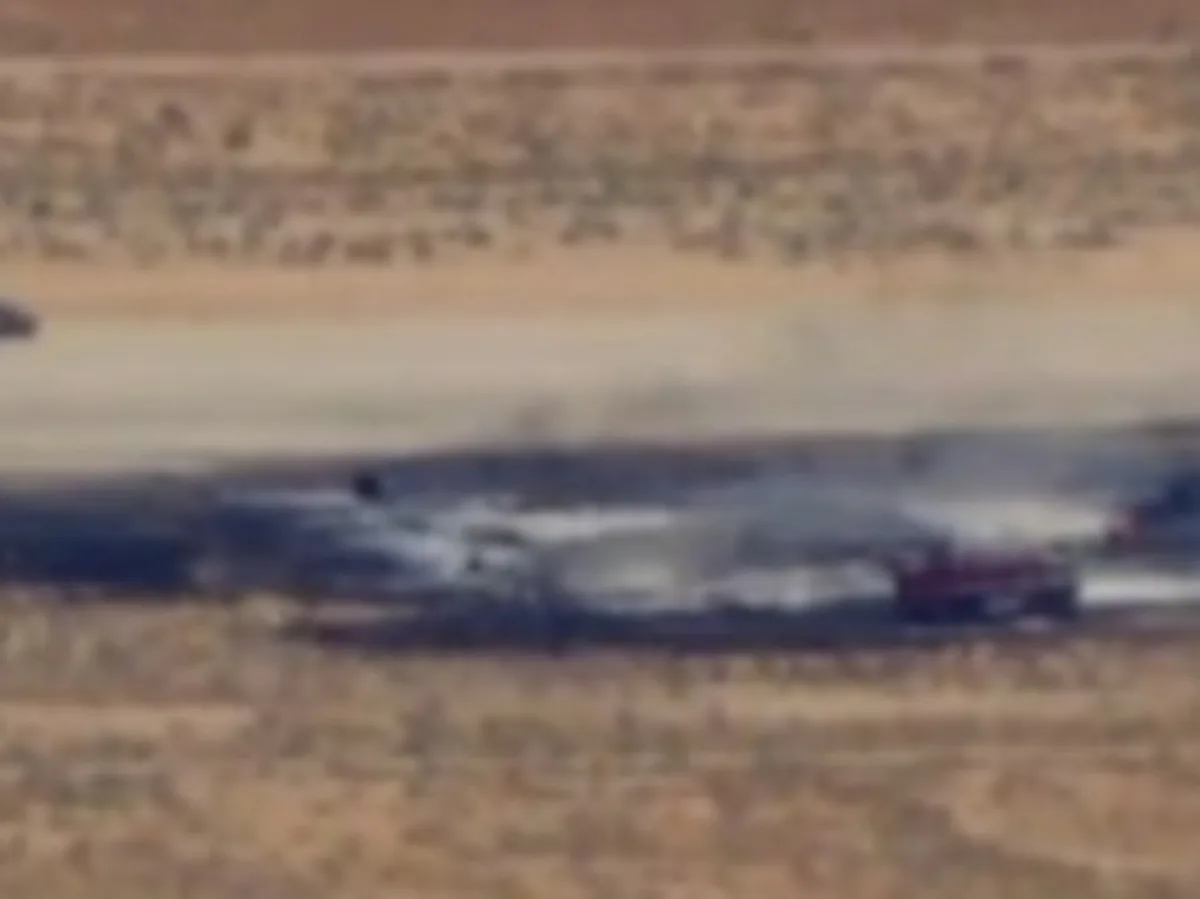

The Indian Air Force (IAF) suffered another devastating blow on June 13 when a Russian-made Antonov An-32 transport aircraft crashed during landing at Jorhat Air Force Station in Assam. Five personnel were killed. The co-pilot survived with injuries. The IAF immediately ordered a Court of Inquiry to determine the cause of the accident.
The deceased were identified as Squadron Leader Prashant Singh, Flight Lieutenant Shubham Kumar, Sergeant Jitendra Sharma, Agniveervayu Khemaram Kumawat, and Agniveervayu Danish Alam. Defence Minister Rajnath Singh expressed deep anguish over the tragedy. He stated the nation would remember their courage. The IAF extended condolences to the bereaved families. It pledged full support during their grief. Political leaders across parties reacted with shock. Congress President Mallikarjun Kharge and Priyanka Gandhi Vadra saluted the service and sacrifice of the fallen air warriors.
The An-32 has been the backbone of India’s military transport fleet since the 1980s. The IAF operates around 90 of these Soviet-designed twin-engine turboprops. They are critical for ferrying troops, supplies, and equipment to remote and high-altitude regions. The aircraft’s ability to operate in extreme climates has made it indispensable. However, its safety record is marred by repeated accidents. Since induction, the An-32 fleet has been involved in at least 18 crashes. These have resulted in the deaths of over 100 personnel.
The most recent major incident before this crash occurred in 2019. An An-32 disappeared shortly after takeoff from Jorhat. Its wreckage was found a week later in Arunachal Pradesh. All 13 personnel on board were killed. Another crash in 2016 saw an An-32 vanish over the Bay of Bengal. Its wreckage was only located in 2024 at a depth of 3.4 kilometers. These incidents highlight the dangers of operating an ageing fleet in demanding conditions. The Jorhat crash underscores the urgent need for modernization.
The IAF issued a Request for Information (RFI) in 2022 to procure medium transport aircraft (MTA) to replace the An-32 and IL-76 fleets. The acquisition process has faced significant delays. Military analysts warn that prolonged reliance on outdated aircraft increases operational risks. This is particularly concerning in border regions where rapid troop movements are critical. The delayed MTA acquisition leaves the IAF vulnerable to repeated accidents. It raises questions about the prioritization of military modernization and the efficiency of defence procurement processes.
Preliminary reports suggest the aircraft lost control upon touchdown. It skidded off the runway and broke into two segments before catching fire. The Court of Inquiry will examine technical conditions, weather factors, maintenance records, and operational procedures. The investigation aims to provide clarity for the armed forces and the families of the deceased. It must also address systemic issues that contribute to such tragedies. The crash serves as a stark reminder of the human cost of delayed reforms.
The deceased personnel included two experienced officers and three younger recruits under the Agniveer short-term enlistment scheme. Their deaths reveal the risks faced by all levels of military personnel. The Agniveer scheme, introduced to address manpower shortages, has placed younger recruits in operational roles alongside seasoned officers. This crash exposes the vulnerabilities of such a system when combined with ageing equipment. The nation must reflect on whether it is doing enough to protect those who serve.
The Jorhat crash has reignited debates about India’s defence preparedness. The IAF’s operational demands in remote and hostile environments require aircraft that meet modern safety standards. The sacrifice of Squadron Leader Prashant Singh and his comrades must drive renewed efforts to equip the armed forces with safer tools. Their legacy must be a commitment to prevent future tragedies. The skies they defended must become safer for those who follow.