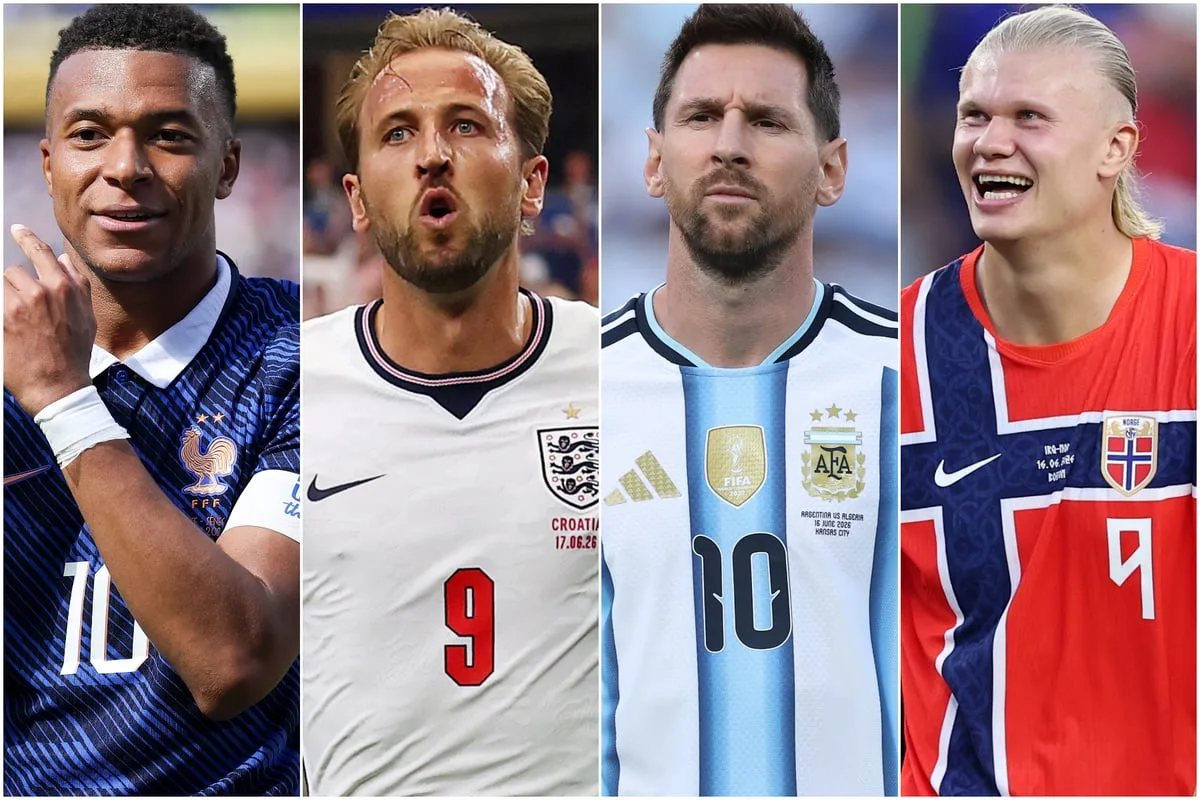
The 2026 World Cup has delivered an early tactical masterclass in how modern football redistributes individual glory. After just three matchdays, the Golden Boot race is not being led by the usual suspects—Kylian Mbappé, Erling Haaland, or Harry Kane—but by Deniz Undav, a 28-year-old Union Berlin forward who has spent more time as a substitute than a starter in this tournament. His three goals and two assists, all delivered in fewer than 120 minutes of action, have propelled him to the top of the scoring charts, a position that defies both expectation and the traditional hierarchy of global strikers.
Undav’s rise is not an anomaly but a symptom of deeper structural shifts in the game. The expanded 48-team format has stretched defensive lines, creating more space for impact substitutes to exploit. Germany’s tactical setup under Julian Nagelsmann prioritises fluid rotations, allowing Undav to thrive in the gaps left by Jamal Musiala and Florian Wirtz’s drifting movements. His brace against Ivory Coast came in a 20-minute cameo, a window where he averaged a goal every 10 minutes. This efficiency is no fluke; it reflects a deliberate strategy to deploy him as a late-game disruptor, a role that now carries disproportionate weight in the Golden Boot race due to the tournament’s tiebreaker rules.
The tiebreaker mechanics—goals, then assists, then minutes played—have turned the race into a mathematical puzzle. Undav’s two assists, both created in the same match, give him a critical edge over Lionel Messi and Jonathan David, who also sit on three goals but lack the secondary contributions. Messi’s hat-trick against Algeria, while historic, came in a match where Argentina’s dominance limited his need to set up teammates. David’s treble for Canada, meanwhile, was a solo masterclass in a 6-0 rout, leaving him without an assist to his name. The rules, designed to reward all-round contributions, have inadvertently elevated a player whose primary role is to finish rather than create.
This dynamic has exposed a growing tension between individual accolades and team success. The Netherlands, for instance, have three players—Cody Gakpo, Brian Brobbey, and Crysencio Summerville—tied on two goals each, a testament to their attacking depth but a nightmare for any of them chasing the Golden Boot. Their goals are spread so evenly that none can pull ahead, a problem compounded by the fact that their next opponents, Tunisia, are already eliminated and likely to park the bus. For players like Mbappé and Haaland, the challenge is different: their teams are still finding rhythm, and their own form has been stifled by opponents who prioritise containment over open play.
The psychological pressure of the Golden Boot race is already reshaping managerial decisions. England’s Gareth Southgate, for example, faces a selection dilemma with Kane on two goals and Ollie Watkins yet to start. Watkins, a more mobile striker, could offer England greater tactical flexibility in the knockout rounds, but Southgate may hesitate to bench Kane, a player whose leadership and penalty-taking ability are deemed irreplaceable. This tension between individual ambition and collective need is playing out in real time, with managers forced to balance short-term glory against long-term tournament survival.
Undav’s lead also highlights the financial undercurrents of the World Cup. His market value, estimated at €30 million, pales in comparison to the €180 million of Mbappé or the €175 million of Haaland. Yet his performances have already triggered speculation about a summer move to a top-five league, with clubs in England and Spain reportedly monitoring his progress. For players outside the traditional elite, the World Cup is no longer just a stage for national pride but a three-week audition for life-changing transfers. Undav’s rise could force a recalibration of how clubs scout talent, shifting focus from pre-tournament hype to in-game impact.
The knockout rounds will likely see the established stars reassert their dominance. Mbappé, Haaland, and Kane are too talented to remain dormant for long, and their teams’ progression will give them more opportunities to score. Yet the early stages have already proven that the Golden Boot is no longer a foregone conclusion. The expanded format, the tactical emphasis on substitutes, and the tiebreaker rules have democratised the race, turning it into a battle of efficiency rather than reputation. For the first time in World Cup history, the leading scorer may not be the player with the most goals, but the one who best exploits the system.
This shift has broader implications for how football measures individual success. The Ballon d’Or, for instance, has long been criticised for favouring attacking players from winning teams. If the Golden Boot can be won by a substitute with fewer than 200 minutes of action, it raises questions about whether other awards should similarly reward efficiency over volume. Undav’s story is not just about a player defying expectations; it is about a sport grappling with how to value contribution in an era where every minute counts.
The final twist in this race may come from an unexpected source. Japan’s Ayase Ueda, another player on two goals, has been deployed as a false nine in a system that prioritises pressing over possession. His ability to score in transition could prove decisive if Japan progress, particularly against teams that struggle to defend counterattacks. Similarly, Morocco’s Ismael Saibari, a midfielder by trade, has thrived in a free role that allows him to drift into scoring positions. These players represent a new breed of hybrid attackers, whose versatility makes them harder to mark but also harder to categorise. Their success could redefine what it means to be a World Cup striker.