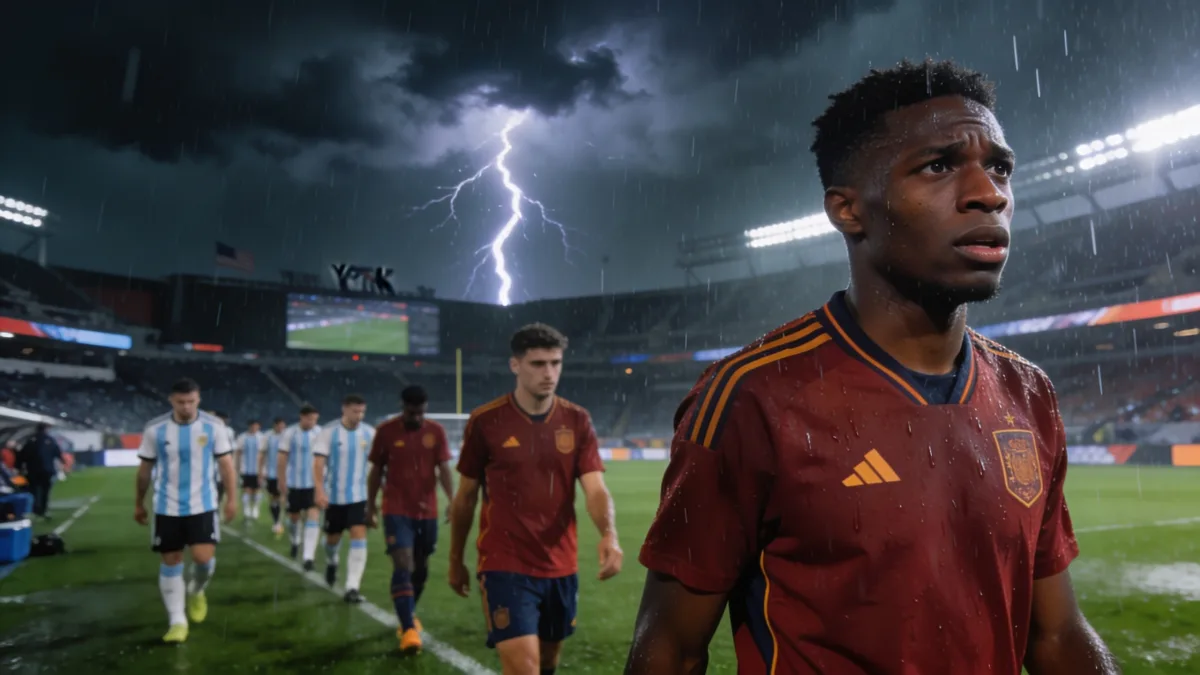
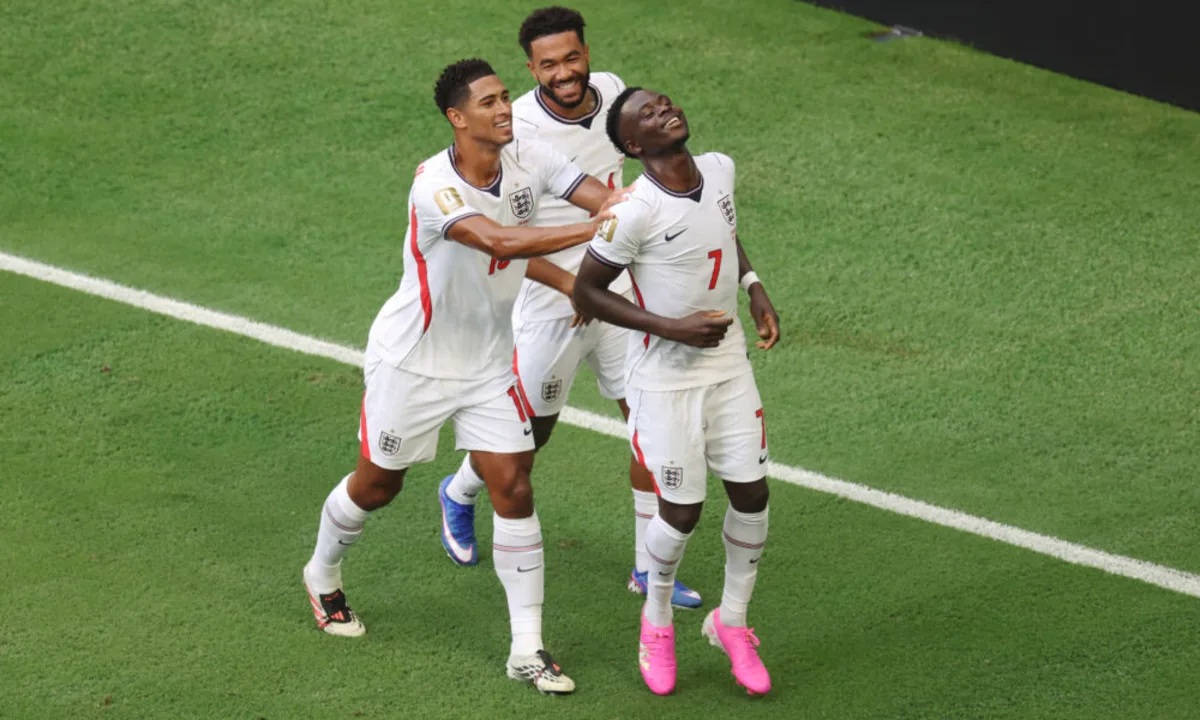
Kylian Mbappe left the 2026 World Cup as its undisputed top scorer with ten goals, yet the tournament’s final act exposed a deeper structural flaw that could define France’s next cycle. The 6-4 defeat to England in the third-place playoff was not merely a farewell to Didier Deschamps but a tactical post-mortem of a midfield that collapsed under pressure. While Mbappe and Michael Olise grabbed headlines for their individual brilliance, the absence of a coherent defensive shield behind them laid bare a vulnerability that Spain and Argentina will have already dissected.
France’s midfield trio of Eduardo Camavinga, Aurelien Tchouameni and Adrien Rabiot were overrun in transition, conceding possession in dangerous areas at an alarming rate. England’s second goal arrived after a 12-second counter from their own half, with Camavinga caught ball-watching as Bukayo Saka exploited the space behind him. The pattern repeated for England’s fourth, where Rabiot’s loose pass under no pressure was intercepted and punished within three touches. Opta data reveals France lost the ball in their own half 28 times during the match, 19 of which led directly to England shots or corners. For context, Argentina’s midfield conceded only seven such turnovers in their semi-final victory over France.
The imbalance was not accidental. Deschamps’ insistence on deploying Mbappe as a lone striker forced Olise and Ousmane Dembele to track back as auxiliary wingers, leaving the midfield exposed. When France regained possession, their transitions lacked verticality; the average pass sequence contained 4.2 lateral passes before a forward ball, compared to Spain’s 2.1. This sluggishness allowed England’s double pivot of Declan Rice and Kobbie Mainoo to dictate tempo, completing 91 passes in the final third while France’s midfield managed just 47.
Olise’s record-breaking seven assists obscured his defensive negligence. His failure to track back on England’s fifth goal, where he stood motionless as Luke Shaw overlapped, epitomised France’s tactical disarray. The Bayern Munich winger’s two assists to Mbappe were offset by three clear-cut chances missed, including a one-on-one with Jordan Pickford in the 78th minute. Post-match, Olise was seen in tears, a rare display of accountability in a squad where individual accolades have long masked collective frailties.
The psychological toll of this collapse extends beyond the pitch. Reports from L’Équipe indicate a dressing room fracture between the older guard—Raphaël Varane, Antoine Griezmann—and younger players like Olise and Warren Zaïre-Emery. The latter pair reportedly questioned Deschamps’ rigid 4-3-3 system in a heated post-semi-final meeting, arguing for a more fluid 4-2-3-1 to accommodate their creative freedom. The rift was papered over for the playoff, but the lack of cohesion was evident in France’s disjointed pressing triggers, which were bypassed 17 times in the first half alone.
Boardroom interference has compounded the issue. The French Football Federation’s decision to extend Deschamps’ contract until 2028, announced mid-tournament, was met with scepticism by senior players. Sources close to the squad reveal Griezmann and Varane pushed for a clause allowing a mutual break clause after Euro 2028, a demand that was rejected. The federation’s insistence on continuity ignores the tactical stagnation that saw France’s expected goals (xG) drop from 2.1 per game in the group stage to 1.3 in the knockout rounds. Mbappe’s goals masked a team that created just 0.8 big chances per game in the latter stages, the lowest among the semi-finalists.
England’s victory, while consolation for their semi-final heartbreak, highlighted a generational shift. Jude Bellingham’s seven-goal haul set a new national record, but his late introduction—substituted on in the 79th minute—raised questions about Gareth Southgate’s conservative approach. The Real Madrid midfielder’s solo goal, a mazy run from deep, was a microcosm of England’s newfound attacking fluidity, a stark contrast to France’s reliance on individual moments. Thomas Tuchel’s post-match admission of a “visible gap” between England and the elite was telling; his Chelsea side’s struggles with midfield transitions this season mirror France’s World Cup woes.
The financial repercussions of France’s exit are already unfolding. Mbappe’s market value, inflated by his Golden Boot, is projected to rise to €220 million, but the federation’s failure to secure a successor could derail their 2028 Euro campaign. Clubs are circling Olise, whose contract at Bayern Munich contains a €100 million release clause, while Dembele’s agent has reportedly held talks with Manchester United over a potential £85 million move. The exodus of creative talent, coupled with the midfield’s structural deficiencies, leaves France facing a rebuild that Deschamps may not be equipped to oversee.
As Spain and Argentina prepare for tonight’s final, France’s third-place playoff will be remembered as a cautionary tale. Mbappe’s Golden Boot is a testament to his individual genius, but the 6-4 defeat revealed a team that has outgrown its manager. The question is not whether Deschamps can adapt, but whether the federation will allow him to. With the next World Cup just two years away, France’s window to rectify their midfield collapse is closing faster than their opponents’ counterattacks.