
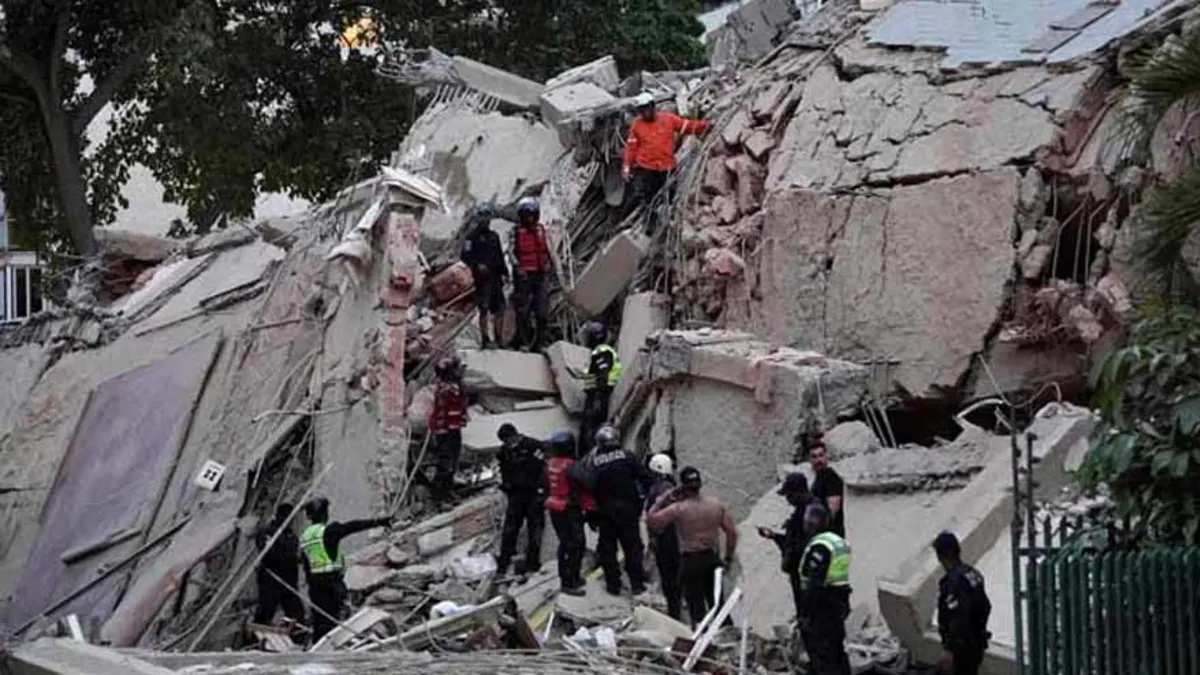
Venezuela faced its deadliest seismic disaster in over a century after twin earthquakes struck the northern Caribbean coast on Wednesday. The 7.2 and 7.5 magnitude tremors killed at least 32 people and injured more than 700. Rescue teams dug through collapsed buildings in Caracas while the government declared a nationwide state of emergency.
The quakes originated near Yaracuy state, west of the capital. The United States Geological Survey recorded the first tremor at 6:04 pm local time, followed by a stronger shock 40 seconds later. Both quakes struck at shallow depths, amplifying their destructive force. Caracas neighborhoods Altamira and El Paraiso suffered the worst damage, with entire apartment blocks reduced to rubble. La Guaira state, near the epicenter, remained cut off from initial damage assessments.
Acting President Delcy Rodriguez confirmed the death toll excluded La Guaira, where local officials described scenes of total devastation. Rodriguez suspended all school activities and mobilized healthcare workers to overwhelmed hospitals. Simón Bolívar International Airport closed after runway cracks and terminal structural damage were discovered. The USGS warned the eventual death toll could reach thousands, citing Venezuela's vulnerable building materials and dense urban population.
International response arrived within hours. US President Donald Trump pledged immediate federal assistance, instructing agencies to prepare search teams and medical supplies. Secretary of State Marco Rubio confirmed the deployment of disaster response units after speaking with Rodriguez. Trump's offer marked a rare moment of US-Venezuela cooperation amid years of diplomatic tension. The Venezuelan leader thanked Washington for its solidarity while maintaining the government's emergency command structure.
Neighboring countries activated regional disaster protocols. El Salvador dispatched 300 paramedics and 50 tons of emergency supplies. Ecuador and Panama offered humanitarian corridors despite political differences with Caracas. Mexico and Brazil expressed solidarity while monitoring their citizens in affected zones. The European Union's emergency response coordination center began organizing relief flights from member states.
The earthquakes exposed Venezuela's infrastructure vulnerabilities. Most collapsed buildings were constructed before modern seismic codes were enforced. Engineers warned that aftershocks could trigger secondary collapses in already weakened structures. The country's economic crisis limited local response capacity, forcing heavier reliance on international aid. Power outages and communication blackouts in La Guaira state hampered initial rescue efforts.
Historical seismic patterns reveal Venezuela's recurring earthquake risk. The 1812 Caracas earthquake killed an estimated 30,000 people, while a 1967 tremor destroyed multiple high-rise buildings in the capital. Geologists note the country sits along the boundary between Caribbean and South American tectonic plates, creating frequent seismic activity. The current disaster represents the strongest quake recorded in Venezuela since modern measurement began.
Public health officials raised concerns about disease outbreaks in temporary shelters. Overcrowded conditions and disrupted water supplies create ideal environments for cholera and dengue transmission. The government established medical triage centers in Caracas parks to handle the injured. International health organizations prepared vaccine shipments and mobile clinics for deployment to affected regions.