
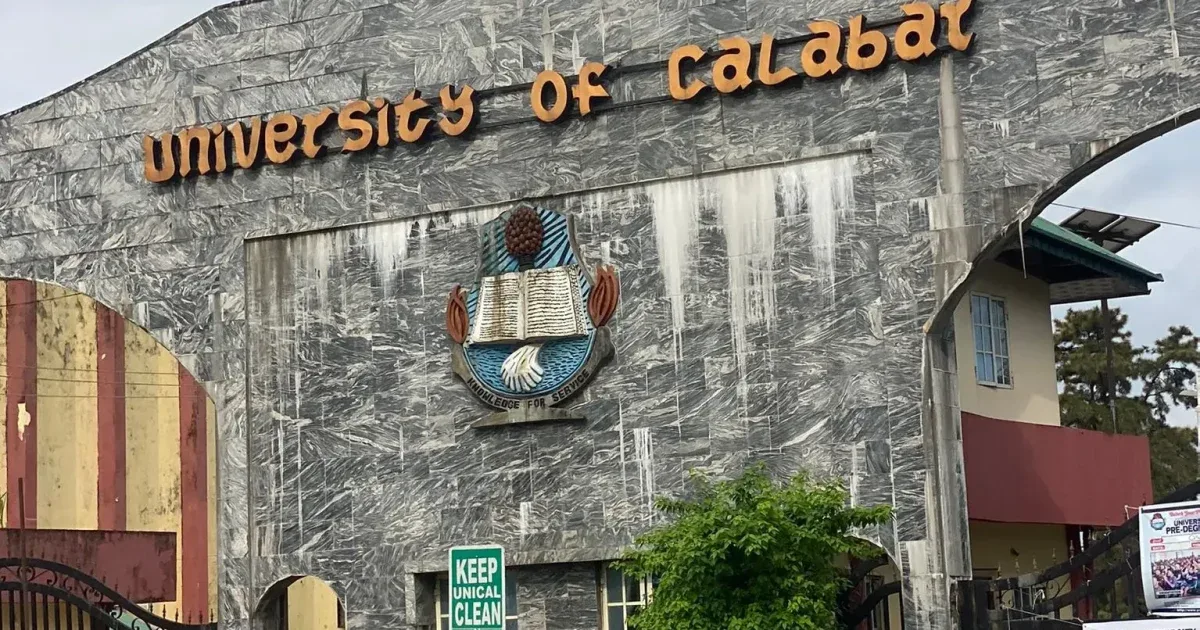
The University of Calabar has enforced a sweeping disciplinary action against 19 students found guilty of examination misconduct. The students, drawn from multiple faculties, will miss an entire academic session as punishment. This decision, ratified by the university senate, underscores a zero-tolerance stance on academic dishonesty.
The suspension order was issued in a letter signed by Dr Citizen Ekpo, Director of Administration, on behalf of the Registrar, Dr Chukwuka Icha. The letter, made public by the News Agency of Nigeria, detailed the penalties following recommendations from the Students’ Disciplinary Committee. The affected students will not resume studies until the 2026/2027 academic session, effectively losing a full year of academic progress.
The students represent a cross-section of the university’s academic spectrum. Faculties involved include Administration, Social Sciences, Biological Sciences, Arts, Education, Allied Medical Sciences, Pharmacy, and Environmental Sciences. Specific departments such as Nursing Science, Peace and Conflict Studies, Science Laboratory Technology, Estate Management, and Marketing also feature among the disciplined. This broad disciplinary sweep signals the university’s intent to root out malpractice across all academic disciplines.
Mr Effiong Eyo, Head of the Public Relations Unit, confirmed the senate’s approval of the committee’s recommendations. He emphasized that the university has directed all deans, heads of departments, and relevant administrative units to enforce the suspension without exception. Compliance is mandatory, and the university has pledged to monitor adherence strictly. This directive aims to send a clear message that academic integrity is non-negotiable.
The decision arrives amid growing concerns over examination malpractice in Nigerian universities. Recent reports indicate a rise in sophisticated cheating methods, including the use of electronic devices and impersonation. The University of Calabar’s decisive action reflects a broader institutional effort to restore credibility to academic assessments. However, critics argue that suspensions alone may not address the root causes of examination fraud, such as overcrowded classrooms, inadequate invigilation, and systemic pressure on students to perform.
This incident also highlights the role of university governance in maintaining academic standards. The Students’ Disciplinary Committee, which investigated the cases, operates under the senate’s oversight. Its recommendations are binding once approved, demonstrating a structured approach to discipline. Yet, the process raises questions about fairness and transparency. Were the accused students afforded due process? Did they have the opportunity to present their defenses? The university has not publicly addressed these procedural concerns.
Beyond the immediate disciplinary consequences, the suspension carries long-term implications for the affected students. Losing an academic session can delay graduation, disrupt career plans, and impose financial burdens on families. For students in professional programs like Nursing Science and Pharmacy, the suspension could also affect licensure timelines. The university has not indicated whether it will provide support services, such as counseling or academic remediation, to help these students reintegrate after their suspension.
The University of Calabar’s action occurs against the backdrop of a national conversation about higher education reform. Vice President Kashim Shettima recently called for universities to evolve beyond traditional learning centers into engines of industrial growth. Such a transformation requires not only academic rigor but also a commitment to ethical standards. The suspension of these 19 students may serve as a deterrent, but it also underscores the need for systemic reforms to prevent future incidents of misconduct.
This case also invites scrutiny of the broader examination culture in Nigerian universities. Are current assessment methods robust enough to detect and deter fraud? Are invigilators adequately trained to handle sophisticated cheating techniques? The University of Calabar’s disciplinary action, while commendable, should prompt a national review of examination protocols. Without addressing these systemic issues, even the harshest penalties may fail to curb the rising tide of academic dishonesty.