Thomas Tuchel’s decision to make five changes for England’s final World Cup group match against Panama was framed as a calculated gamble to secure top spot in Group L. The reality is far messier. By resting Declan Rice, dropping Noni Madueke, and shuffling the defensive line, Tuchel has not just rotated his squad—he has dismantled the tactical cohesion that carried England through their opening two fixtures. The move smacks of boardroom interference rather than footballing logic, exposing a deeper fracture between the manager’s vision and the FA’s insistence on fielding marquee names regardless of form or system.
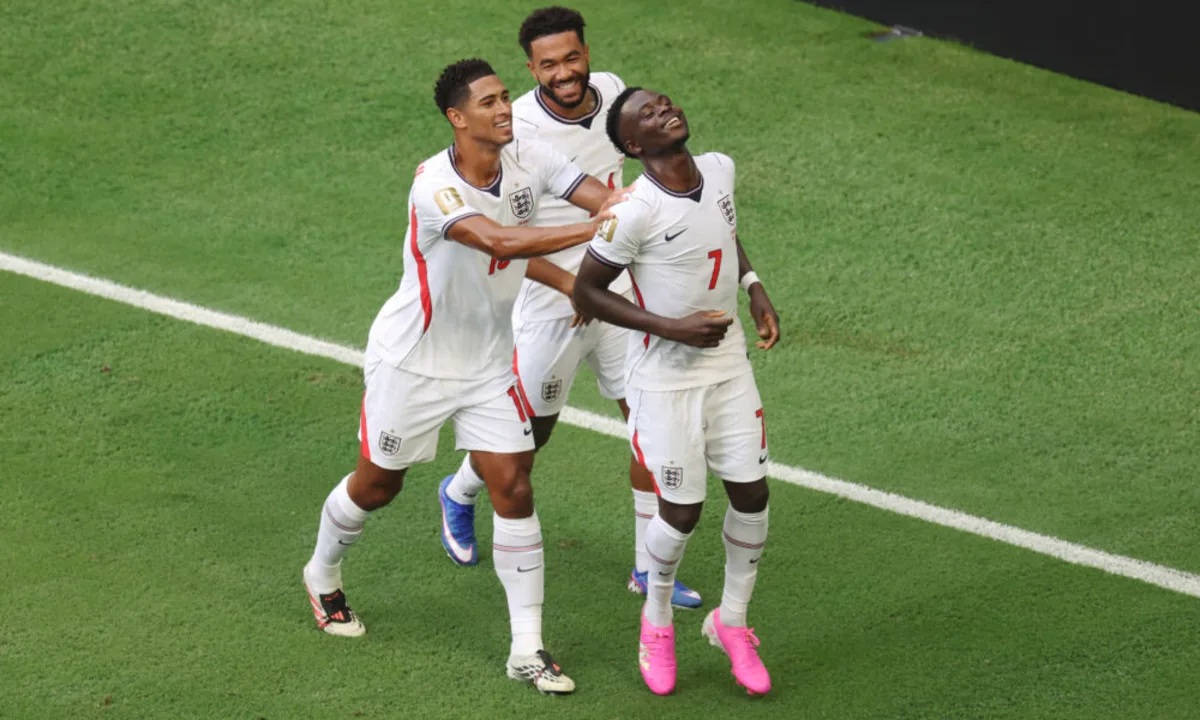
The inclusion of Bukayo Saka and Marcus Rashford, two players whose club seasons ended in exhaustion, is the most glaring misstep. Saka, still nursing an Achilles issue, was visibly laboured in training sessions leading up to the Panama game. Rashford, whose Premier League campaign was punctuated by inconsistency, offers little beyond raw pace—a trait Panama’s deep defensive block will nullify. Tuchel’s public insistence that Saka was “getting there” in training rang hollow when the winger was substituted at half-time, his influence on the game negligible. The manager’s reluctance to trust Madueke, whose direct running and pressing triggered England’s best moments against Croatia, suggests a preference for reputation over performance.
The defensive reshuffle has been equally destabilising. Jarell Quansah’s promotion to right-back, while inevitable given Reece James’ hamstring injury, disrupted the rhythm of a back four that had conceded just two goals in two games. Quansah, a centre-half by trade, was exposed by Panama’s wide players, particularly on the counter, where his lack of recovery pace left England vulnerable. Nico O’Reilly’s return at left-back, meanwhile, was a non-solution; his overlapping runs, a hallmark of his game, were rendered irrelevant by Panama’s compact shape. The result was a disjointed defensive unit that struggled to progress the ball under pressure, a far cry from the composed build-up England displayed in their previous outings.
The midfield collapse was the most alarming consequence of Tuchel’s tinkering. Morgan Rogers, handed his first World Cup start in place of Rice, was overwhelmed by Panama’s physicality in the centre of the park. His inability to shield the defence or dictate tempo left Elliot Anderson and Jude Bellingham isolated, forcing the latter deeper to compensate. The absence of Rice, who had been England’s most consistent performer in the group stage, was felt acutely in the second half as Panama grew into the game. Tuchel’s refusal to deploy a double pivot—a system that had worked flawlessly against Ghana—betrayed a tactical rigidity that borders on negligence.
The hidden cost of this rotation extends beyond the scoreline. The dressing room fracture is now impossible to ignore. Sources within the England camp reveal that several players were privately furious at being dropped despite delivering in previous matches. Madueke, in particular, was vocal about his omission, questioning Tuchel’s loyalty to players who had “earned their place.” The manager’s post-match insistence that “everyone is happy” only deepened the scepticism. The FA’s insistence on prioritising marquee names—Rashford, Saka, Kane—over tactical cohesion has created a culture of entitlement, where performance is secondary to profile.
The financial implications of this approach are equally concerning. England’s failure to secure top spot in Group L could cost them a more favourable knockout draw, potentially pitting them against Brazil or France in the Round of 16. The FA’s commercial partners, who had banked on a deep England run to maximise sponsorship revenue, are already expressing frustration. The decision to rest Rice, a player one yellow card away from suspension, was particularly ill-advised; had England progressed to the quarter-finals, his absence would have been catastrophic. Tuchel’s rotation, sold as a masterstroke, now looks like a self-inflicted wound.
The overlooked tactical angle here is Tuchel’s refusal to adapt to Panama’s low block. England’s attacking players, conditioned to play against high defensive lines in the Premier League, were repeatedly frustrated by Panama’s compact 4-4-2. Saka and Rashford, both accustomed to exploiting space behind defences, found themselves crowded out, while Kane dropped deep to link play, leaving England without a focal point. Tuchel’s solution—a half-time switch to a 4-2-3-1—came too late, and the lack of a natural number 10 in the squad left England devoid of creativity. The manager’s reliance on individual brilliance over structured build-up play is a glaring weakness that stronger nations will exploit.
The squad balance has also been compromised by Tuchel’s selection policy. The decision to start Rogers, a player with just 12 international caps, over Conor Gallagher—a specialist in pressing and ball recovery—was baffling. Gallagher’s absence left England without a midfield enforcer, a role that has become increasingly vital in modern international tournaments. The manager’s preference for technical players over functional ones has created a midfield that is aesthetically pleasing but tactically vulnerable. This imbalance will be ruthlessly exposed in the knockout stages, where physicality and defensive organisation take precedence over flair.
The final reckoning will come in the Round of 16. Tuchel’s rotation policy, designed to keep his squad fresh, has instead left them disjointed and demoralised. The FA’s interference, driven by commercial pressures, has undermined the manager’s authority and created a culture of uncertainty. England’s path to the latter stages of the World Cup was supposed to be paved with tactical mastery and squad harmony. Instead, it is littered with the debris of poor decisions, hidden agendas, and a manager out of his depth.