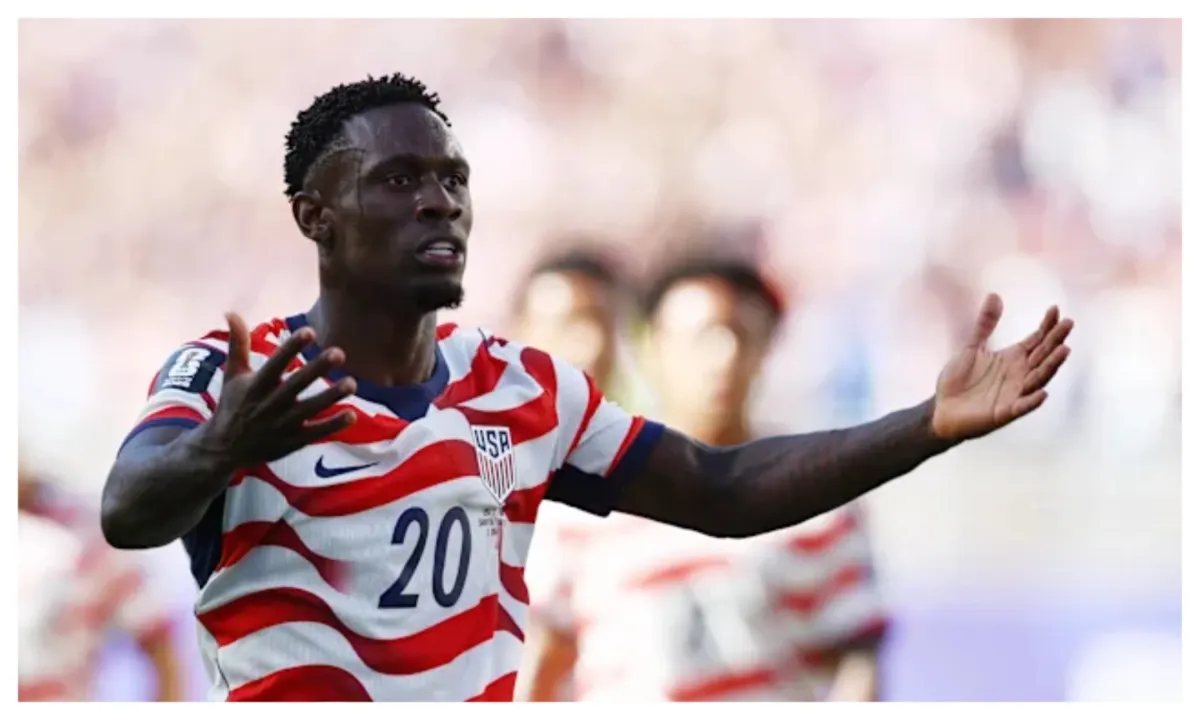
FIFA’s decision to overturn Folarin Balogun’s red card ahead of the United States’ Round of 16 clash against Belgium was not just a refereeing correction. It was a geopolitical power play that laid bare the fault lines between football governance and state interference. The call from President Donald Trump to FIFA president Gianni Infantino, demanding the suspension be lifted, was the first time a sitting U.S. leader has directly intervened in a World Cup disciplinary matter. The move, confirmed by multiple sources including The New York Times and The Athletic, was not merely about one player’s availability. It was a calculated flex of American soft power, leveraging FIFA’s long-standing courtship of Trump to secure a tactical advantage on the pitch.
The red card itself, shown to Balogun for a challenge on Bosnia and Herzegovina’s Tarik Muharemovic, was contentious from the outset. Mauricio Pochettino, the U.S. head coach, called it "completely unfair" and pointed to at least a dozen similar incidents in the tournament that went unpunished. But the real controversy began when Trump’s intervention was revealed. FIFA’s statutes explicitly prohibit political interference, yet Infantino has spent years cultivating a relationship with the U.S. president, even awarding him a bespoke FIFA Peace Prize in 2025—a move widely seen as a quid pro quo for Trump’s support of the 2026 World Cup. The optics were damning: a governing body bending its own rules to appease a political figure who had just reclaimed the White House.
Behind the scenes, the U.S. government’s involvement went deeper than a single phone call. Commerce Secretary Howard Lutnick, a major U.S. Soccer donor, and hedge fund manager Scott Goodwin were enlisted to coordinate legal submissions to FIFA. Goodwin, who helped fund Pochettino’s salary, dismissed claims of undue influence, insisting U.S. Soccer’s legal team led the effort. But the timeline tells a different story. Within hours of Balogun’s red card, White House Task Force director Andrew Giuliani was liaising with FIFA and U.S. Soccer, while Secretary of State Marco Rubio publicly declared the U.S. had been "screwed" by the decision. The legal argument hinged on VAR’s use of slow-motion replays—a technicality FIFA had previously warned referees against—but the speed of the reversal suggested political pressure, not procedural rigor, drove the outcome.
The fallout has been swift. Norway’s coach condemned the decision as "really bad for football," while Belgium’s Rudi Garcia likened it to an April Fools’ joke. More critically, the episode has reignited scrutiny over Infantino’s leadership. FIFA’s ethics committee is already reviewing a complaint from FairSquare, a human rights group, over Infantino’s decision to open a FIFA office in Trump Tower—a move that effectively funnels money into the Trump Organization. Fifty members of the European Parliament have demanded FIFA address the complaint, and the Norwegian Football Federation has publicly backed the challenge. The Balogun case has become a symbol of FIFA’s willingness to prioritize geopolitical alliances over sporting integrity.
Tactically, the reversal handed the U.S. a critical advantage. Balogun, with three goals and three assists in the tournament, is the team’s most potent attacking threat. His absence would have forced Pochettino into a selection dilemma, likely benching either Christian Pulisic or Gio Reyna to accommodate a less dynamic forward. The U.S. midfield, already stretched by Weston McKennie’s suspension, would have struggled to control possession against Belgium’s high press. Without Balogun, the team’s counterattacking threat—a cornerstone of their Round of 32 win over Bosnia—would have been blunted. The decision to reinstate him was not just about one player; it was about preserving the structural balance of the team’s 4-3-3 formation, where Balogun’s movement between the lines pulls defenders out of position and creates space for Pulisic to exploit.
Yet the long-term consequences for football’s governance are far more damaging. FIFA’s decision sets a dangerous precedent, where political influence can override refereeing decisions. If a U.S. president can secure a reversal for a red card, what stops other nations from leveraging their own leaders to sway disciplinary outcomes? The episode also exposes the hypocrisy of FIFA’s neutrality claims. Infantino’s relationship with Trump—from the Peace Prize to the World Cup draw relocation to Washington D.C.—has been a masterclass in transactional diplomacy. The Balogun case was not an isolated incident; it was the culmination of years of backroom deals designed to secure American support for FIFA’s global ambitions.
For the U.S. team, the controversy has created an uneasy dynamic. Pochettino, who claimed he was unaware of Trump’s involvement until after the decision, framed the reversal as a victory for fairness. But the dressing room is not naive. Players like Tyler Adams, who publicly criticized FIFA’s lack of an appeals process, now face the uncomfortable reality that their success hinges on political maneuvering rather than sporting merit. The team’s preparation for Belgium has been overshadowed by questions about whether they deserved the reprieve. The psychological impact of such external interference cannot be underestimated; it risks fracturing the unity that has defined the U.S. squad’s underdog narrative.
The Balogun affair is a microcosm of modern football’s existential crisis. The sport is no longer governed by its own rules but by the whims of politicians, billionaires, and bureaucrats who see the game as a tool for influence. FIFA’s decision to overturn the red card was not about justice; it was about power. And in the process, it has eroded the one principle that should be sacrosanct: that the game is decided on the pitch, not in the corridors of political power.