
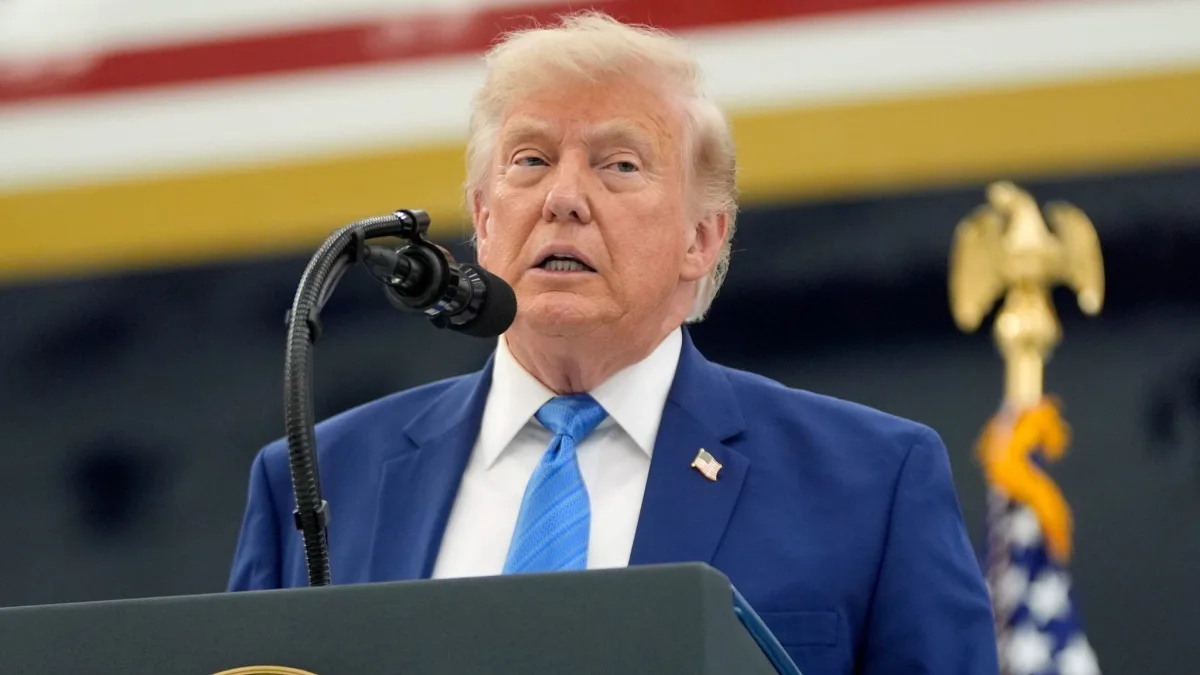
The United States and Iran have agreed to resume talks after Tehran formally requested negotiations. President Donald Trump announced the decision on Friday but immediately declared the June ceasefire terminated. His statement on Truth Social left no room for ambiguity. "The Islamic Republic of Iran has asked us to continue 'talks.' We have agreed to do so, but the United States has stated to them, in no uncertain terms, that the Cease Fire is OVER!" Trump wrote. The move follows a week of escalating military exchanges that have shattered the fragile truce.
The latest round of hostilities began Thursday when Iranian forces launched coordinated attacks on US military installations across Gulf states. The Pentagon confirmed strikes targeted bases in Qatar, Bahrain, and the United Arab Emirates. Washington retaliated within hours, hitting Iranian coastal and eastern provinces with precision airstrikes. Both sides claimed the other breached the interim deal signed last month to end a four-month conflict that disrupted global energy supplies. The agreement had already been fraying under repeated violations before Trump’s public termination.
Qatar has emerged as the primary mediator in the crisis. Prime Minister Sheikh Mohammed bin Abdulrahman Al Thani urged both nations to honor their memorandum of understanding during a call with Egypt’s Foreign Minister Badr Abdelatty. The Qatari leader stressed the need to protect freedom of navigation in the Strait of Hormuz, where recent attacks on commercial vessels have raised maritime security threats to "severe" levels. The UK Maritime Trade Operations warned ships transiting the area to expect radio contact from naval forces and to avoid a designated mine-danger zone. Despite the heightened alert, the southern route through the strait remains open to all traffic.
The killing of Supreme Leader Ayatollah Ali Khamenei in February’s US-Israeli airstrikes continues to fuel Iranian demands for vengeance. Islamic Revolutionary Guard Corps commander Brigadier-General Ahmad Vahidi vowed retaliation against both nations, calling the assassination a "cowardly" act. "The criminal leaders of America and all enemies of the Islamic Revolution must know that by this act they will never bring the flag of resistance to the ground," Vahidi declared. Iran’s Supreme National Security Council echoed the threat, stating that future attacks on infrastructure would trigger immediate reprisals. The council explicitly warned Israel would not be spared from Iranian counterstrikes.
Behind the public posturing, US officials revealed a deliberate strategy of calibrated military action. CNN reported the Pentagon has been striking Iranian targets and then pausing to allow diplomacy space. The USS Abraham Lincoln carrier strike group in the Arabian Sea remains on high alert. Flight crews armed fighter aircraft while pilots conducted training exercises for potential strike missions. The carrier’s captain briefed sailors on rising regional tensions, emphasizing the need for constant readiness. Despite Iranian claims of additional US strikes, American officials denied further military action—though they warned the situation remains fluid and could escalate rapidly.
The conflict’s economic fallout continues to reverberate globally. The International Energy Agency reported a partial recovery in oil production after shipments through the Strait of Hormuz resumed. June saw the largest monthly increase in global oil supply in months, with Gulf output rising by 3.5 million barrels per day. However, intermittent disruptions persist due to security concerns. The IEA warned that geopolitical risks in the Gulf continue to cloud market stability. Current production levels remain 9.4 million barrels per day below pre-war figures, with OPEC+ output still struggling to regain pre-conflict volumes.
Trump’s decision to declare the ceasefire over while agreeing to talks reveals a calculated diplomatic gamble. The president faces mounting domestic pressure over high gas prices ahead of midterm elections. His Republican Party risks losing congressional seats if energy costs remain elevated. The White House has framed the military pauses as proof of diplomatic flexibility, but analysts question whether the strategy can break the cycle of retaliation. The original ceasefire agreement contained no enforcement mechanisms, leaving both sides free to interpret violations as they saw fit. This structural flaw allowed the truce to collapse within weeks of signing.
The Strait of Hormuz remains the conflict’s most volatile flashpoint. Iran has repeatedly asserted its right to control passage through the waterway, even suggesting it may impose transit fees. International law prohibits such measures, as the strait comprises Omani and Iranian territorial waters where free navigation is guaranteed. The US Navy has maintained a continuous presence to deter Iranian interference, but recent attacks on tankers demonstrate the limits of this deterrence. Qatar’s LNG shipments have become particular targets, with Tehran denying responsibility for strikes on Qatari vessels despite Doha’s public condemnations.