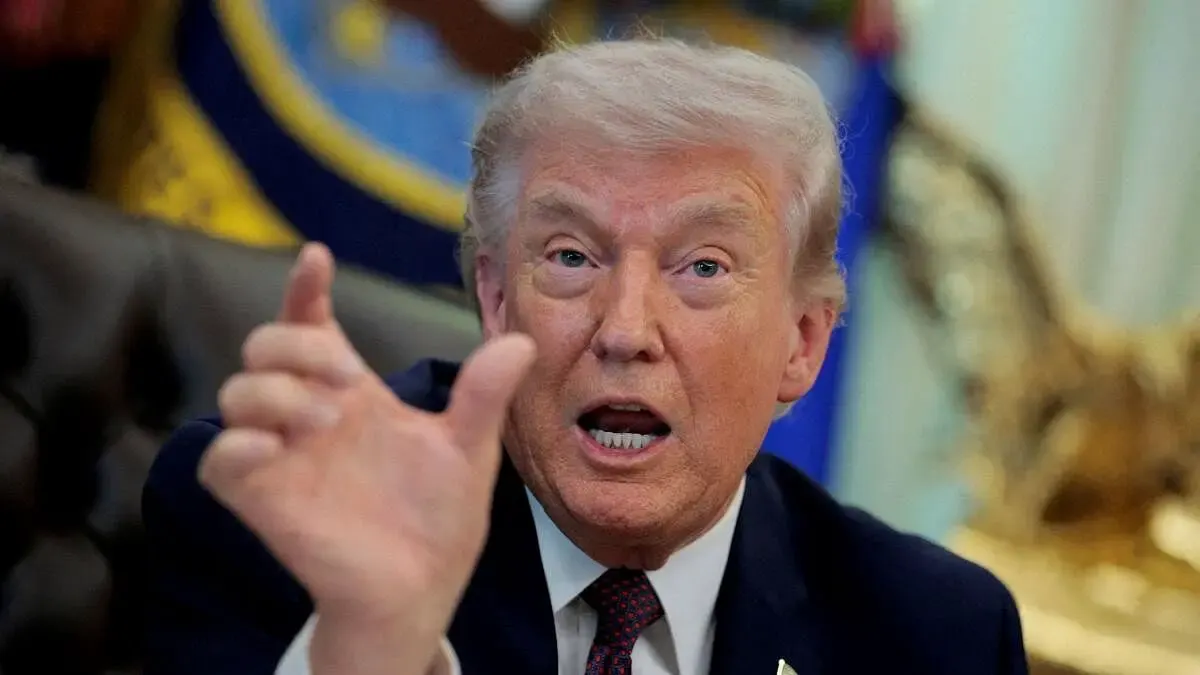
The United States and Iran have reached a landmark agreement to end nearly 18 months of military conflict. President Donald Trump announced the deal on Monday, declaring the immediate reopening of the Strait of Hormuz and the lifting of the US naval blockade. The agreement, brokered with mediation from Pakistan, Qatar, and Saudi Arabia, marks a dramatic shift in Middle Eastern geopolitics.
Trump’s statement on Truth Social confirmed the deal’s completion. He authorized the toll-free opening of the Strait of Hormuz and ordered the removal of the US naval blockade. His post included a directive to global shipping: “Ships of the World, start your engines. Let the oil flow.” The Strait of Hormuz, a critical chokepoint for global oil and gas supplies, had been effectively closed since February 2025, when Iran imposed a blockade in retaliation for US and Israeli strikes. The US responded with its own blockade of Iranian ports, escalating tensions into a full-scale regional war.
The agreement’s terms remain partially undisclosed, but key elements have emerged. Pakistani Prime Minister Shehbaz Sharif revealed that the deal includes an “immediate and permanent termination of military operations on all fronts, including in Lebanon.” Iran’s Deputy Foreign Minister Kazem Gharibabadi confirmed this, stating that the war had ended with “great victories” for Iran. The pact also addresses the parallel conflict between Israel and Hezbollah, though details of that resolution are still unclear. The signing ceremony is scheduled for Friday in Switzerland, with electronic signatures already exchanged.
The road to this agreement was fraught with last-minute disruptions. On Sunday, Israel launched airstrikes on Beirut’s southern suburbs, a Hezbollah stronghold, killing three people. Trump condemned the attack, calling it a deliberate attempt to derail the peace process. In a phone call with Axios, he expressed fury at Israeli Prime Minister Benjamin Netanyahu, questioning the timing of the strike. “Why did Bibi have to do a fucking attack?” Trump said. “He has no fucking judgement.” The Israeli military claimed the strike was in response to Hezbollah rocket fire, but Trump dismissed the provocation as “very small and meaningless.”
The Israeli strike triggered a sharp response from Iran. The Supreme National Security Council warned that retaliation was “imminent,” and Iran’s Parliament Speaker Mohammad Bagher Ghalibaf accused the US of either lacking the will or the ability to enforce its commitments. The incident underscored the fragility of the negotiations, which had been building momentum for weeks. UN Secretary-General Antonio Guterres criticized the attack, urging “maximum restraint” from all parties. Despite the setback, US Defense Secretary Pete Hegseth remained optimistic, stating that the deal was “not a matter of if, but when.”
One of the most contentious issues in the negotiations was the status of the Strait of Hormuz. Iran had insisted on maintaining control over the waterway, while the US demanded its unconditional reopening. The final agreement appears to have resolved this by lifting the US blockade of Iranian ports in exchange for Iran’s withdrawal from the strait. However, Iran’s Foreign Minister Abbas Araghchi indicated that the strait would not return to its pre-war status quo, suggesting lingering restrictions or oversight mechanisms. Another sticking point was Iran’s nuclear program, particularly its stockpile of highly enriched uranium. Trump had previously vowed to remove and destroy the uranium, but Araghchi stated that the only viable solution was to “dilute it inside Iran.”
The economic implications of the deal are immediate and far-reaching. The Strait of Hormuz handles approximately 20% of the world’s oil supply, and its closure had sent global energy markets into turmoil. Oil prices spiked by over 30% since the blockade began, and analysts predict a sharp correction once shipping resumes. The deal also includes provisions for the gradual lifting of economic sanctions on Iran, which could unlock billions in frozen assets and revive its struggling economy. However, the timeline for sanctions relief remains unclear, and hardliners in both the US and Iran may resist concessions.
Regional dynamics are already shifting in response to the agreement. Saudi Arabia and Qatar played key roles in mediation, signaling a broader realignment of Gulf states toward diplomacy. Turkey also expressed support for the deal, though its long-term stance remains uncertain. Israel, however, has been left isolated. Netanyahu’s government has repeatedly demanded the destruction of Hezbollah’s military capabilities, and the deal’s inclusion of Lebanon may be seen as a betrayal. Israeli Finance Minister Bezalel Smotrich escalated tensions by demanding the demolition of 10 buildings in Beirut’s Dahiyeh district for every rocket fired at Israel. The Israeli military reported rocket fire from Lebanon on Sunday, though no injuries were recorded.
The deal’s durability remains an open question. Previous ceasefires in the region have collapsed under the weight of mutual distrust and external provocations. Iran’s hardline factions, including the Islamic Revolutionary Guard Corps, may resist concessions, while US lawmakers could challenge the agreement’s terms. The upcoming US presidential election adds another layer of uncertainty, as a potential change in administration could alter Washington’s approach. For now, the reopening of the Strait of Hormuz offers a rare moment of relief in a conflict that has claimed thousands of lives and destabilized the Middle East.