
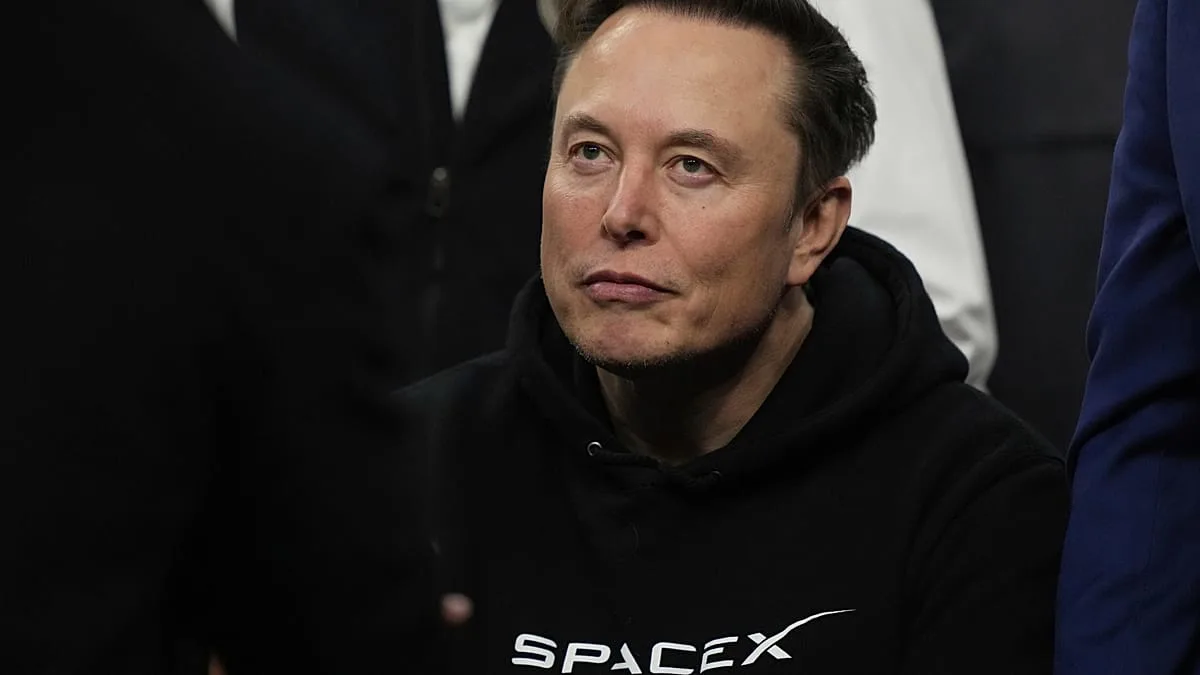
Elon Musk’s SpaceX has executed its largest artificial intelligence acquisition to date. The rocket and satellite giant confirmed a $60 billion all-stock purchase of San Francisco-based coding startup Cursor. The deal closes in September. Cursor will operate as a wholly owned subsidiary under SpaceX’s expanding AI division, xAI.
The transaction arrives three months after SpaceX’s record-breaking initial public offering. The IPO raised $86 billion and catapulted SpaceX’s market capitalisation above $2.5 trillion. Musk became the world’s first trillionaire on the first day of trading. SpaceX shares have since climbed nearly 50% from the $135 offer price. Analysts attribute the surge to investor optimism about future earnings rather than current profitability. SpaceX lost over $9 billion in 2025 and 2026 combined, driven by heavy spending on AI infrastructure and reusable rocket technology.
Cursor specialises in AI-powered software development tools. Its platform automates code generation, debugging, and optimisation for enterprise clients. Major users include Stripe, Adobe, and Nvidia. Nvidia CEO Jensen Huang publicly called Cursor his "favourite enterprise AI service" earlier this year. The startup was founded in 2022 by former Google engineers. Its technology leverages large language models trained on billions of lines of open-source code. This allows developers to write, refactor, and deploy software using natural language prompts instead of manual coding.
The acquisition fulfils a pre-existing partnership agreement signed in April. SpaceX had secured an option to buy Cursor for $60 billion or pay $10 billion for joint work completed. The April announcement highlighted the strategic fit: Cursor’s product and distribution network combined with SpaceX’s Colossus supercomputer. Colossus, described as a "million H100 equivalent" training cluster, is one of the world’s most powerful AI supercomputers. SpaceX claims the merger will enable the creation of "the world’s most useful models" for both software development and broader AI applications.
This deal marks SpaceX’s most aggressive move yet to close the gap with AI leaders OpenAI and Anthropic. Musk’s xAI division, launched in 2023, has struggled to match the market penetration of competitors. Its flagship product, the Grok chatbot, has faced criticism for factual inaccuracies and controversial training data. The Cursor acquisition provides SpaceX with immediate access to a mature enterprise AI product and an established customer base. It also brings in-house the technical talent needed to accelerate xAI’s development roadmap.
Regulatory filings reveal a critical timeline pressure. SpaceX must complete the acquisition before its next quarterly earnings report in October. The company’s stock price has been volatile since the IPO, with analysts warning that investor patience for continued losses is wearing thin. The Cursor deal is positioned as a revenue accelerator. SpaceX projects that integrating Cursor’s technology into its Starlink satellite internet platform will generate $3 billion in annual recurring revenue within two years. This would offset approximately one-third of SpaceX’s current annual losses.
An overlooked dimension of this acquisition is its impact on Nigeria’s burgeoning tech ecosystem. Cursor has quietly built a significant user base among Nigerian software developers. Local tech communities report that over 15,000 Nigerian developers use Cursor’s free tier for personal and freelance projects. The acquisition could disrupt this access. SpaceX’s enterprise-focused business model may prioritise paid subscriptions, potentially pricing out independent developers. Nigerian tech leaders have already begun lobbying SpaceX to maintain a free tier or establish a local partnership program to preserve access for emerging markets.
The deal also exposes a structural tension in SpaceX’s AI strategy. The company’s core business—rocket launches and satellite internet—relies on proprietary, closed-source technology. Yet its AI ambitions require open collaboration with the global developer community. Cursor’s platform thrives on contributions from open-source repositories. SpaceX must now reconcile these opposing philosophies. Industry observers note that Musk’s public criticism of open-source AI models contrasts sharply with Cursor’s collaborative approach. This ideological clash could slow integration and limit the acquisition’s strategic value.
Financial analysts highlight another risk: valuation sustainability. The $60 billion price tag represents nearly 30 times Cursor’s projected 2026 revenue. SpaceX’s own valuation is similarly inflated, trading at 50 times its current revenue. Both multiples assume aggressive growth that may not materialise. If AI adoption slows or competition intensifies, SpaceX could face significant write-downs. The company’s board has already approved a $20 billion share buyback program to support its stock price, signalling concern about long-term valuation stability.