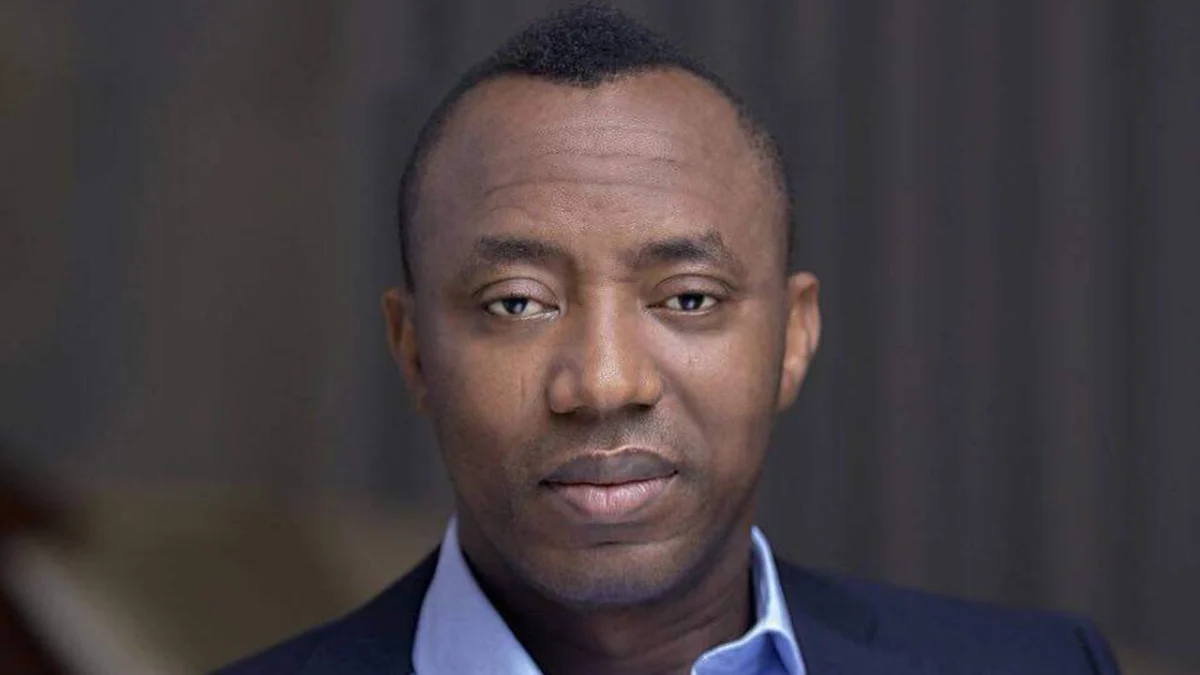
A Federal High Court in Abuja has set June 30 2026 as the date to rule on activist Omoyele Sowore’s application to restore his revoked bail. The decision follows a dramatic legal standoff that has reignited national debate over judicial independence and the weaponization of cybercrime laws against government critics.
The Department of State Services (DSS) is prosecuting Sowore on two counts of criminal defamation. The charges stem from social media posts in which he referred to President Bola Tinubu as a "criminal." The posts appeared on Sowore’s verified X and Facebook accounts. Justice Mohammed Umar revoked Sowore’s bail on June 16 after he failed to appear in court. The judge also issued a bench warrant for his arrest. Sowore’s legal team filed a motion on June 17 seeking 12 reliefs. These include setting aside the bail revocation, vacating the bench warrant, and restoring the original bail conditions.
The defence grounded its application in constitutional provisions and the Administration of Criminal Justice Act. Sections 35(4), 36(1), and 6(6)(a) and (b) of the 1999 Constitution were cited. The defence also invoked Sections 169 and 352 of the Administration of Criminal Justice Act 2015. A 34-paragraph affidavit deposed by Emmanuel Larry supported the motion. A subsequent 36-paragraph affidavit by Sodiq Temitope was filed on June 24. The defence urged the court to grant the application "in the interest of justice."
The prosecution countered with a 25-paragraph counter-affidavit deposed by Moses Madara. Lead prosecutor Akinlolu Kehinde (SAN) argued that Sowore had not presented truthful facts capable of swaying the court’s discretion. Kehinde urged the court to refuse the application. The prosecution’s opposition reveals a pattern of legal aggression against dissenting voices. Similar tactics have been deployed against journalists and activists under cybercrime and defamation charges. The DSS has increasingly used these laws to silence critics of the administration.
The courtroom drama took a sharper turn when Sowore’s counsel applied for his temporary release pending the ruling. The defence cited Sowore’s deteriorating health and offered an undertaking to produce him in court on June 30. The prosecution dismissed the request as "a little bit absurd." Justice Umar denied the application. He stated that granting it would defeat the purpose of adjourning the case to prepare his ruling. The judge ordered Sowore’s continued remand at the Kuje Correctional Centre.
The denial of Sowore’s temporary release request underscores a broader judicial trend. Courts have increasingly deferred to executive security agencies in high-profile cases involving government critics. This deference has raised concerns about the erosion of judicial discretion. Legal analysts note that such rulings often prioritize procedural formality over substantive justice. The optics of the case—where a prominent activist remains in custody while awaiting a bail ruling—further fuel perceptions of a compromised judiciary.
The case has exposed systemic gaps in Nigeria’s legal framework for handling dissent. Cybercrime and defamation laws are frequently repurposed as tools of political repression. The DSS’s decision to prosecute Sowore on behalf of the federal government signals a dangerous expansion of state power. This expansion blurs the line between legitimate law enforcement and the suppression of free speech. The African Action Congress (AAC), of which Sowore is the presidential candidate, has condemned his detention as an attack on democratic freedoms.
The June 30 ruling will test the judiciary’s willingness to uphold constitutional protections. If the court restores Sowore’s bail, it could signal a rare check on executive overreach. A refusal, however, would reinforce fears of a judiciary increasingly aligned with state security apparatuses. The case has already drawn international attention. Human rights organizations have warned that Nigeria’s legal system is being weaponized to stifle opposition voices. The outcome will reverberate beyond Sowore’s individual fate. It will shape the contours of Nigeria’s democratic resilience in the face of authoritarian pressures.
The broader implications of this case extend to Nigeria’s media landscape. Sowore’s Sahara Reporters has been a thorn in the side of successive administrations. The platform is known for its investigative journalism and unflinching criticism of government corruption. The DSS’s prosecution of Sowore sends a chilling message to other media outlets. It suggests that critical reporting—particularly on social media—could invite legal retaliation. This climate of fear threatens to shrink the space for independent journalism in Nigeria.