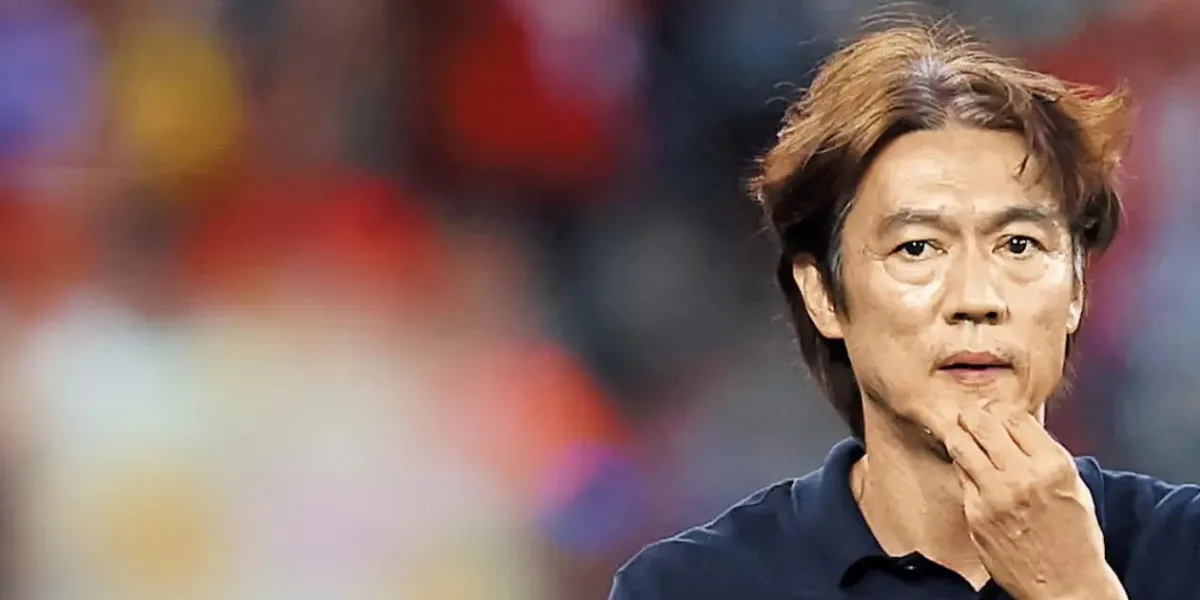
South Korea’s 2026 World Cup exit has detonated a political and cultural crisis that stretches far beyond the pitch. President Lee Jae-myung’s demand for a state-led investigation into the Korea Football Association (KFA) marks the first time a sitting South Korean leader has weaponised football as a governance audit. The probe will dissect not only Hong Myung-bo’s tactical missteps but the opaque hiring processes that installed him, the financial opacity of public subsidies, and the alleged cronyism that has long shielded federation executives from accountability. With taxpayers funding an estimated ₩45 billion (£26 million) for the campaign, the inquiry is set to become a forensic examination of how national prestige is monetised—and mismanaged.
The tactical autopsy of the group-stage collapse reveals a squad structurally unbalanced before the tournament even began. Hong’s decision to bench Son Heung-min for the decisive South Africa match was not merely a selection gamble; it exposed a deeper midfield collapse that had been masked by the opening win over the Czech Republic. Data from Opta shows South Korea averaged just 0.8 expected goals per game in Mexico, the lowest of any Asian side still competing. The defensive frailty was equally stark: 58% of opposition chances originated from transitions, a statistic that points to a systemic inability to press collectively. Former international Lee Young-pyo’s televised verdict—that the South Africa defeat was “the worst Korean performance of the 21st century”—was not hyperbole but a recognition that the squad lacked the tactical identity Klinsmann had instilled during his tenure.
The dressing room fracture that preceded the tournament has emerged as a critical, overlooked factor. In early June, players staged a media boycott after domestic journalists were caught on hot microphones mocking Son’s 2018 Asian Games military exemption. The incident, first reported by Korean outlet Sports Chosun, revealed a toxic environment where personal grievances festered unchecked. Sources within the camp describe a divide between the European-based stars—Son, Kim Min-jae, and Lee Kang-in—and domestically based players over training intensity and tactical discipline. This schism manifested on the pitch: South Korea’s pressing triggers were inconsistent, with Son’s absence against South Africa removing the only player capable of breaking defensive lines through individual brilliance.
While mainstream coverage fixates on the death threats and restaurant bans, the real institutional rot lies in the KFA’s financial engineering. The federation’s 2025 annual report, obtained by investigative outlet Newstapa, reveals that 62% of its ₩120 billion budget was allocated to “administrative costs,” a euphemism for salaries and perks for executives with political connections. The state audit will scrutinise why Hong, whose previous managerial stint ended with a 2014 group-stage exit, was reappointed without a competitive tender process. Insiders claim the selection committee was stacked with former KFA officials who had worked under Hong during his playing career—a clear conflict of interest that the presidential probe is expected to dismantle.
The fallout has already triggered a seismic shift in the Asian football hierarchy. Japan’s progression to the round of 32, where they face Brazil, has cemented their status as the continent’s standard-bearer, a role South Korea had occupied since 2002. The ripple effects extend to the transfer market: European clubs are now circling Kim Min-jae, whose contract with Bayern Munich expires in 2027, with Manchester United and Real Madrid preparing summer bids. The defender’s agent has confirmed that Kim is reconsidering his international future, a move that would deprive the next manager of Asia’s most dominant centre-back. Meanwhile, Son’s silence since the elimination fuels speculation that his 12-year international career may end not with a farewell tour but a quiet withdrawal.
The KFA’s next managerial appointment will be the first test of whether the federation can reform. The shortlist, leaked to Ilgan Sports, includes two candidates with diametrically opposed philosophies: former Ulsan Hyundai manager Hong Myung-ho, whose defensive pragmatism mirrors Hong Myung-bo’s, and ex-Borussia Dortmund assistant Peter Hermann, a proponent of high-pressing football. The choice will signal whether the KFA prioritises short-term damage control or a long-overdue tactical evolution. Hermann’s potential appointment would also force a reckoning with the squad’s age profile; the current team’s average age of 29.3 is the oldest in Korean World Cup history, and a rebuild around younger talents like Jeong Sang-bin (23) and Lee Han-beom (22) is inevitable.
The presidential investigation’s interim report, due in September, is expected to recommend sweeping reforms, including mandatory financial disclosures for federation executives and a cap on administrative spending. The most radical proposal—a government-appointed oversight board with veto power over major decisions—would effectively end the KFA’s autonomy. This model, already implemented in Nigeria and Kenya following similar crises, reflects a global trend where governments are no longer willing to subsidise sporting failure. For South Korea, the stakes are higher: the 2026 collapse risks eroding the cultural capital built since 2002, when the national team’s semi-final run united a country still grappling with the aftermath of the Asian financial crisis.
The final, unspoken consequence of this debacle is its impact on the 2027 Asian Cup, which South Korea will co-host with Saudi Arabia. The tournament, already overshadowed by the World Cup failure, now faces the prospect of empty stadiums and a demoralised squad. The KFA’s marketing team has quietly shelved plans for a pre-tournament friendly against Argentina, fearing a repeat of the 2023 humiliation when South Korea lost 4-0 to Morocco in front of 12,000 empty seats in Seoul. With Son’s international future hanging in the balance and the federation’s credibility in tatters, the road to redemption will be measured not in months but years.