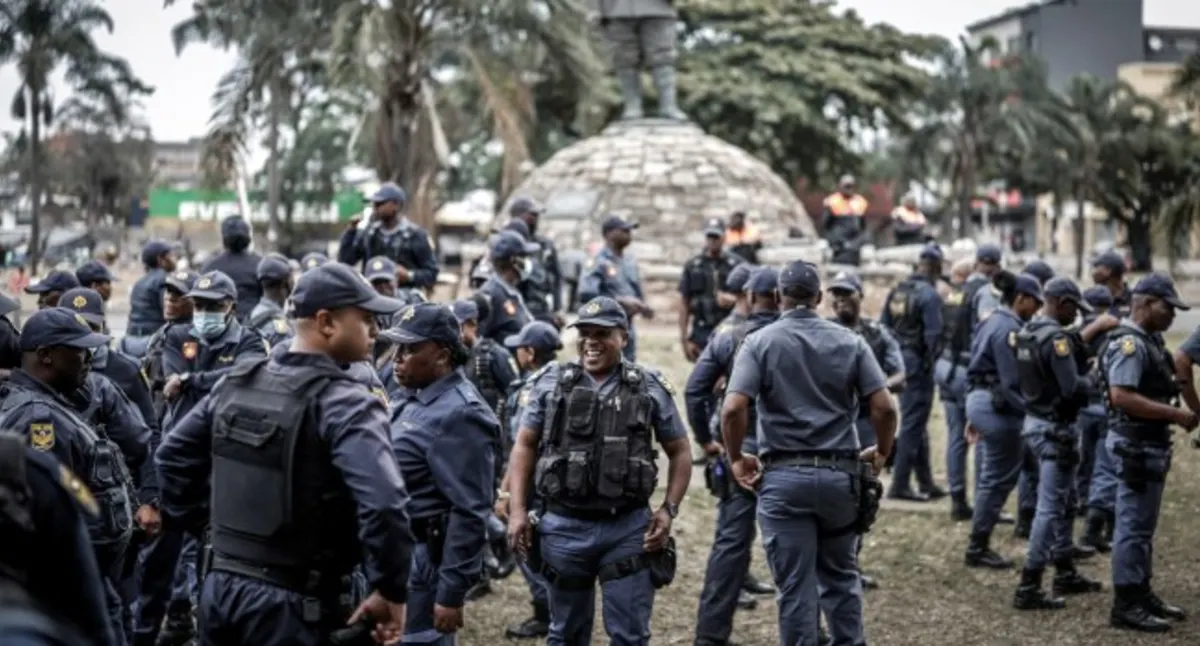
South Africa stood on the edge of another xenophobic eruption on June 30, 2026. The March and March movement, a coalition of citizen-led vigilante groups and minor political parties, set an unofficial deadline for undocumented migrants to leave the country. Police deployed in force across Durban, Johannesburg, and Cape Town. Streets emptied. Shops shuttered. Hundreds of foreign nationals, mostly Malawians and Zimbabweans, gathered outside consulates and bus stations, desperate to flee.
The protests were not spontaneous. They were meticulously organised, amplified by social media campaigns that spread disinformation about migrants stealing jobs and fueling crime. Analysts say the movement is well-resourced, with funding and logistical support that suggest deeper political backing. The timing is no coincidence. Local government elections loom in November. Anti-migrant sentiment has been weaponised to deflect public anger away from the real culprits: corruption, mismanagement, and a governance system that has failed to deliver basic services.
The human cost is already severe. At least four migrants—two Mozambicans, an Ethiopian, and a Malawian—have been killed in recent weeks. Uganda, Malawi, and Zimbabwe have launched emergency repatriation plans. Nearly 750 Ugandans are set to be evacuated. In Durban, Malawian builder Peter Madsoan, 45, waited for a bus home. "I am a breadwinner back in Malawi," he said. "It is better for me to go than to die in South Africa." Zimbabwean Evelyn Chinooneka, 29, camped outside her country’s consulate in Cape Town with her 10-month-old baby. "All the clothes are wet now," she said. "We need our buses to come."
The government’s response has been reactive, not preventive. President Cyril Ramaphosa announced stepped-up border controls and urged traditional leaders to calm tensions. But the root causes remain unaddressed. South Africa’s unemployment rate hovers above 30 percent. Crime is rampant. Public services are collapsing. Migrants are scapegoated for problems created by decades of political failure. Labour analyst Dale McKinley put it bluntly: "The xenophobic groups have got it wrong. This is a problem of governance, corruption, and mismanagement."
The protests also reveal a dangerous institutional gap. The South African Police Service (SAPS) has been deployed in large numbers, but their mandate is unclear. Are they there to protect migrants or contain the protests? In Johannesburg, police fanned out across the city, but their presence did little to reassure foreign nationals. In Durban, protesters in Zulu attire chanted "abahambe"—"Let them go"—while police stood by. The lack of a clear, proactive strategy from SAPS suggests a force stretched thin, reactive rather than strategic.
The economic fallout is already visible. Businesses in Bellville and Mitchells Plain, normally bustling shopping hubs, fell silent ahead of the protests. Landlords evicted migrant tenants. Employers fired workers to avoid fines or vigilante attacks. The informal economy, which migrants dominate, is grinding to a halt. This is not just a humanitarian crisis. It is an economic one. South Africa’s small businesses, already struggling under load-shedding and crime, cannot afford another shock. Yet the government’s focus remains on containment, not solutions.
The protests also expose a deeper structural flaw in South Africa’s immigration policy. The country has no coherent strategy for managing migration. Border controls are porous. Asylum systems are backlogged. Undocumented migrants live in legal limbo, vulnerable to exploitation and violence. The March and March movement’s demand for mass deportations is simplistic, but it resonates because the government has failed to offer a viable alternative. Without a clear, humane immigration policy, xenophobic rhetoric will continue to fill the vacuum.
The international community is watching. Nigeria, Uganda, and Zimbabwe have already condemned the violence. Nigeria’s presidential aide warned that the country "won’t accept any humiliation or damage to its interests." This is not just about South Africa’s internal politics. It is about the continent’s stability. If Africa’s most industrialised economy cannot manage migration without resorting to violence, what hope is there for others? The protests are a warning. Unless South Africa’s leaders address the governance failures that fuel xenophobia, the cycle of violence will repeat.