
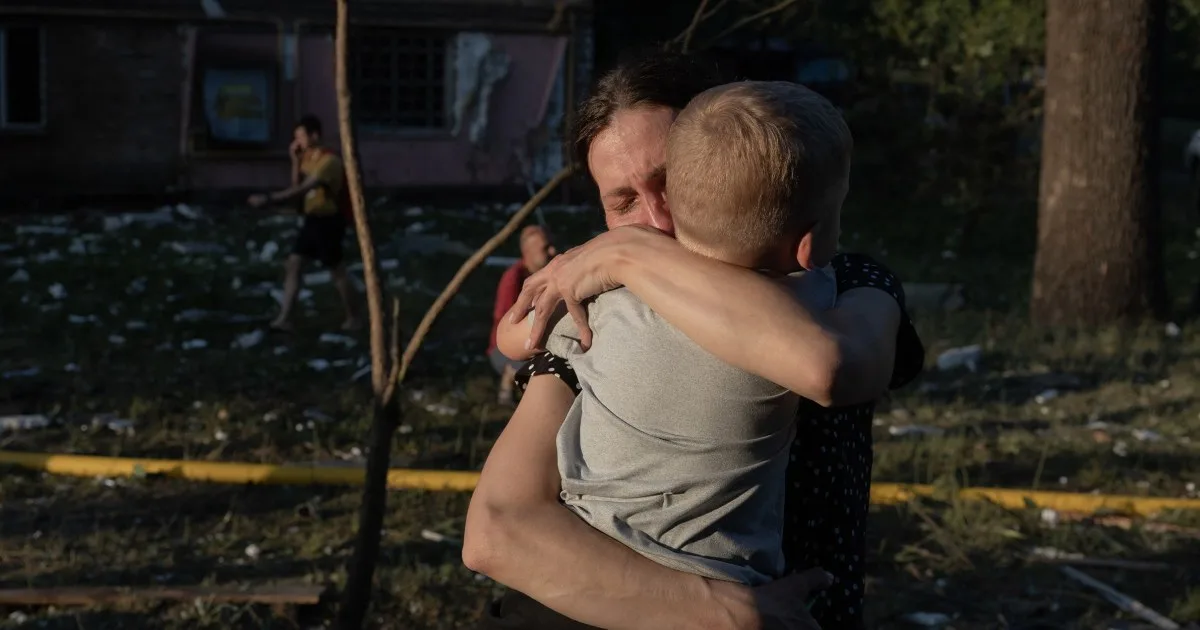
Russia launched its most devastating strike on Kyiv in the early hours of July 2, 2026. The attack killed at least 17 people. Officials reported up to 20 deaths. Another 90 civilians were injured. Explosions rocked the city for four straight hours. Ballistic missiles, cruise missiles, and drones rained down on residential districts. President Volodymyr Zelenskyy had warned of a "massive strike" hours earlier. He cut short his Dublin visit to return to Kyiv. His warning came too late to prevent the carnage.
The assault targeted 30 locations across Kyiv. Most were apartment buildings and civilian infrastructure. In Darnytskyi district, six floors of a nine-story building collapsed. Rescuers pulled survivors from the rubble. In Shevchenkivskyi, a paramedic responding to the attack was critically injured. Kyiv Mayor Vitali Klitschko confirmed 20 residential buildings were damaged. Fires broke out in 16-story towers and private homes. Smoke blanketed the city by dawn. Emergency services deployed 500 personnel and 100 vehicles. They worked through the night to evacuate trapped residents.
Russia claimed the strikes hit "key military plants." The evidence tells a different story. The hardest-hit areas—Darnytskyi, Desnianskyi, Holosiivskyi—are civilian neighborhoods. No military installations exist there. Ukrainian Foreign Minister Andrii Sybiha called the attack a "night of horror." He demanded faster deliveries of air defense systems from Western allies. Sybiha invoked Article 51 of the U.N. Charter. He framed Ukraine’s drone strikes on Russian oil refineries as lawful self-defense. Moscow called the Kyiv assault retaliation for those refinery attacks. This cycle of escalation has become the war’s defining pattern.
The timing of the strike was no accident. Russia intensified attacks on Kyiv after Ukraine’s drone campaign disrupted Russian fuel supplies. Those drones hit 12 refineries inside Russia. Fuel output dropped by 18%. The Kremlin’s response was not proportional. It was punitive. By targeting Kyiv’s residential heart, Russia aimed to break civilian morale. The strategy failed. Public defiance surged. Volunteers lined up outside blood banks. Residents donated food and blankets to displaced families. The attack united Kyiv in ways no political speech could.
Western allies face a moral reckoning. Ukraine’s air defenses are stretched thin. The U.S. and EU have pledged Patriot missiles. Deliveries lag. Each delay costs lives. British Prime Minister Keir Starmer condemned the attack as "barbaric." He stopped short of announcing new military aid. The EU’s top diplomat proposed fresh sanctions on Moscow. Sanctions alone will not stop Russian missiles. Ukraine needs real-time intelligence sharing. It needs faster approvals for weapons transfers. Zelenskyy’s request for licenses to produce Patriot missiles domestically signals a shift. Ukraine is moving from dependence on foreign aid to self-sufficiency.
The attack exposed critical gaps in Kyiv’s defenses. Sirens sounded only minutes before the first missiles struck. Many residents received alerts on their phones after explosions began. Kyiv’s metro stations, designed as Cold War-era shelters, are now overcrowded. Some lack basic medical supplies. Emergency services are overwhelmed. Nearly 500 personnel and 100 vehicles responded. They worked through the night. Resources are finite. The next strike could push them past their breaking point.
Russia’s escalation reflects internal pressures. President Vladimir Putin faces growing dissent over the war’s economic toll. Sanctions have crippled Russia’s tech and manufacturing sectors. The ruble has lost 30% of its value since 2022. By ramping up attacks on Kyiv, Putin aims to project strength. The Kremlin’s rhetoric—"increasing pressure" and "no compromise"—is designed to rally nationalist support. Yet each civilian death in Kyiv fuels global outrage. The U.N. estimates over 16,000 Ukrainian civilians have died since 2022. That number will rise if air defenses are not bolstered.
The attack’s aftermath reveals a city fighting to rebuild. Debris clearance began within hours. Engineers assessed structural damage to 20 residential buildings. Temporary shelters opened in schools and community centers. The psychological scars run deeper. Psychologists report a surge in PTSD cases among children. Many witnessed the attack from metro tunnels. Schools have introduced trauma counseling. Resources are scarce. The war’s long-term impact on Ukraine’s youth may be its most devastating legacy.