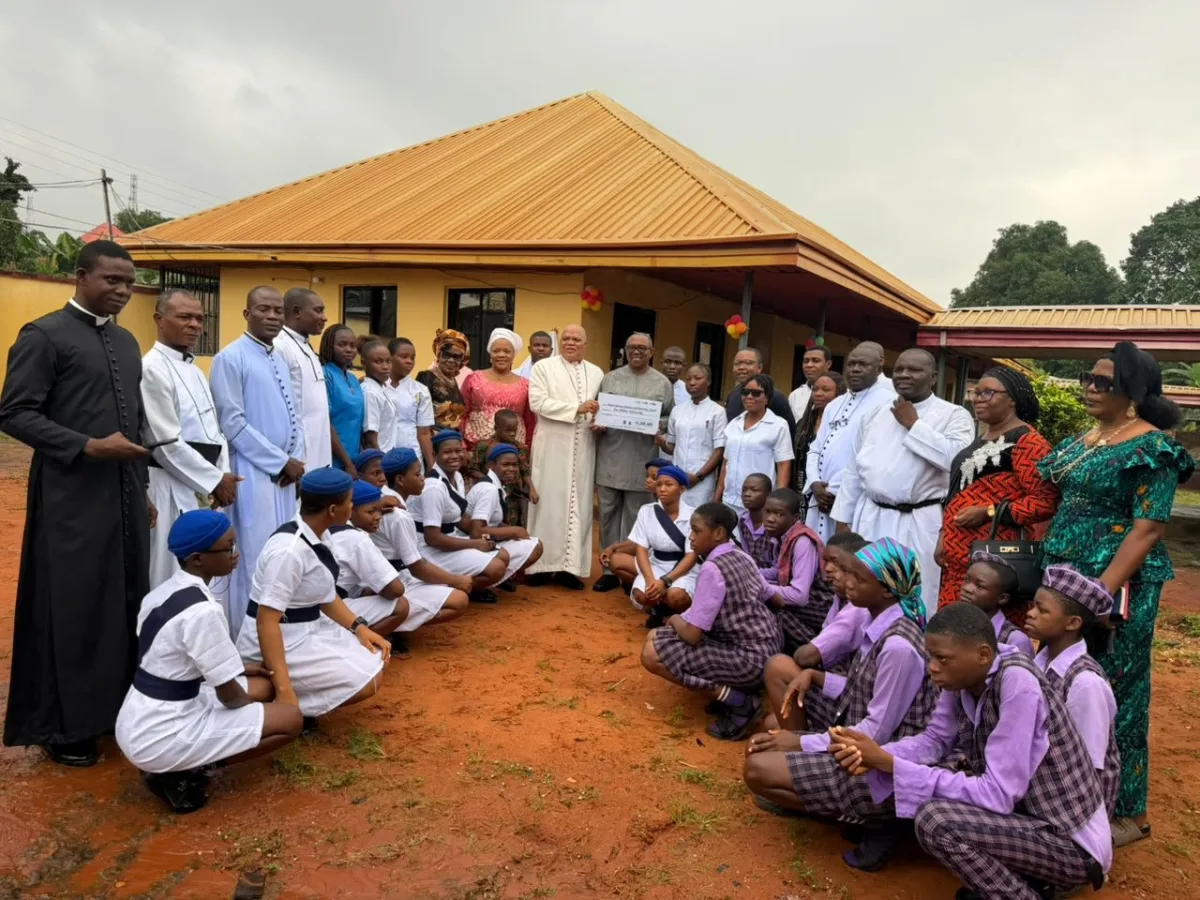
Peter Obi marked his 65th birthday on July 19 by donating N10 million to St. Raphael’s Hospital in Umueri, Anambra State. The gesture was not just a personal milestone celebration but a deliberate statement on leadership and national responsibility. Obi’s decision to channel funds into healthcare infrastructure reflects a broader philosophy that prioritizes service over self-indulgence. His actions underscore a growing trend among Nigerian political figures who use personal milestones to address systemic gaps in public services.
The donation to St. Raphael’s Hospital, a rural facility in Anambra East Local Government Area, highlights the dire state of healthcare in underserved communities. Nigeria’s healthcare system has long been plagued by underfunding, inadequate infrastructure, and a brain drain of medical professionals. Obi’s contribution, while significant, is a drop in the ocean compared to the billions required to revamp the sector. However, his choice of a rural hospital sends a powerful message about the need to prioritize marginalized communities. The hospital, like many others in rural Nigeria, struggles with basic amenities, limited medical supplies, and a shortage of qualified personnel. Obi’s visit and donation bring temporary relief but also draw attention to the chronic neglect of such facilities by successive governments.
Obi’s birthday reflection reveals a deliberate rejection of extravagant celebrations in favor of humanitarian service. He argued that Nigeria’s socio-economic realities make lavish festivities inappropriate. With millions of Nigerians grappling with poverty, unemployment, and inadequate healthcare, Obi’s stance challenges the culture of ostentatious displays among the political elite. His approach contrasts sharply with the norm, where politicians often host elaborate parties funded by public or questionable resources. By redirecting attention to societal needs, Obi positions himself as a leader who aligns personal values with public expectations. This strategy is not merely symbolic; it is a calculated move to reinforce his image as a reformist ahead of the 2027 presidential election.
The former Anambra State governor’s emphasis on education and healthcare as critical national investments is not new. During his tenure as governor, Obi implemented policies that improved school infrastructure and healthcare delivery in Anambra State. His administration’s focus on these sectors was driven by the belief that human capital development is the bedrock of economic growth. However, his post-gubernatorial philanthropy raises questions about the sustainability of such interventions. While individual donations provide immediate relief, they cannot replace the need for structured government policies and funding. Obi’s actions, though commendable, also highlight the failure of the state to fulfill its obligations to citizens, forcing private individuals to step in where public institutions have failed.
Obi’s birthday statement also serves as a subtle critique of Nigeria’s leadership culture. He described hospitals and schools as the “greatest investments any society can make,” a direct challenge to the country’s political class, which has historically prioritized short-term gains over long-term development. His assertion that “leadership is about caring for the vulnerable” contrasts with the reality of Nigerian politics, where leaders often distance themselves from the struggles of ordinary citizens. Obi’s rhetoric, while inspiring, must be measured against his own political record. As a two-term governor, his administration made strides in education and healthcare, but critics argue that his post-gubernatorial philanthropy is an extension of his political brand rather than a purely altruistic endeavor.
A deeper analysis of Obi’s donation reveals its strategic timing and potential electoral implications. With the 2027 presidential election on the horizon, Obi’s actions are likely designed to consolidate his support base among the youth and middle class, who view him as a credible alternative to the status quo. His focus on healthcare and education resonates with these demographics, who are disproportionately affected by the country’s failing systems. However, Obi’s philanthropy also risks being perceived as performative, especially if it is not accompanied by a clear policy agenda for systemic change. While his donations provide immediate relief, they do not address the root causes of Nigeria’s healthcare and education crises, such as corruption, mismanagement, and policy inconsistency.
Beyond the immediate impact of the N10 million donation, Obi’s birthday gesture raises broader questions about the role of philanthropy in Nigeria’s development. The country’s elite, including politicians and business leaders, have a long history of using philanthropy to burnish their public images. However, such acts often serve as band-aids for deep-seated structural problems. Obi’s donation, while well-intentioned, underscores the need for a more coordinated approach to development, one that combines private sector involvement with robust government policies. Without this synergy, Nigeria’s healthcare and education sectors will continue to rely on sporadic acts of generosity rather than sustainable solutions.
Obi’s commitment to visiting schools and hospitals throughout the rest of the month further amplifies his message of service. By extending his birthday celebrations to include multiple acts of philanthropy, he reinforces his brand as a leader who prioritizes humanity over personal aggrandizement. However, this approach also invites scrutiny of his political motives. As a presidential aspirant, Obi’s actions are inevitably viewed through the lens of electoral strategy. His emphasis on healthcare and education aligns with the priorities of many Nigerians, but it remains to be seen whether his philanthropy will translate into tangible policy proposals if he assumes office. For now, his birthday donation serves as a reminder of the power of individual action in a country where institutional failure has become the norm.