
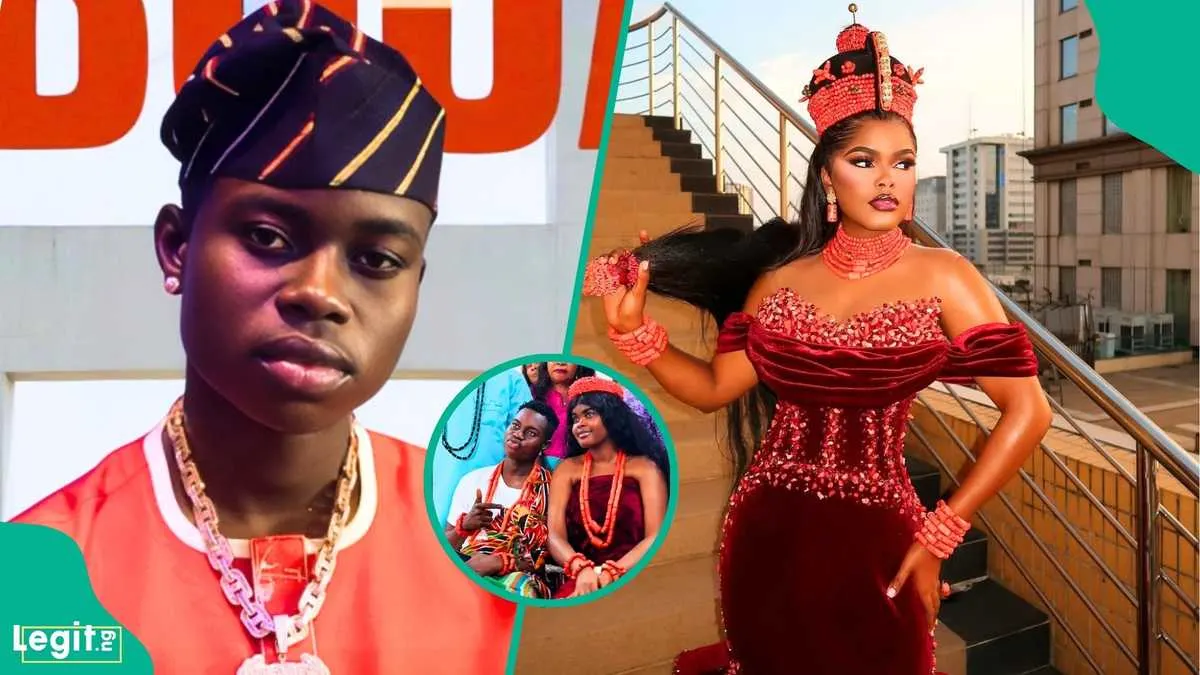
Nigerian TikTok star Habeeb Hamzat, known as Peller, has officially paid the bride price for his partner Elizabeth Aminata, popularly called Jarvis, in a traditional ceremony held in Benin City, Edo State. The event, captured in a viral video posted on June 21, 2026, marks the culmination of a highly publicized relationship that has unfolded across social media platforms for months. Peller and Jarvis, both influential content creators, have built a combined following of over 5 million across TikTok and Instagram, turning their personal lives into a spectacle of digital-age romance.
The ceremony itself was steeped in Edo cultural traditions. Peller wore a white shirt paired with a George wrapper and coral beads, while Jarvis donned a red wrapper with matching coral accessories and a beaded crown. The visual symbolism of the attire underscored the gravity of the occasion, transforming what could have been a mere social media moment into a formal family recognition of their union. Peller’s caption on Instagram—“Today, I proudly paid the bride price of the woman I love”—was accompanied by emojis of rings and sparkles, but the subtext was clear: this was not just performative. Both families had given their blessings, and the couple now faced the expectations that come with public commitment.
The road to this ceremony has been anything but smooth. The couple first gained attention in early 2025 when they began collaborating on TikTok skits, blending humor with glimpses of their personal lives. Their relationship timeline reads like a scripted drama. In March 2026, Peller proposed to Jarvis in Accra, Ghana, during a lavish event that was live-streamed to thousands. Yet within weeks, rumors of a breakup surfaced after Jarvis described the engagement ring as a “promise ring” in a television interview, insisting marriage was not imminent. The tension escalated in November 2025 when Jarvis posted cryptic messages about emotional distress, leading to speculation that the relationship had collapsed. Reconciliation efforts followed, but the public nature of their conflicts left many questioning the stability of their bond.
What sets this union apart is not just the celebrity factor but the economic undercurrents shaping it. Both Peller and Jarvis have monetized their relationship through brand partnerships, sponsored content, and joint livestreams. Industry analysts estimate that their combined annual earnings from digital content exceed ₦50 million, with major brands like MTN, Infinix, and Betway sponsoring their joint appearances. The traditional marriage ceremony itself was not just a cultural milestone but a strategic move to solidify their marketability as a power couple. Brands prefer stable, long-term partnerships, and the bride price payment sends a signal to advertisers that their relationship is now institutionally recognized.
Yet beneath the glamour lies a deeper tension between digital performance and real-life commitment. The couple’s relationship has been scrutinized for its authenticity, with critics arguing that their public displays of affection are calculated for engagement metrics. Peller’s recent revelation that Jarvis is pregnant—shared in a separate Instagram post—adds another layer of complexity. The pregnancy, if confirmed, could further boost their content value, as family-themed content typically attracts higher ad revenue. However, it also raises questions about the timing of their traditional marriage. Was the ceremony rushed to align with the pregnancy announcement, or was it a genuine step toward building a family?
The Edo traditional marriage system itself offers a fascinating lens through which to view this union. Unlike Western-style weddings, the bride price payment in Edo culture is not merely symbolic. It involves a structured negotiation between families, with specific items—including kola nuts, drinks, and cash—presented to the bride’s family. The amount paid is often kept private, but sources close to the ceremony revealed that Peller’s payment exceeded ₦2 million, a figure that reflects both his financial status and the social standing of Jarvis’s family. This detail is rarely discussed in mainstream coverage but underscores the intersection of modern celebrity and traditional values. For Peller, a young man from a modest background, the payment was not just a cultural obligation but a statement of his economic ascent.
Public reaction to the ceremony has been overwhelmingly positive, with fans flooding the comment sections of their posts. However, a closer look at the discourse reveals a generational divide. Older Nigerians have praised the couple for honoring tradition, while younger audiences have focused on the performative aspects of the event. One Twitter user wrote, “This is not just a wedding; it’s a content strategy.” Another commented, “They turned marriage into a brand deal.” These reactions highlight a broader cultural shift, where personal milestones are increasingly framed as public spectacles. For Peller and Jarvis, this duality is both an opportunity and a risk. Their ability to balance authenticity with audience expectations will determine whether their union thrives or becomes another cautionary tale of digital-age relationships.
The couple’s next steps remain unclear. While the traditional marriage has been completed, there has been no announcement of a white wedding or civil registration. In Nigeria, traditional marriages are legally recognized, but many couples opt for additional ceremonies to align with Western norms. For Peller and Jarvis, the decision to hold a white wedding could hinge on logistical factors, including Jarvis’s pregnancy and their content calendar. Industry insiders suggest that a lavish white wedding, if planned, could generate millions in sponsorship deals, with brands vying to associate with what is already being dubbed “Nigeria’s first TikTok marriage.” Yet the pressure to deliver a flawless event may also strain their relationship, as the line between personal happiness and professional obligation blurs further.
One angle that has been overlooked in mainstream coverage is the role of Jarvis’s family in shaping the narrative. Unlike Peller, who frequently shares details of his personal life, Jarvis has maintained a relatively private stance, particularly regarding her family. The Edo ceremony revealed that her family is deeply rooted in Benin’s cultural elite, with her father reportedly a retired civil servant and her mother a businesswoman. This background contrasts with Peller’s more modest origins, adding a layer of social dynamics to their union. The bride price negotiation, typically a private affair, was in this case a public performance, raising questions about whether the couple’s families were fully aligned or merely playing their roles for the cameras. The absence of any public statements from Jarvis’s family suggests a deliberate strategy to control the narrative, ensuring that the focus remains on the couple rather than their backgrounds.