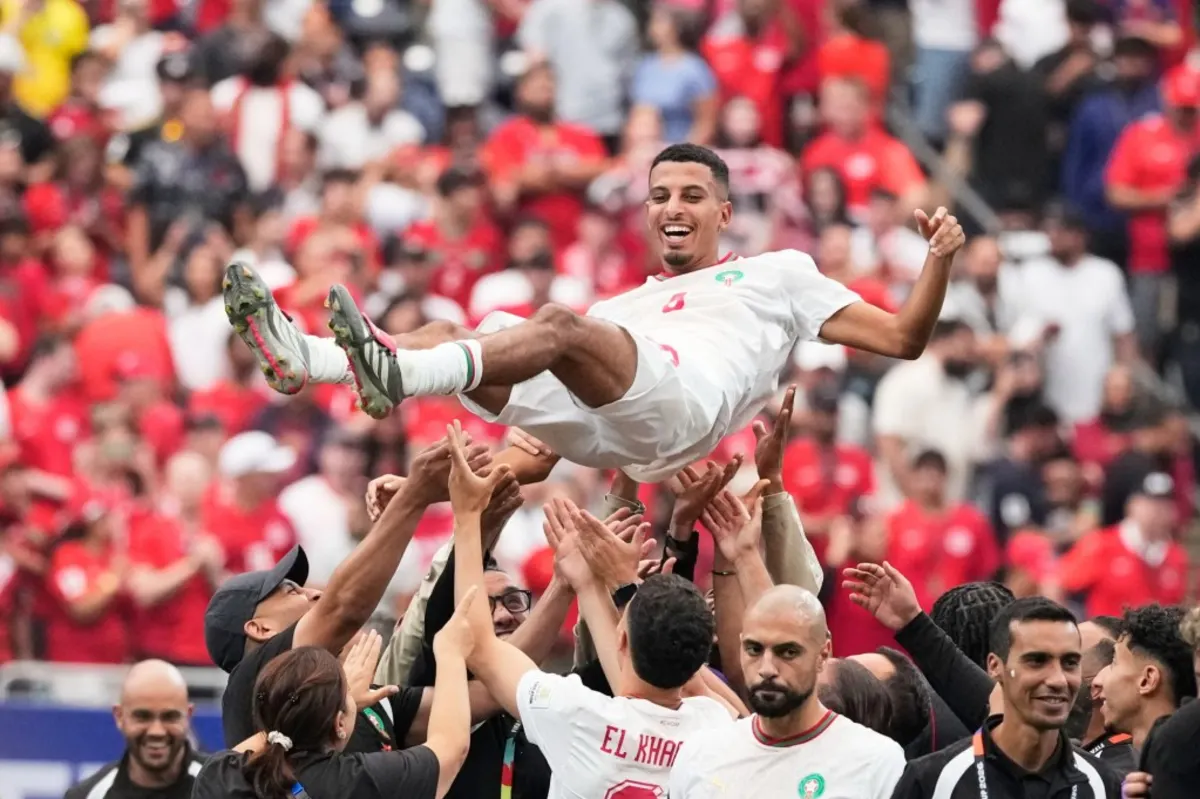
Morocco’s 3-0 demolition of World Cup co-hosts Canada in Houston was not merely a progression to the quarterfinals. It was a tactical masterclass that laid bare the structural frailties of a Canadian side still learning how to navigate the pressure of knockout football. Azzedine Ounahi’s brace and Soufiane Rahimi’s stoppage-time strike masked a first-half performance that bordered on defensive collapse, a vulnerability Canada exploited with relentless early pressure but failed to convert into goals. The result propels Morocco into a Thursday showdown with either Paraguay or France, but the real story lies in the micro-tactical adjustments that turned a shaky opening into a controlled second-half clinic.
Canada’s aggressive press from the opening whistle exposed Morocco’s midfield collapse in the first 30 minutes. Ismael Saibari’s hamstring injury in the 22nd minute forced coach Mohamed Ouahbi into an early substitution, replacing the tournament’s joint-top scorer with Soufiane Rahimi. The change disrupted Morocco’s rhythm, but it also revealed Canada’s inability to sustain their initial intensity. Tani Oluwaseyi’s early chance—a low drive saved by Yassine Bounou—was emblematic of Canada’s profligacy. They created five clear opportunities in the first half but failed to register a single shot on target. Jesse Marsch’s post-match praise for his team’s control rang hollow when measured against the scoreline; Canada dominated possession (58%) and territory but lacked the clinical edge to punish Morocco’s defensive frailties.
The turning point arrived in the 50th minute, not through individual brilliance but through a meticulously rehearsed set-piece routine. Achraf Hakimi’s low free-kick delivery to Ounahi exploited Canada’s zonal marking system, which left the midfielder unmarked 25 yards from goal. Ounahi’s first-time finish was precise, but the real tactical insight was Morocco’s exploitation of Canada’s high defensive line. For the remainder of the match, Morocco targeted the space behind Canada’s full-backs, forcing Tajon Buchanan and Richie Laryea into defensive retreats that stifled Canada’s counterattacking threat. Marsch’s decision to push his wingers forward in search of an equaliser left his defence exposed, and Ounahi’s second goal—a clinical finish from Brahim Díaz’s through ball—was the direct result of Canada’s structural imbalance.
Morocco’s defensive resilience in the second half was underpinned by a subtle but decisive shift in midfield shape. Ouahbi switched from a 4-3-3 to a 4-1-4-1, with Selim Amallah dropping deeper to shield the back four. This adjustment neutralised Canada’s central overload, where Stephen Eustaquio and Jonathan Osorio had previously found space to dictate play. The introduction of Amallah also allowed Hakimi to push higher up the pitch, providing an outlet for Morocco’s counterattacks. Canada’s inability to adapt to this midfield pivot was glaring; their pressing triggers became predictable, and Morocco’s quick transitions—culminating in Rahimi’s late goal—exposed the gaps left by Canada’s attacking full-backs.
The psychological fracture in Canada’s dressing room was evident long before the final whistle. Alphonso Davies’ fitness struggles—he was substituted at half-time—deprived Canada of their most dynamic attacking outlet. Without Davies, Canada lacked a creative spark, relying instead on speculative long balls and set-pieces. The absence of a natural playmaker was compounded by Marsch’s reluctance to adjust his tactics. His post-match assertion that Canada were “better than the No. 7 team in the world” betrayed a disconnect between ambition and execution. Morocco, by contrast, displayed the composure of a side accustomed to knockout pressure. Ouahbi’s calm demeanour on the touchline—despite his visible frustration in the first half—reflected a squad that has internalised the lessons of their 2022 semifinal run.
Canada’s elimination also exposes a deeper institutional issue: the lack of a coherent long-term vision for their footballing development. The country’s historic run was built on the back of a golden generation, but the absence of a robust domestic league infrastructure means this progress is unsustainable. Canada’s squad is heavily reliant on players plying their trade in Europe’s second-tier leagues, with only Davies (Bayern Munich) and Buchanan (Inter Milan) competing at the highest level. Morocco, meanwhile, have cultivated a squad where every player operates in Europe’s top five leagues, with Hakimi (PSG), Amallah (West Ham), and Ounahi (Atalanta) providing a blend of experience and technical quality. The contrast in squad depth is stark and underscores the gulf between the two nations’ footballing ecosystems.
The quarterfinal clash with France or Paraguay will test Morocco’s tactical flexibility in a new dimension. France’s likely progression would pit Ouahbi against his former club, Monaco, where he served as assistant coach under Didier Deschamps. This familiarity could prove decisive; Ouahbi’s intimate knowledge of France’s defensive vulnerabilities—particularly their susceptibility to quick transitions—could shape Morocco’s game plan. Paraguay, meanwhile, present a different challenge. Their physicality and disciplined defensive shape would force Morocco to abandon their reliance on set-pieces and instead focus on breaking down a low block. The absence of Saibari, whose direct running and dribbling were key to Morocco’s group-stage success, will be keenly felt if he remains sidelined.
Morocco’s progression also reignites the debate about Africa’s growing influence in global football. Their back-to-back quarterfinal appearances mark a shift from underdog to contender, but the real test lies in consistency. The Atlas Lions have yet to face a genuine title contender in this tournament, and their ability to navigate the latter stages will depend on their capacity to adapt to different tactical systems. Canada’s exit, meanwhile, serves as a cautionary tale for emerging football nations. Their early promise was built on passion and athleticism, but without a clear tactical identity or a pipeline of elite talent, their World Cup journey remains precarious. The contrast between Morocco’s structured progression and Canada’s emotional rollercoaster is a stark reminder that footballing success is built on more than just heart.