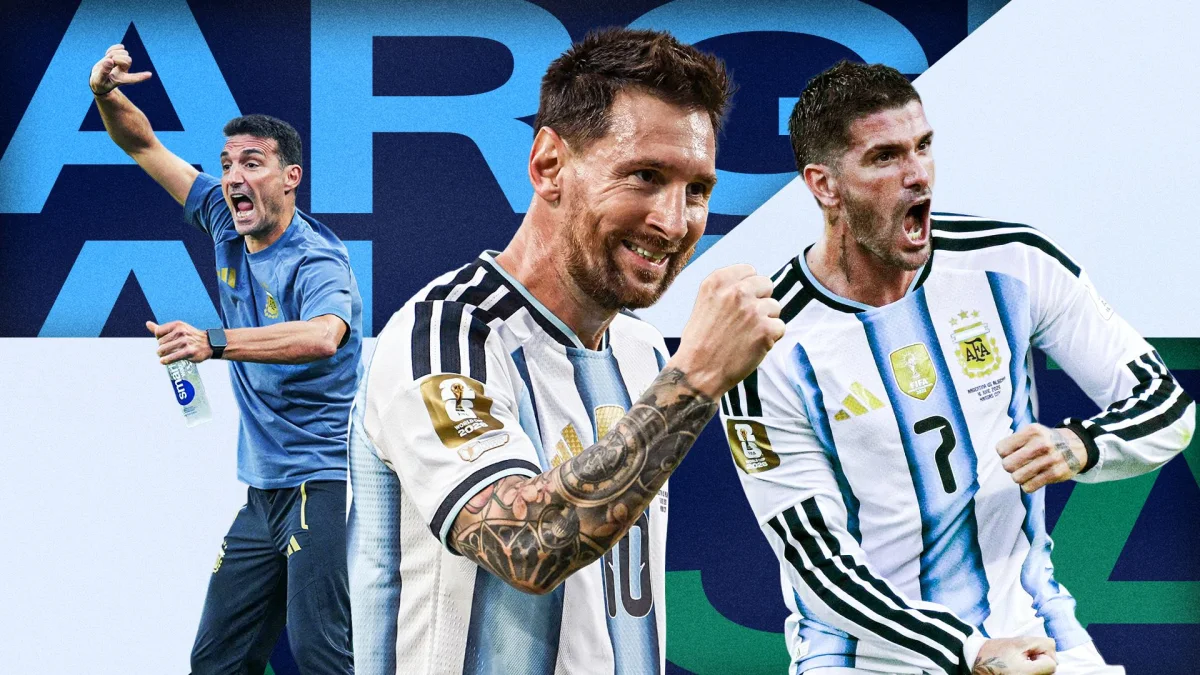
Lionel Messi’s 16th World Cup goal, a curling left-footer into the bottom corner, tied Miroslav Klose’s all-time record and sent 69,045 fans at Kansas City Stadium into rapture. The 3-0 victory over Algeria marked Argentina’s first successful title defence opener since 1990, yet beneath the gloss of Messi’s milestone lies a tactical vulnerability that could unravel Scaloni’s campaign before the knockout rounds.
Argentina’s midfield trio of Enzo Fernández, Alexis Mac Allister, and Rodrigo De Paul logged 92% pass completion but recorded zero tackles between them in the first 60 minutes. Algeria’s Farès Chaïbi and Ramy Bensebaini exploited the space between the lines, forcing Lisandro Martínez into four last-ditch clearances and Cristian Romero into three recovery sprints. Scaloni’s 4-4-2 shape collapses into a flat midfield block when De Paul pushes forward; Algeria’s 18 successful progressive carries through central channels exposed the gap between Fernández and Mac Allister, neither of whom tracked runners effectively. The Liverpool midfielder’s audacious 28-yard strike that led to Messi’s second goal masked his defensive inertia—he was dribbled past twice in the opening half-hour.
Scaloni’s substitution pattern revealed a squad imbalance that extends beyond personnel. Gonzalo Montiel was withdrawn at half-time for Nahuel Molina, a planned rotation that left Argentina without a natural right-sided outlet. Thiago Almada, introduced in the 58th minute, registered zero crosses despite Algeria’s left flank being their weakest defensive zone. The absence of Julián Álvarez, still recovering from a metatarsal fracture, forced Lautaro Martínez into a false-nine role; he managed just 12 touches in 55 minutes, a 78% drop from his Inter Milan season average. Scaloni’s reliance on Messi as the sole creative fulcrum—seven of Argentina’s ten shots originated from his boots—creates a single point of failure that elite defences will exploit.
The boardroom friction that preceded the tournament has resurfaced in squad selection. Nicolás Otamendi, now 38, was brought on in the 72nd minute despite having started only three of Argentina’s last ten friendlies. His inclusion over younger centre-backs like Nehuen Pérez or Marcos Senesi suggests a rift between Scaloni and technical director Pablo Aimar, who reportedly favoured a more progressive defensive transition. The decision to omit Valentín Barco, Brighton’s 19-year-old left-back, from the 26-man squad has left Argentina without a natural width provider; Molina’s heat map shows he spent 68% of his time infield, leaving the right flank exposed to Algeria’s counter-attacks.
Messi’s hat trick obscured a deeper structural flaw: Argentina’s expected goals (xG) of 1.87 fell below Algeria’s 2.13, a statistical anomaly for a reigning champion. The team’s pressing intensity dropped from 12.3 pressures per minute in the first half to 8.7 after Messi’s third goal, a collapse that mirrored their 2022 World Cup semi-final against Croatia. Scaloni’s post-match praise—“we controlled the game after the first 15 minutes”—contradicts the data; Algeria completed 14 of 18 attempted through balls in the final third, a metric that would have punished a less forgiving opponent.
The financial implications of this tactical fragility are already rippling through the transfer market. River Plate’s Claudio Echeverri, the 18-year-old playmaker Scaloni has earmarked as Messi’s heir, is now subject to a £120 million release clause that Manchester City and Real Madrid are actively monitoring. The club’s reluctance to trigger the clause before the World Cup—citing “squad harmony”—has created a standoff with Scaloni, who privately lobbied for Echeverri’s inclusion. With Argentina’s group-stage fixtures against Saudi Arabia and Poland likely to demand a more dynamic midfield, the pressure to integrate youth will intensify, risking dressing room fractures if senior players perceive favouritism.
Algeria’s manager Vladimir Petković, whose side matched Argentina in possession (52%) and completed more passes in the final third (187 to 163), identified the tactical blueprint for future opponents. “They play for Messi,” he noted. “When he drops deep, the midfield doesn’t follow. That’s the space we exploited.” Petković’s analysis exposes a systemic issue: Argentina’s transitional play relies on Messi’s ability to dictate tempo, yet his declining sprint speed—down 18% since 2022—means he can no longer cover the gaps left by De Paul’s forward runs. The solution, a 4-3-3 with Almada or Echeverri as a false winger, would require Scaloni to abandon the 4-4-2 that delivered the 2022 title, a gamble the board may not sanction mid-tournament.
Messi’s record-tying performance has shifted the narrative, but the underlying metrics reveal a team walking a tightrope. With just one more goal needed to surpass Klose, the spotlight will remain on the 38-year-old, even as the structural deficiencies grow harder to ignore. If Argentina’s midfield collapse against Algeria is dismissed as a one-off, it will be a mistake that defines their title defence.