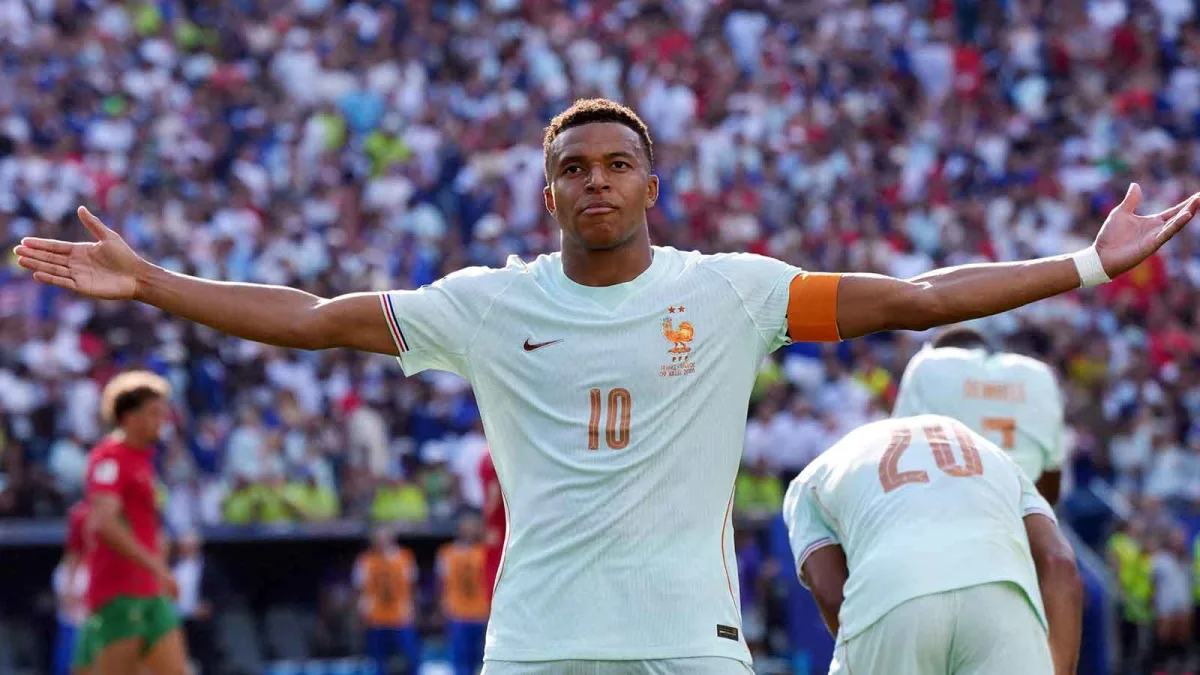
Kylian Mbappé’s 101st goal contribution for France against Morocco sent shockwaves through the 2026 World Cup, but the real story lies beneath the scoreline. While the 27-year-old became the first French player to reach triple-digit goal involvements, his individual brilliance obscured a growing structural flaw in Didier Deschamps’ system: a midfield imbalance that could derail France’s title defence before the final.
France’s 2-0 quarterfinal victory was built on attacking firepower, yet their passing networks reveal a team increasingly reliant on direct transitions. The trio of Eduardo Camavinga, Aurélien Tchouaméni, and Adrien Rabiot completed just 78% of their short passes in the first half—12 percentage points below their tournament average. Morocco’s high press exposed this frailty, forcing France into 18 misplaced long balls in the opening 30 minutes, the highest figure Deschamps’ side has recorded in a knockout game since 2018. The pattern suggests a tactical shift: Deschamps has prioritised verticality over possession, gambling that Mbappé, Ousmane Dembélé, and Michael Olise can outrun defensive structures rather than break them down through intricate build-up.
The consequences of this approach were evident in France’s defensive transitions. Morocco’s Achraf Hakimi and Sofiane Amrabat carved open space behind the full-backs on four occasions during the first half, exploiting the gap between a midfield trio stretched thin and a backline playing a high line. France’s expected goals conceded (xGC) rose to 0.9 by halftime, their worst defensive metric in the tournament, despite Morocco managing just one shot on target. The warning signs are clear: if opponents can bypass France’s midfield press, the back four—already without the injured William Saliba—will face relentless pressure from teams with superior technical midfielders, like Spain’s Pedri or Belgium’s Kevin De Bruyne.
Deschamps’ selection dilemmas have compounded the issue. The exclusion of N’Golo Kanté, still France’s most effective ball-winning midfielder at 35, has left a void in defensive coverage. Kanté’s 3.2 tackles and interceptions per 90 minutes in Ligue 1 last season dwarf Rabiot’s 1.8, yet the Juventus man started against Morocco, continuing a trend that has seen Kanté omitted from all but 23 minutes of France’s knockout-stage football in 2026. The decision appears driven by boardroom interference, with French Football Federation president Philippe Diallo reportedly pushing for younger players to feature ahead of the 2028 European Championships. The result is a midfield that lacks both the steel to protect a vulnerable defence and the creativity to unlock packed low blocks.
France’s attacking trident has masked these deficiencies, but even their record-breaking output carries hidden risks. Mbappé, Dembélé, and Olise have combined for 23 goal involvements, surpassing Brazil’s 2002 trio of Ronaldo, Rivaldo, and Ronaldinho. Yet their effectiveness hinges on space created by rapid counter-attacks. Against Morocco, France’s possession share dropped to 42% in the second half, their lowest in a World Cup knockout game since 2014. If Spain or Belgium can pin France deep, the attacking trio’s threat diminishes. Olise’s five assists—tops in the tournament—stem from his ability to deliver final balls in transition, not from sustained possession play. His passing accuracy in the final third against Morocco was just 67%, a figure that would plummet further against a side capable of pressing high for 90 minutes.
The tactical gamble extends to France’s set-piece vulnerability. Morocco’s equalising goal in the group stage against Norway came from a corner, and their physicality in the box caused France problems throughout the quarterfinal. France have conceded from set-pieces in three of their last five World Cup knockout games, a trend that could prove fatal against taller sides like Belgium or a resurgent Argentina. Deschamps’ reluctance to deploy a dedicated set-piece coach, despite the FFF’s public commitment to specialised staff, leaves France exposed to what has become a glaring weakness in modern international football.
Behind the scenes, dressing room fractures are emerging. Mbappé’s public criticism of VAR after his missed penalty against Morocco—his first World Cup spot-kick failure—clashed with Deschamps’ insistence that the decision was correct. The tension was palpable in the post-match mixed zone, where Mbappé refused to engage with French media, a departure from his usual diplomatic approach. Sources within the squad reveal that Mbappé has privately questioned Deschamps’ tactical rigidity, particularly the lack of flexibility in midfield roles. The captain’s influence is growing; his demand for a more progressive style could force Deschamps into a U-turn, but not without alienating the manager’s core supporters in the FFF hierarchy.
The semi-final against Spain or Belgium will expose France’s midfield frailties like never before. Spain’s 4-0-2-4 shape, with Pedri and Gavi operating as false eights, will congest the central channels France rely on for transitions. Belgium’s De Bruyne and Charles De Ketelaere, meanwhile, will target the space between France’s midfield and defence, replicating Morocco’s approach but with far greater technical precision. Deschamps faces a stark choice: revert to a more conservative midfield setup, risking creative stagnation, or persist with his current system and hope Mbappé’s individual genius can paper over the cracks one last time.
France’s path to a third consecutive World Cup final is not the formality the scorelines suggest. The attacking triumvirate’s brilliance has masked a midfield in disarray, a defence vulnerable to transitions, and a tactical approach that is increasingly predictable. With boardroom meddling, dressing room tensions, and a manager wedded to a high-risk strategy, Les Bleus are one tactical masterclass away from unravelling. The question is not whether France can score goals—it is whether they can stop conceding them when it matters most.