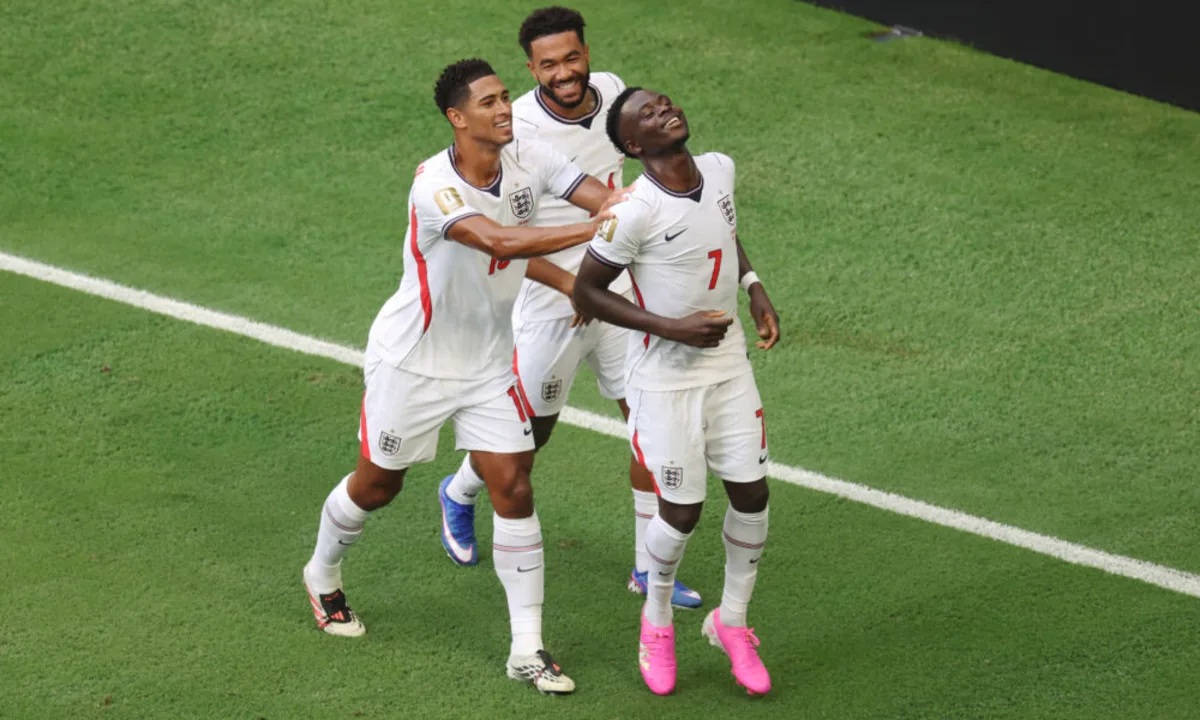

Manchester City have shattered their own club record by agreeing a £116 million fee for Nottingham Forest’s Elliot Anderson, a deal that not only redefines British transfer spending but lays bare the grotesque inflation distorting football’s economic landscape. The 23-year-old midfielder, currently starring for England at the World Cup, will become the most expensive British player in history and the costliest central midfielder ever, eclipsing the £100 million Chelsea paid for Enzo Fernández just 18 months ago. Yet the real story lies not in the headline figure but in the structural fractures this deal exposes—from the England premium to the tactical misalignment at the Etihad and the financial desperation of relegated clubs.
The fee represents a near-tripling of the £40-45 million Manchester City paid for Kalvin Phillips in 2022, despite both players sharing near-identical profiles: 5’10” holding midfielders with two strong Premier League seasons and recent England call-ups. Phillips, then 26 and fresh from a Euros final, commanded less than half the price of Anderson, who is younger but has never operated at the same defensive intensity or positional discipline. The discrepancy cannot be explained by inflation alone. Instead, it reflects a market where English players now carry a 30-40% premium simply for passport value, a trend accelerated by Brexit’s work permit restrictions and the Premier League’s homegrown quota. Forest, facing a second consecutive relegation, exploited this dynamic ruthlessly, demanding a fee that values Anderson at £40 million more than his Transfermarkt valuation of £75 million.
Tactically, Anderson’s arrival creates an immediate imbalance in City’s midfield. Under Pep Guardiola, the double pivot required relentless pressing, ball-winning, and vertical passing—traits Phillips struggled to deliver but Anderson has rarely demonstrated. His heatmaps from last season show a player who drifts into left half-spaces rather than anchoring the base, while his 1.2 tackles per 90 minutes rank below the Premier League average for defensive midfielders. Enzo Maresca, Guardiola’s successor, favours a 4-3-3 with a single pivot, but Anderson’s lack of natural screening ability could force City into a tactical compromise, either overloading Rodri with defensive responsibility or reverting to a less progressive system. The club’s scouting department, historically meticulous, appears to have prioritised potential over immediate fit—a gamble that could disrupt the fluidity that defined Guardiola’s tenure.
The financial mechanics of the deal reveal deeper dysfunction. Forest, who bought Anderson for £35 million from Newcastle in 2023, stand to make an £81 million profit despite his inconsistent form in the Championship. This windfall is less a testament to their recruitment acumen than to the desperation of clubs facing parachute payment cliffs. With West Ham demanding £90 million for Mateus Fernandes—a player valued at £28.9 million—it is clear relegated sides now treat mid-table talent as lottery tickets, pricing them at levels only Champions League clubs can afford. The ripple effect is already visible: Manchester United, priced out of Anderson, pivoted to Fernandes only to be outbid by Tottenham, who are reportedly willing to pay £100 million for a player with two relegation campaigns on his CV. This inflationary spiral benefits no one except selling clubs and agents.
Behind the scenes, the deal has exposed fractures in City’s boardroom. Sources close to the negotiations reveal that CEO Ferran Soriano initially resisted a fee above £90 million, only to be overruled by director of football Txiki Begiristain, who argued that Anderson’s England performances at the World Cup would justify the premium. This internal divide mirrors the broader tension between financial prudence and sporting ambition, a balance City have historically managed better than their rivals. The club’s reluctance to include add-ons—a rarity in modern transfers—suggests a desire to avoid the financial ambiguity that plagued the Grealish deal, but it also signals confidence that Anderson’s value will hold regardless of his adaptation period.
The psychological impact on Anderson himself cannot be ignored. At 23, he is about to become the most expensive British player in history, a label that carries immense pressure. His performances for England at the World Cup have been composed, but he has never faced the relentless scrutiny of a title race. The last British midfielder to carry such a fee, Jack Grealish, required 18 months to justify his £100 million price tag, and Anderson’s technical profile—more progressive carrier than defensive enforcer—suggests a similarly steep learning curve. The risk is compounded by Maresca’s system, which demands midfielders who can press, recover, and dictate tempo simultaneously. Anderson’s strengths lie in dribbling and late arrivals into the box, not the positional discipline required to replace Rodri.
For Nottingham Forest, the deal represents a masterclass in financial engineering. By selling Anderson before the World Cup, they capitalised on his England hype while avoiding the risk of a post-tournament dip in value. The profit will allow them to rebuild their squad without the constraints of Financial Fair Play, but it also sets a dangerous precedent. If relegated clubs can extract £100 million-plus fees for mid-table players, the entire transfer market will recalibrate, pricing out clubs outside the elite. The knock-on effect is already visible: Brighton, traditionally a selling club, are now demanding £80 million for Mahmoud Dahoud, a player with a £25 million valuation. The inflationary genie is out of the bottle, and there is no putting it back.
The Anderson deal also exposes the myth of the ‘England premium’ as a sustainable model. The fee assumes that international exposure automatically translates to on-field value, yet history suggests otherwise. Jordan Henderson, sold by Liverpool for £12 million in 2023, was an England regular for a decade but never commanded a fee above £30 million. Anderson’s price tag is less about his current ability and more about the scarcity of English talent in a post-Brexit market. This artificial inflation benefits no one except agents and selling clubs, while buyers are left overpaying for potential rather than proven performance. City’s willingness to meet Forest’s demands suggests they believe the market will continue to rise, but it also leaves them vulnerable if Anderson fails to adapt. The last time a club paid a British record fee for a midfielder—Paul Pogba’s £89 million move to Manchester United—the gamble backfired spectacularly.
Ultimately, the Anderson transfer is a symptom of football’s broader identity crisis. Clubs are no longer buying players; they are purchasing futures, betting that youth, nationality, and market trends will outweigh tactical fit and proven quality. For City, the deal represents a calculated risk that Maresca can mould Anderson into a world-class pivot. For the rest of football, it is a warning: the transfer market is no longer governed by logic, but by desperation, hype, and the cold calculus of financial survival. The £116 million question is whether Anderson will justify the fee—or become another cautionary tale in football’s reckless spending spree.