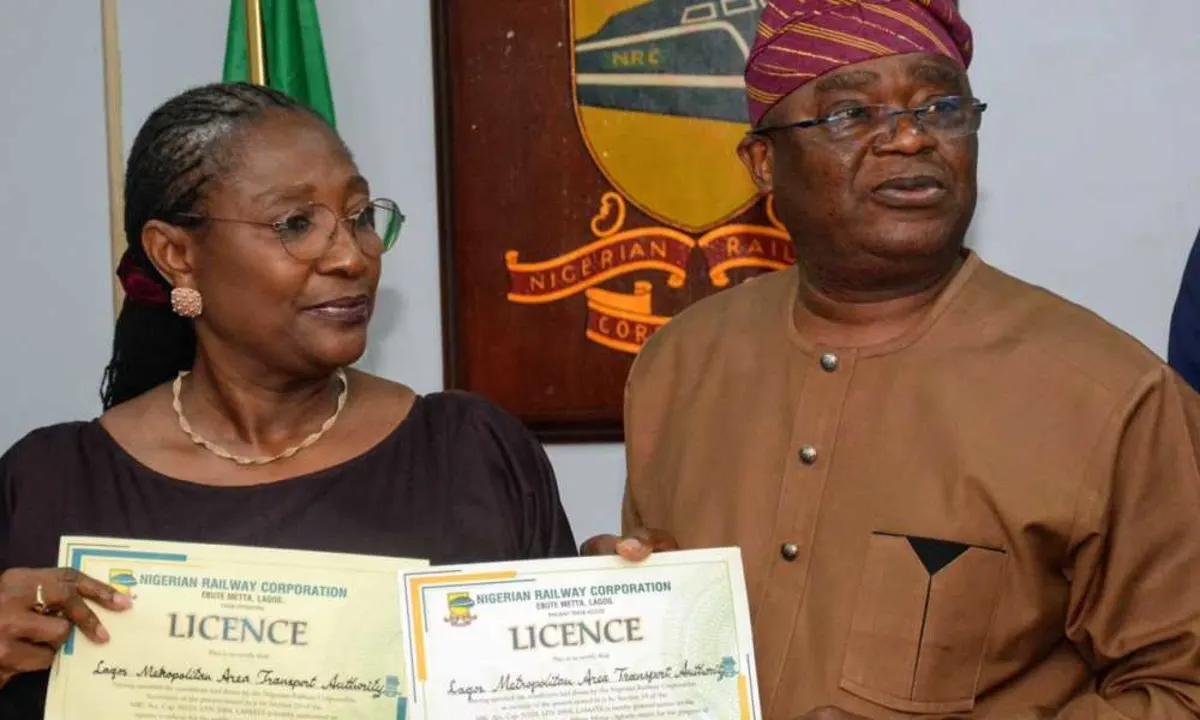
The Nigerian Railway Corporation handed Lagos State a permanent operating licence for the Red Line rail yesterday. The move ends 128 years of federal monopoly on rail services. It also marks the first time a state government will run a commercial rail line on a shared federal corridor.
The licence was presented at a ceremony in Lagos. NRC Managing Director Dr Kayode Opeifa called the event a watershed. He said the corporation is not surrendering its statutory role. Instead it is adopting global best practice by allowing multiple operators within a regulated framework. Opeifa stressed that the decision reflects a deliberate policy shift to expand Nigeria’s railway ecosystem through strategic partnerships.
The Red Line began passenger operations on October 15 2024. It runs from Oyingbo to Agbado. The federal government had approved the transfer of two federal rail tracks to Lagos State in April 2012. This approval came under former President Goodluck Jonathan. The state government then built the Red Line infrastructure and acquired rolling stock. President Bola Tinubu inaugurated the line last year.
The permanent licence follows over one year of temporary operations. During this period Lagos State met all operational requirements set by the NRC. The licence grants the Lagos Metropolitan Area Transport Authority the legal authority to operate services on the shared corridor. It also empowers the state to develop and operate other rail systems in line with international standards. Opeifa praised Lagos for its investment in rail infrastructure. He said the state has positioned itself as a model for urban rail development in Nigeria.
The NRC boss urged other state governments to emulate Lagos. He argued that expanding rail services nationwide would reduce pressure on highways. It would also lower logistics costs and improve passenger mobility. Opeifa said rail transportation remains the backbone of efficient mass transit systems worldwide. He added that it stimulates commercial and industrial activities and strengthens national economic growth.
The licence presentation reveals a deeper institutional shift. For the first time the NRC has ceded operational control of a federal rail corridor to a sub-national entity. This creates a precedent for other states to seek similar licences. It also signals a potential decentralisation of Nigeria’s rail sector. States with viable rail projects may now pursue independent operations without waiting for federal approval.
The Red Line’s success exposes critical gaps in Nigeria’s rail policy. The federal government has struggled to maintain and expand rail infrastructure. Lagos State filled this void by investing its own resources. The state’s ability to meet NRC’s operational standards demonstrates that sub-national governments can deliver efficient rail services. This challenges the long-held assumption that only the federal government can manage rail operations. It also raises questions about the future role of the NRC in a multi-operator rail system.
The licence also highlights the economic implications of rail decentralisation. Lagos State has shown that rail investment can reduce traffic congestion and boost local economies. Other states may now prioritise rail projects to attract investment and improve mobility. This could lead to a surge in rail infrastructure development across Nigeria. It may also force the federal government to rethink its approach to rail financing and management.
The NRC’s decision to grant the licence reflects a broader trend in Nigeria’s transport sector. The federal government has increasingly partnered with states to address infrastructure deficits. This collaborative approach has yielded results in road and aviation sectors. The Red Line licence extends this model to rail transport. It sets a new benchmark for public-private and inter-governmental partnerships in Nigeria’s infrastructure development.