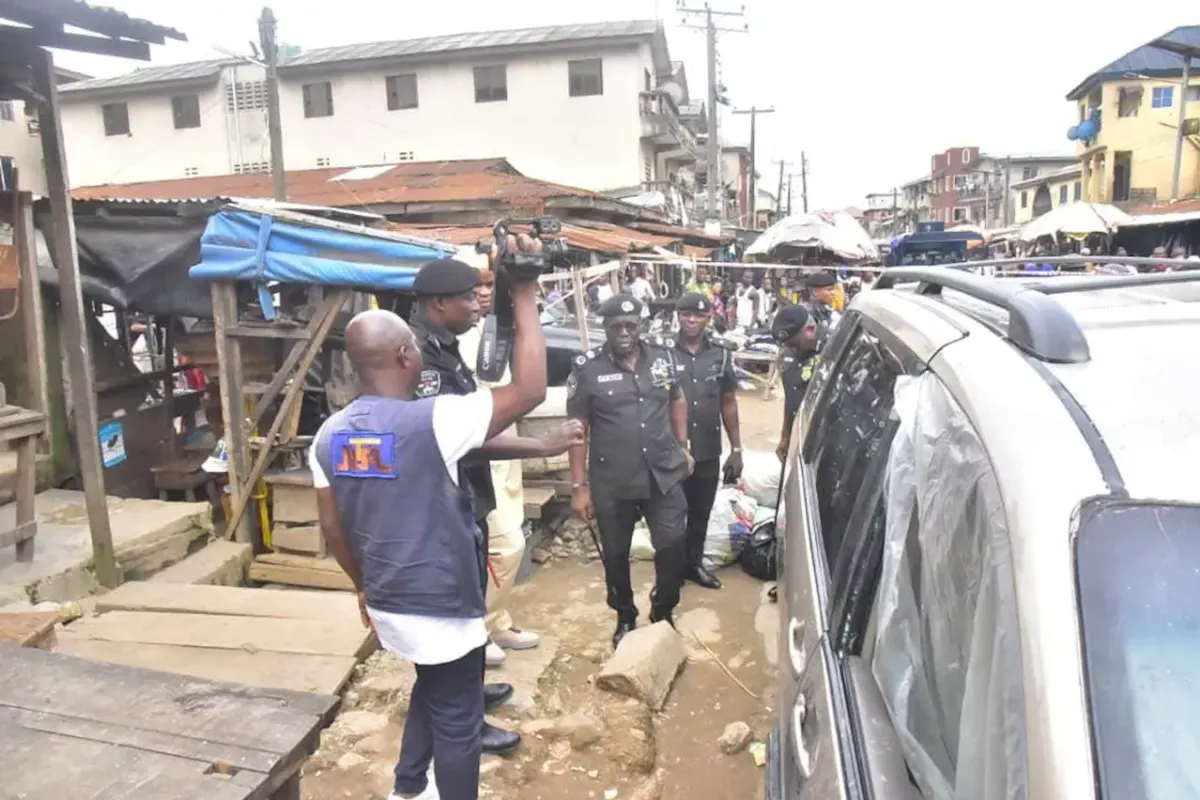
The Lagos State Police Command has officially closed its investigation into the June 22 explosion in Mushin. The blast, which sent shockwaves through the densely populated market area, was not an act of terrorism. Forensic teams found no traces of explosives, detonators, or residues. The incident was instead caused by the catastrophic failure of a pressurised mechanical component attached to a parked Toyota Sienna.
The vehicle was stationed at 22 Wey Street in the Oke Mushin Shoe Materials Market when the component ruptured. The sudden energy release shattered the front passenger-side glass, injuring the occupant. Witnesses reported hearing a loud bang around 7:30 a.m., prompting immediate panic. Residents initially feared an improvised explosive device had been planted under the vehicle. The Baale of Oke Mushin, Tajudeen Lasisi Farunbi, alerted security agencies within minutes and ordered the scene preserved for investigators.
Commissioner of Police Tijani Fatai led the response team. Bomb disposal experts, forensic analysts, and emergency responders cordoned off the area. The vehicle was towed to a secure facility for detailed examination. Laboratory tests confirmed the absence of explosive materials, ruling out sabotage or criminal intent. The police statement emphasised that the incident was classified as a mechanical explosion, not a security threat.
The findings reveal a critical gap in public awareness about mechanical hazards in urban settings. Lagos has seen a rise in vehicle-related accidents caused by faulty components, yet regulatory oversight remains weak. The National Automotive Design and Development Council lacks the capacity to inspect every imported vehicle part. Local mechanics often install uncertified components to cut costs, increasing the risk of catastrophic failure. This incident exposes the need for stricter enforcement of automotive safety standards.
Market traders in Oke Mushin have expressed lingering unease despite the police clarification. Many recall the 2022 Balogun Market fire, which started from an electrical fault and destroyed goods worth billions. The Mushin blast has reignited calls for mandatory safety audits in high-density commercial areas. The Lagos State Emergency Management Agency has yet to announce any plans for mechanical safety inspections in markets or public parking zones.
The police report also highlights the psychological impact of such incidents. Residents described sleepless nights following the blast, fearing a repeat attack. Social media amplified the panic, with unverified claims of a terrorist cell operating in Mushin. The police have urged the public to verify information through official channels before sharing. This incident underscores the challenge of managing misinformation in crisis situations, particularly in areas with limited trust in law enforcement.
Industry experts warn that similar incidents could recur without systemic changes. The Federal Road Safety Corps lacks the mandate to inspect vehicle components beyond basic roadworthiness checks. The Standards Organisation of Nigeria has not updated its automotive safety guidelines since 2018. Imported used vehicles, which dominate Lagos roads, often arrive with worn-out or counterfeit parts. The Mushin blast serves as a wake-up call for policymakers to address these regulatory blind spots before a more deadly failure occurs.
The Lagos State Government has not commented on the police findings. Governor Babajide Sanwo-Olu, who visited the scene hours after the blast, promised a thorough investigation but has not addressed the broader safety concerns. The state’s Ministry of Transportation has no public record of mechanical safety initiatives. This silence contrasts with the government’s swift response to traffic congestion, where it has implemented multiple infrastructure projects. The disparity suggests a prioritisation of mobility over safety in urban planning.