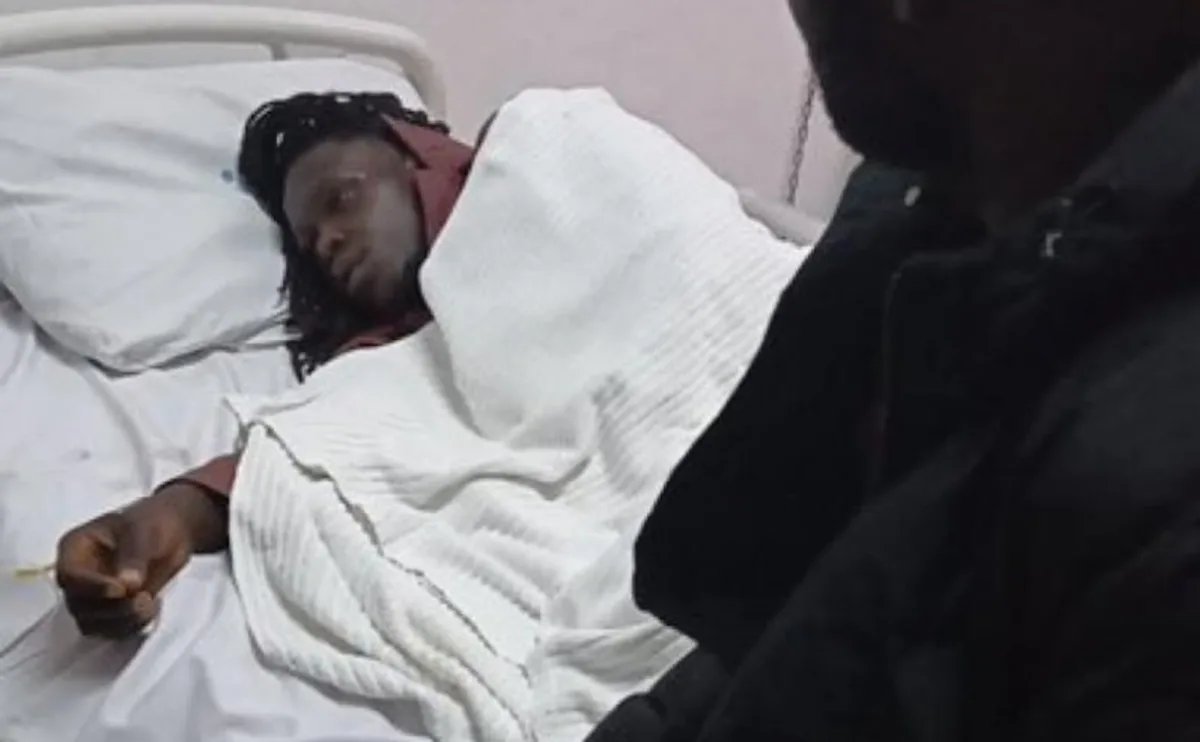
Kenyan activist Davis Lichuma was found outside Kenyatta National Hospital in critical condition. He had been missing for three days after disappearing during anti-government protests. His body bore signs of severe torture. He could not speak when discovered. The Social Justice Centres Working Group confirmed his condition and demanded an immediate independent investigation into his abduction and the identities of those responsible.
The discovery of Lichuma has reignited national outrage over enforced disappearances in Kenya. He was one of seven activists seized near Parliament on June 25 during commemorations of the 2024 Gen Z protests. Six of the activists were found dumped along Lang’ata Road on Saturday morning with injuries consistent with physical assault. Lichuma remained missing until Sunday night when he was abandoned outside the hospital. Witnesses reported he appeared disoriented and may have been sedated. His mother, Margaret Lichuma, revealed that her son had visited her the day before his disappearance, asking for prayers as he knew the risks of his activism. This mirrors the June-August 2024 crackdown, where Human Rights Watch documented 12 similar cases.
The National Police Service denied direct involvement but acknowledged receiving a missing person report filed at Central Police Station. Police spokesperson Muchiri Nyaga stated that all allegations of enforced disappearances and torture would be investigated thoroughly and impartially. Civil society groups dismissed these assurances as insufficient. They pointed to a pattern of abductions targeting government critics and protesters, particularly following the 2024 demonstrations that led to widespread unrest and a brutal crackdown by security forces. The Independent Policing Oversight Authority and the Director of Public Prosecutions are now under pressure to launch immediate investigations.
Human rights organizations have documented a sharp rise in enforced disappearances since mid-2024. A November 2024 report by Human Rights Watch detailed how security forces allegedly abducted, tortured, and killed perceived protest leaders between June and August of that year. The report named several cases where victims were taken from police stations or public spaces by masked operatives driving unmarked Subaru vehicles. Lichuma’s case matches the documented tactics in the report. The Missing Voices coalition has reported a significant increase in enforced disappearances, with at least three other activists—Macmillan Kiarie, Abdulaziz Buda, and Michael Oloo—still missing following the June 25 protests.
The abandonment of Lichuma outside a hospital, rather than a police station, suggests an attempt to evade accountability. Lawyer Willis Otieno condemned the alleged treatment of Lichuma as incompatible with democratic principles. He stated that violence and torture have no place in a society governed by the rule of law. The Social Justice Centres Working Group has threatened nationwide demonstrations if the government fails to produce the missing activists and prosecute those responsible. Their statement declared, "We will not accept silence, cover-ups or excuses. An injury to one is an injury to all."
The broader implications of Lichuma’s case extend beyond Kenya’s borders. The country is a signatory to the International Covenant on Civil and Political Rights, which prohibits torture and arbitrary detention. The resurgence of enforced disappearances has raised concerns about Kenya’s commitment to upholding these international obligations. Amnesty International and the United Nations Office of the High Commissioner for Human Rights have called on the Kenyan government to conduct impartial investigations. Analysts warn that the erosion of civic freedoms could destabilize the region, particularly as Kenya positions itself as a democratic leader in East Africa.
The Kenyan government’s response to these allegations has been inconsistent. While the police have pledged to investigate, no high-ranking officers have been held accountable for previous cases of enforced disappearances. Civil society groups argue that the lack of consequences has emboldened security forces to continue these practices. The pattern of abductions, torture, and abandonment of activists suggests a systemic failure to protect constitutional freedoms. The government’s handling of this crisis will be a critical test of its willingness to protect human rights and maintain public trust in its institutions.
The case of Davis Lichuma exposes a deeper institutional crisis within Kenya’s security apparatus. The use of unmarked vehicles and masked operatives to abduct activists mirrors tactics used during the 2024 Gen Z protests. These operations are often carried out with impunity, as victims are rarely able to identify their captors. The lack of transparency in police investigations further compounds the problem, as families of the missing are left without answers for months. The Social Justice Centres Working Group has called for the establishment of a truth commission to address the systemic issues underlying these abuses.