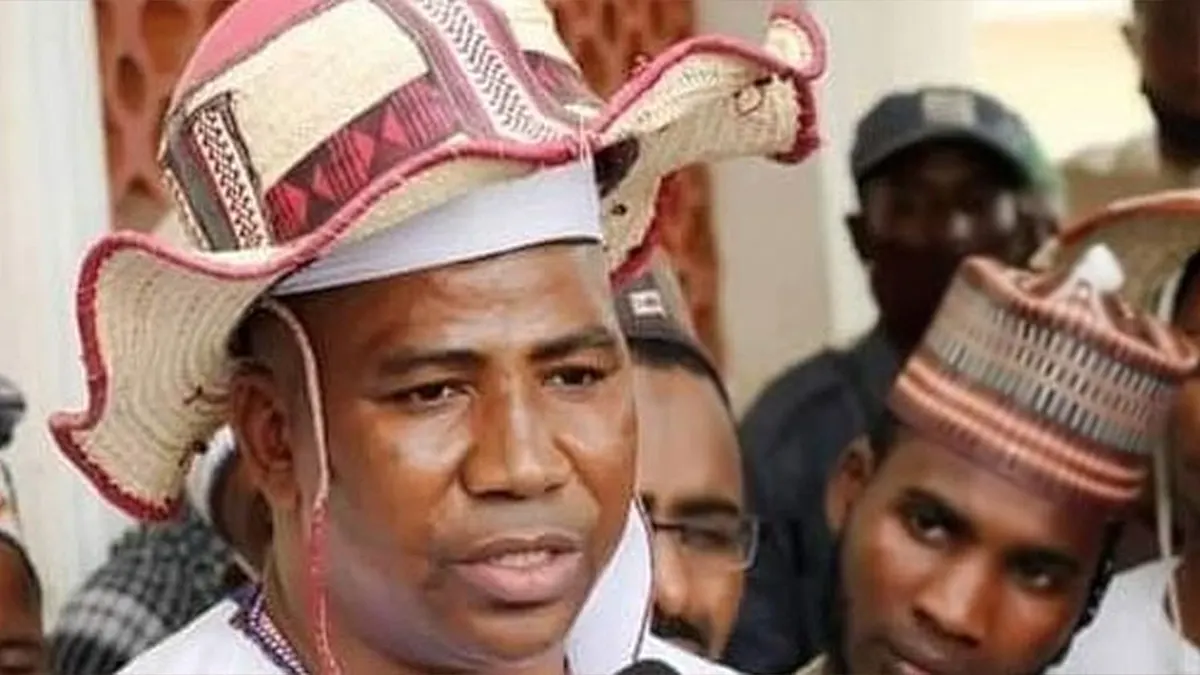

The Department of State Services arrested seven high-ranking Boko Haram and ISWAP commanders at Katsina’s Umaru Musa Yar’Adua International Airport on June 25. They had just returned from the 2026 Hajj pilgrimage in Mecca. The arrests occurred two days after Katsina State Governor Dikko Umaru Radda denied allegations that his administration spent ₦10 million per head to sponsor terror leaders on the holy trip.
The Minister of Interior, Olubunmi Tunji-Ojo, confirmed the arrests during a press briefing at the Presidential Villa. He revealed the suspects were flagged by a newly integrated biometric surveillance system linking Nigeria’s National Identity Management Commission, the Immigration Service, and Interpol databases. The system triggered alerts when the commanders’ biometrics matched global terror watchlists. Security operatives immediately transferred them to DSS custody for interrogation.
The Katsina State Government has refused to comment on the arrests. Commissioner for Internal Security and Home Affairs Nasiru Mu’azu Danmusa told BBC Hausa the state lacks jurisdiction over federal border enforcement. He directed all inquiries to the Nigeria Immigration Service and the DSS. This silence contrasts sharply with the government’s earlier vehement denial of the ₦10 million sponsorship allegations made by security analyst Bashir Kurfi.
The scandal exposes a dangerous gap in Nigeria’s counter-terrorism architecture. The arrested commanders secured international passports, Saudi visas, and clearance through state-managed pilgrim screening processes. This suggests either catastrophic intelligence failure or deliberate collusion at multiple levels. The Integrated Operations Centre, which flagged the suspects on return, did not detect them during outbound travel. This raises questions about the consistency of biometric checks at departure points.
The arrests validate long-standing accusations that northern political elites use public funds to appease terror groups. Kurfi, convener of the Katsina Security Community Initiative, had named specific commanders allegedly sponsored for Hajj. He claimed many were still in Saudi Arabia when he spoke. The Katsina State Government dismissed his allegations as baseless and politically motivated. The real-time arrest of seven commanders directly contradicts that denial and demands a forensic audit of the state’s pilgrims welfare board records.
The scandal has regional security implications. East African nations like Kenya face similar challenges with porous borders and fragmented identity systems. The Katsina incident demonstrates the urgent need for African countries to integrate national biometric databases with Interpol’s global watchlists. Kenya’s Maisha Namba system, for example, must link seamlessly with immigration and intelligence records to prevent terror suspects from exploiting travel loopholes. The Nigerian model shows that even partial integration can yield results.
The economic fallout of this scandal extends beyond security. Nigeria’s manufacturing sector already suffers from a 22.5 percent contraction in bank credit allocation, losing ₦1.92 trillion in 2025. The diversion of public funds to sponsor terror leaders further destabilizes investor confidence. Businesses operating in high-risk northern states face heightened operational risks. The scandal reinforces perceptions that state resources are misallocated, discouraging long-term investment in critical sectors like agriculture and infrastructure.
The DSS interrogation of the arrested commanders must prioritize identifying accomplices within the aviation security sector and the Katsina State Pilgrims Welfare Board. Investigators should examine how the suspects obtained valid travel documents without detection. The outcome will determine whether Nigeria’s new biometric framework can be scaled to terrestrial borders. The country’s vast, unpoliced land routes remain vulnerable to terror movement. The Katsina scandal is not just a security failure but a governance crisis that demands accountability at all levels.