Norway’s World Cup campaign hangs by a thread as Ivory Coast’s relentless pace and counter-attacking football dismantled their defensive structure in a 3-1 Round of 32 defeat at AT&T Stadium. Erling Haaland’s four-goal tournament tally proved insufficient against an Ivorian side that exploited Norway’s high line with clinical precision, exposing a tactical vulnerability that could define their early exit.
Emerse Fae’s Ivory Coast entered the match with a clear mandate: win or go home. The Elephants executed a game plan built on rapid transitions, using the blistering speed of Amad Diallo and Nicolas Pepe to stretch Norway’s backline. Within the first 20 minutes, Ivory Coast’s first goal arrived via a lightning counter, with Diallo sprinting past a static Norwegian defence before squaring for Sebastien Haller to tap home. The second, a 38th-minute header from Odilon Kossounou, underscored Norway’s inability to cope with direct balls over the top—a weakness Stale Solbakken had warned about but failed to address.
Norway’s midfield collapse was the match’s turning point. Martin Odegaard and Sander Berge struggled to assert control, leaving Haaland isolated against a compact Ivorian block. When Ivory Coast won possession, their wingers immediately targeted the space behind Norway’s full-backs, forcing centre-backs Marius Lode and Andreas Hanche-Olsen into repeated recovery sprints. By halftime, Norway’s expected goals (xG) stood at just 0.3, while Ivory Coast’s xG had already reached 1.8. Solbakken’s half-time adjustments—switching to a 4-4-2—only invited more pressure, as Ivory Coast’s numerical superiority in midfield allowed them to dictate tempo.
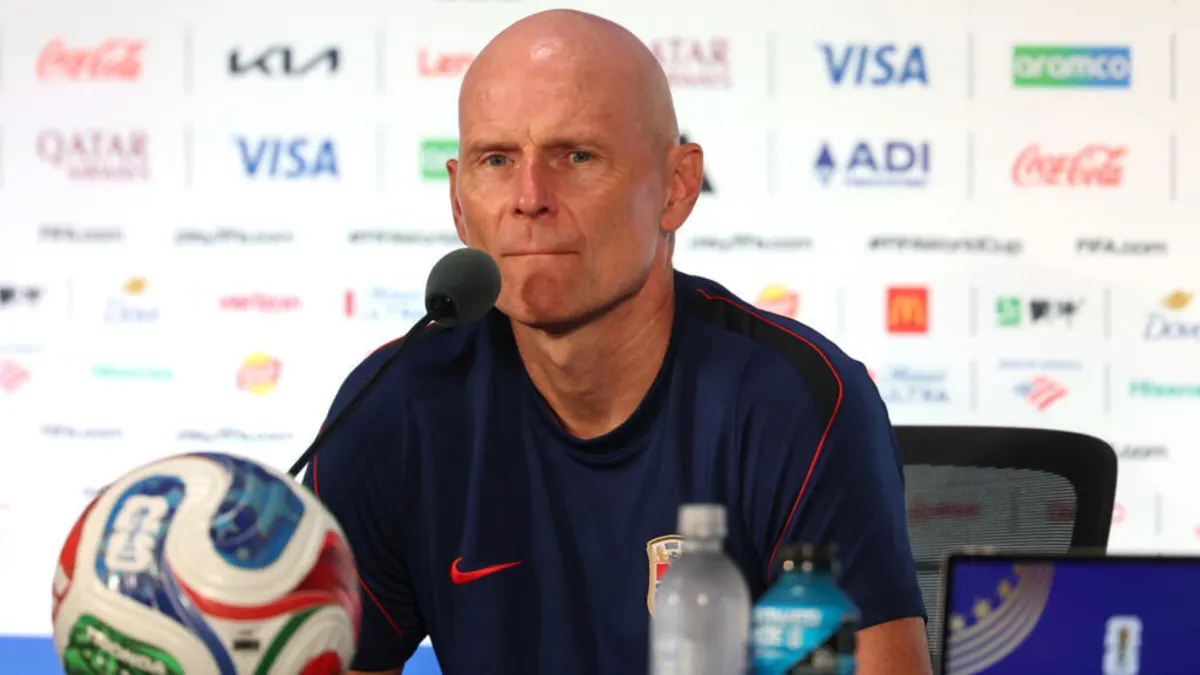
Haaland’s frustration was palpable. The striker, who had dominated Group I with his physicality, found himself starved of service as Ivory Coast’s double pivot of Franck Kessie and Ibrahim Sangare choked Norway’s creative outlets. Haaland’s lone goal, a 67th-minute header, came too late to alter the narrative. Post-match, Solbakken admitted his side had been “outplayed tactically,” a rare concession from a manager known for his defensive organisation. The defeat raises questions about Norway’s squad balance, particularly their reliance on Haaland without a supporting striker capable of occupying defenders.
The match revealed a hidden institutional fracture within Norwegian football. Sources close to the squad suggest tension between Solbakken and the Norwegian FA over pre-tournament preparation. While Solbakken pushed for a physical, direct style to maximise Haaland’s strengths, the FA’s technical director advocated for a possession-based approach to develop younger talents like Antonio Nusa. The disconnect manifested on the pitch, where Norway’s lack of tactical flexibility left them vulnerable to Ivory Coast’s adaptability. The FA’s reluctance to back Solbakken’s vision may now accelerate calls for his departure, regardless of Norway’s early exit.
Ivory Coast’s victory marks a seismic shift in African football’s tactical evolution. Historically reliant on physicality and set-pieces, the Elephants demonstrated a sophisticated counter-attacking system that could trouble deeper-lying defences in the Round of 16. Fae’s use of wing-backs—Wilfried Singo and Ghislain Konan—allowed Ivory Coast to overload Norway’s flanks while maintaining defensive solidity. Their third goal, a 72nd-minute strike from Simon Adingra, came from a quick switch of play that exposed Norway’s slow defensive rotations. The performance has elevated Ivory Coast to dark-horse status, with pundits now tipping them to reach the quarter-finals if they maintain this level of intensity.
Norway’s defeat also highlights a broader structural issue in European football: the over-reliance on individual brilliance at the expense of collective cohesion. Haaland’s dominance in the Premier League and Champions League has masked Norway’s lack of depth, a problem magnified in high-stakes tournaments. Without a Plan B, Norway’s World Cup campaign became a one-dimensional exercise in feeding Haaland, leaving them exposed when Ivory Coast neutralised their primary threat. The result serves as a cautionary tale for nations like England and France, whose squads are similarly built around a single world-class striker.
The financial implications of Norway’s exit are already rippling through the transfer market. Haaland’s stock, which had soared after his four-goal group stage, has taken a hit, with clubs like Real Madrid and Manchester City now questioning his ability to deliver in knockout football. Norwegian players, too, face an uncertain future. Full-backs Julian Ryerson and Birger Meling, both linked with moves to the Premier League, may see their valuations drop after their struggles against Ivory Coast’s wingers. Conversely, Ivory Coast’s squad has seen a collective surge in market value, with Diallo and Kessie now attracting interest from top European clubs.